
The enactment of the Bharatiya Nagarik Suraksha Sanhita, 2023 (BNSS), which superseded the Code of Criminal Procedure, 1973 (CrPC) with effect from July 1, 2024, preserved the vital inherent supervisory jurisdiction of High Courts to prevent abuse of the judicial process. Under Section 528 of the BNSS (corresponding identically to erstwhile Section 482 CrPC), High Courts retain sweeping constitutional powers to quash frivolous, malicious, and legally untenable criminal prosecutions at the threshold stage.
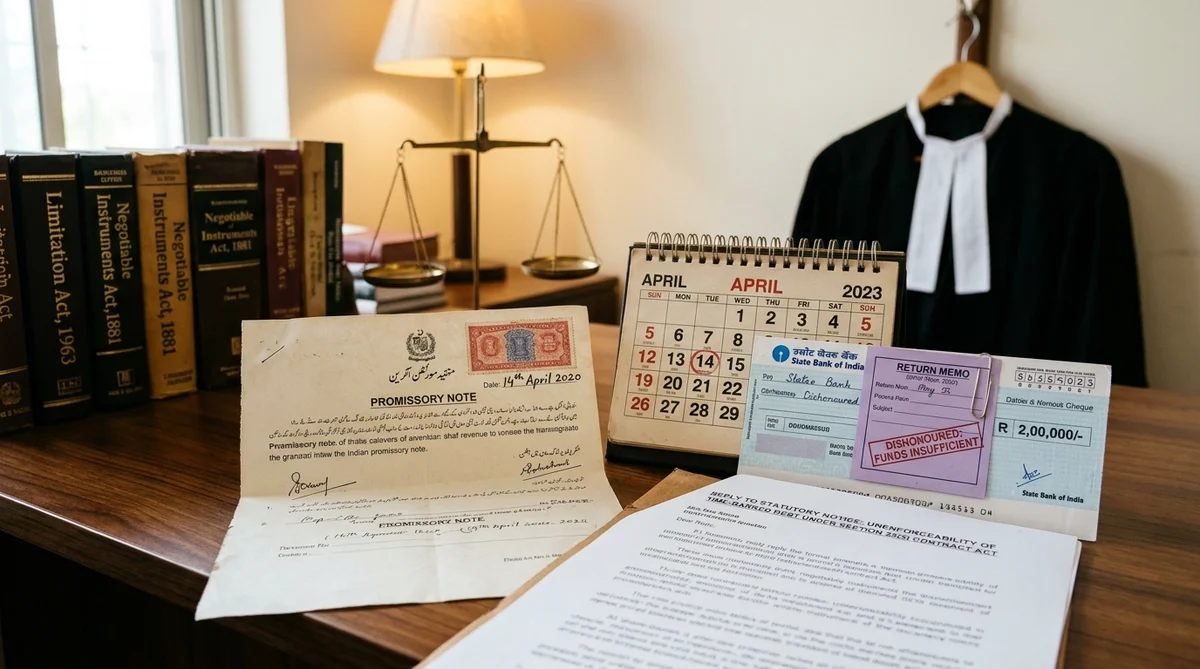
Nowhere is this supervisory jurisdiction more vigorously invoked than in summons trials under Section 138 of the Negotiable Instruments Act, 1881 (NI Act). While Section 138 was conceived as an expedited statutory mechanism to penalize dishonest drawers, creditors frequently weaponize the provision to enforce expired civil liabilities or extract extortionate settlements. Two classic abuses dominate modern commercial litigation: first, instituting criminal complaints for cheques issued against time-barred debts where the civil limitation period for recovery has long expired; and second, indiscriminately roping in independent, nominee, and non-executive company directors under the vicarious liability umbrella of Section 141 NI Act without a shred of evidence linking them to daily operations.
Navigating Section 528 BNSS quashing petitions enables corporate leaders, independent directors, and commercial debtors to vindicate their legal rights, arrest criminal harassment, and secure total exoneration without enduring years of grueling trial court appearances.
High Courts exercise inherent jurisdiction under Section 528 BNSS (formerly Section 482 CrPC) to quash Section 138 complaints founded on time-barred debts lacking written Section 25(3) Contract Act promises. Quashing is equally available to independent and non-executive directors where complaints lack specific averments demonstrating active operational management under Section 141.
1. Inherent Jurisdiction under Section 528 BNSS: Principles in Cheque Dishonour Trials
Section 528 of the BNSS preserves the historic inherent powers of the High Court:
Section 528, Bharatiya Nagarik Suraksha Sanhita, 2023:
"Nothing in this Sanhita shall be deemed to limit or affect the inherent powers of the High Court to make such orders as may be necessary to give effect to any order under this Sanhita, or to prevent abuse of the process of any Court or otherwise to secure the ends of justice."
In landmark pronouncements including State of Haryana v. Bhajan Lal (1992) Supp (1) SCC 335, Dashrath Rupsingh Rathod v. State of Maharashtra (2014) 9 SCC 129, and Sunil Todi v. State of Gujarat (2021) SCC OnLine SC 1174, the Supreme Court established clear benchmarks governing the exercise of inherent quashing powers in Section 138 trials:
- Uncontroverted Plaint Allegations: Where the allegations made in the complaint, even if accepted in their entirety as true, fail to constitute an offence under Section 138 or disclose an insurmountable statutory bar.
- Patent Lack of Jurisdiction: Where the trial magistrate lacked territorial jurisdiction or took cognizance of a complaint barred by limitation without condonation.
- Unimpeachable Documentary Proof: Where the defense relies on public documents of unimpeachable authenticity (such as MCA filings, death certificates, or court orders) that completely demolish the foundation of the prosecution without requiring trial adjudication.
- Manifest Mala Fide: Where the criminal proceeding is manifestly attended with mala fide intentions or instituted maliciously with an ulterior motive for wreaking vengeance on the accused.
2. The "Legally Enforceable Debt" Requirement and Time-Barred Debts
The core statutory foundation of Section 138 is embedded in its Explanation:
"Explanation.—For the purposes of this section, 'debt or other liability' means a legally enforceable debt or other liability."
Under the Limitation Act, 1963 (Articles 19, 21, and 113), the limitation period for recovering an ordinary commercial loan, invoice payment, or contractual debt is strictly three (3) years from the date of default. Once this 3-year period lapses without any written acknowledgment of debt signed under Section 18 of the Limitation Act, the remedy to recover the debt is extinguished by operation of law.
A critical legal question arises: Can a cheque issued in respect of a time-barred debt attract Section 138 criminal liability?
"A cheque issued for the discharge of a debt which is barred by the law of limitation cannot be treated as a cheque issued for a 'legally enforceable debt' within the meaning of the Explanation to Section 138 NI Act. Penal liability cannot be anchored to a time-barred civil liability unless the drawer executed a fresh, express written promise to pay under Section 25(3) of the Indian Contract Act, 1872."
— Delhi High Court in Atamjit Singh v. State (NCT of Delhi) & Bombay High Court in Dinesh B. Chokshi v. Rahul J. Soni
Under Section 25(3) of the Indian Contract Act, 1872, an agreement to pay a time-barred debt is valid only if it is in writing and signed by the debtor. Merely handing over a blank cheque or an undated security instrument does not automatically satisfy Section 25(3) unless accompanied by an explicit written covenant promising to revive the extinguished liability. In the absence of such a written covenant, a complaint filed on a time-barred loan is liable to be quashed under Section 528 BNSS.
The Supreme Court in Sasseriyil Joseph v. Devassia (2001) affirmed this principle by upholding the acquittal of an accused where the cheque was issued for a debt barred by limitation. Criminal courts cannot be converted into debt collection agencies for claims that the civil law refuses to recognize. This was further reinforced by the Andhra Pradesh High Court in K. Hymavathi v. State of A.P. (2023), which held that when the complaint itself mentions transactions that took place beyond the three-year limitation threshold without showing any written promise to pay, taking cognizance is an incurable illegality warranting quashing under Section 482 CrPC / Section 528 BNSS.
Additionally, the doctrine of promissory estoppel cannot be invoked by a complainant to overcome the statutory bar of limitation. The statutory presumption under Section 139 of the NI Act applies only to the existence of a debt that is legally enforceable; it does not extend to creating a presumption that an expired debt has been revived in the absence of primary documentary proof.
3. Vicarious Criminal Liability under Section 141: Non-Executive and Independent Directors
In corporate debt disputes, complainants routinely arraign every individual listed on the Ministry of Corporate Affairs (MCA) portal as an accused director to orchestrate boardroom panic. Section 141 of the NI Act, however, establishes a strict vicarious liability regime:
- The Statutory Test of Section 141(1): Criminal liability attaches only to persons who "at the time the offence was committed, were in charge of, and were responsible to the company for the conduct of the business of the company." Vicarious criminal liability is an exception to the normal criminal jurisprudence and must be strictly established.
- The S.M.S. Pharmaceuticals Doctrine: In S.M.S. Pharmaceuticals Ltd. v. Neeta Bhalla (2005) 8 SCC 89, a Three-Judge Bench of the Supreme Court held that there is no universal presumption that every director knows about the day-to-day transactions of the company. A complaint must contain specific, clear, and unambiguous averments demonstrating the precise operational role played by each named director. Mere reproducing the words of the statute without factual specifics is legally insufficient.
- Protection for Independent and Non-Executive Directors: In Pooja Ravinder Devidasani v. State of Maharashtra (2014) 16 SCC 1 and Sunita Palita v. Panchami Stone Quarry (2022) 10 SCC 152, the Supreme Court unequivocally ruled that non-executive directors, independent directors, and sleeping directors who are not signatories to the cheque cannot be summoned on vague, boilerplate allegations. The court held that summoning an accused in a criminal case is a serious matter, and magistrates cannot issue process mechanically against outside directors.
- Statutory Shield under Companies Act, 2013: Under Section 149(12) of the Companies Act, an independent director or non-executive director can only be held liable for acts of omission or commission which occurred with their knowledge, attributable through board processes, and with their explicit consent or connivance. In S.P. Mani and Mohan Dairy v. Snehalatha Elangovan (2022) SCC OnLine SC 1238, the Supreme Court reiterated that when a director does not hold an executive position (such as Managing Director or Joint Managing Director), specific averments disclosing their active management role are an absolute prerequisite to maintain a complaint.
- Non-Signatory Spouses and Family Members: In family-run enterprises or private limited companies where spouses or elderly parents are inducted as nominal directors without operational authority, the Supreme Court in Aparna A. Shah v. Sheth Developers Ltd. (2013) 8 SCC 71 laid down that a non-signatory spouse cannot be prosecuted under Section 138 NI Act merely by virtue of joint account holding or family relationship.
Roping in external directors without showing that they authorized or signed the cheque constitutes a textbook abuse of criminal process warranting instantaneous quashing.
4. Relying on Unimpeachable MCA Records: Form DIR-11 and DIR-12
A common dilemma in Section 528 BNSS petitions is whether High Courts can examine defense documents without sending the matter for full trial. The Supreme Court established a vital exception for certified public documents:
"Where the accused director produces certified copies of Form DIR-11 (Notice of resignation by director) and Form DIR-12 (Particulars of cessation of director) duly approved and registered on the portal of the Ministry of Corporate Affairs prior to the date of issuance of the cheque, the High Court is bound to look into such unimpeachable public documents under Section 482 CrPC / Section 528 BNSS and quash proceedings against such retired director."
— Supreme Court of India in Anita Malhotra v. Apparel Export Promotion Council (2012) 1 SCC 520
Under Sections 55 and 63 of the Bharatiya Sakshya Adhiniyam, 2023 (BSA), official records downloaded from government portals carrying official digital signatures carry statutory presumption of authenticity. An ex-director who resigned prior to the cheque issuance date cannot be compelled to face trial.
Similarly, in Harshendra Kumar D. v. Rebatilata Koley (2011) 3 SCC 351, the Supreme Court held that where a director has resigned and the resignation has been accepted by the company with necessary filings completed before the cheque was drawn, continuation of criminal proceedings against such a person is completely impermissible. Forcing retired directors to face trial violates Article 21 of the Constitution.
5. Strategic Drafting Blueprint for Section 528 BNSS Quashing Petitions
A successful Section 528 BNSS petition requires precision in drafting, factual alignment, and strategic annexures:
- Clear Demarcation of Legal Grounds: Segregate grounds into jurisdictional flaws (time-barred debt, lack of territorial nexus) and personal exemptions (non-executive status, prior resignation).
- Compulsory Annexures:
- Certified copy of the complaint and summoning order.
- Statutory demand notice and reply notice setting up the defense at the earliest threshold.
- Certified MCA Company Master Data and Form DIR-12 verifying designation.
- Bank loan statements establishing the exact date of default and expiration of 3-year limitation.
- Interim Prayers: Seek an immediate stay of trial court proceedings and exemption of petitioner from personal appearance before the Magistrate during the pendency of the quashing petition.
- Mandatory Section 225 BNSS (Section 202 CrPC) Inquiries: Highlight failure of the trial magistrate to conduct mandatory postponement of process and pre-summoning inquiry where the petitioner resides outside the territorial jurisdiction of the magistrate court. In Sunil Todi (2021), the Supreme Court held that Section 202 CrPC is mandatory in Section 138 cases involving outstation accused.
By deploying Section 528 BNSS proactively, litigants protect their liberty and avoid the devastating professional consequences of protracted criminal litigation.
Landmark Judicial Precedents & Statutory Authorities
Courts and appellate tribunals across Delhi NCR (Faridabad, Saket, Tis Hazari, Gurugram, High Courts) strictly apply these authoritative Supreme Court benchmarks:
The Supreme Court affirmed that the statutory presumption under Section 139 of the Negotiable Instruments Act includes the existence of a legally enforceable debt or liability once the execution of the cheque is admitted. However, the Bench settled that the accused is not required to establish their defense beyond reasonable doubt; raising a probable defense through cross-examination or relying on the complainant's own admissions on a preponderance of probabilities is sufficient to rebut the presumption.