Frozen Bank Account Due to Cyber Crime Notice: Step-by-Step Procedure to Unfreeze under Section 106 BNSS
 Authored by: Advocate Kishan Kumar (Advocate & Legal Consultant)
Quick Summary & Strategic Key Takeaways
- Section 107 BNSS Power & Limits: Cyber police freeze bank accounts under Section 107 BNSS (old 102 CrPC) per the Tapas Neogy doctrine, but must mandatorily report the seizure to the Magistrate forthwith.
- Lien-Only Freezing Mandate: Freezing an entire operational bank account for a small disputed amount is illegal; High Courts mandate that debit freezes must be confined strictly to the disputed tainted sum.
- Magisterial Remedy under Section 497 BNSS: Account holders can secure release of funds by executing an indemnity bond before the jurisdictional Magistrate under Section 497 BNSS (old 451/457 CrPC).
- High Court Article 226 Writ Protection: For interstate multi-jurisdictional cyber freezes, a writ petition before the High Court quashes arbitrary police notices and restores business banking operations.
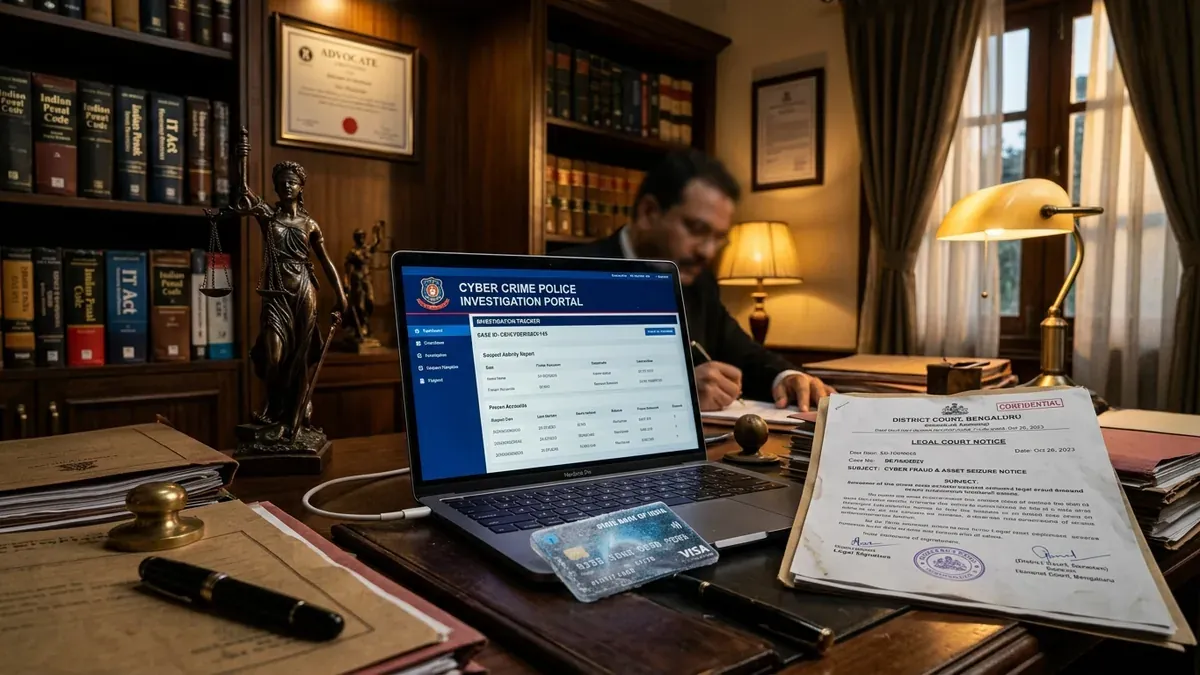
In today's hyper-digitized financial ecosystem, discovering that your primary corporate or personal bank account has been suddenly subjected to a total debit freeze is catastrophic. Operating capital becomes inaccessible, payroll defaults loom, commercial vendor cheques bounce, and personal livelihoods are paralyzed without any prior notice or judicial hearing. This phenomenon stems from automated fraud tracking mechanisms deployed under India's National Cybercrime Reporting Portal (NCRP) and the 1930 Helpline. To unfreeze accounts, innocent business entities, P2P cryptocurrency traders, and freelance professionals must invoke the procedural safeguards codified under the Bharatiya Nagarik Suraksha Sanhita, 2023 (BNSS) and binding High Court constitutional jurisprudence.
1. Anatomy of Cyber Crime Bank Freezes & 1930 NCRP Mechanism
The operational trigger behind cyber crime account freezes lies in the citizen financial fraud reporting framework managed by the Indian Cyber Crime Coordination Centre (I4C) under the Ministry of Home Affairs (MHA):
- Citizen Complaint via 1930 Helpline: A victim of an online financial fraud (investment scams, digital arrest scams, phishing, or crypto Ponzi schemes) dials the 1930 emergency helpline or logs a complaint on cybercrime.gov.in, providing transaction reference numbers (UTR/IMPS).
- Automated NCRP Alert Generation: The portal's automated engine maps the fund trail and issues automated electronic freezing requisitions to beneficiary banks across the country.
- Blanket Bank Compliance: Bank nodal officers, fearing regulatory penalties from the Reserve Bank of India (RBI) or criminal prosecution under Section 111 / 318 BNS, reflexively execute total debit freezes on every account in the downstream transaction path, regardless of whether the account holder had any knowledge of or involvement in the original fraud.
2. Statutory Scope & Mandatory Reporting under Section 106 BNSS 2023
The substantive power of a police officer to seize property suspected to be stolen or linked to a crime is codified under Section 106 of the Bharatiya Nagarik Suraksha Sanhita, 2023 (corresponding to Section 102 of the old Code of Criminal Procedure, 1973).
While the Supreme Court in the landmark verdict of State of Maharashtra v. Tapas D. Neogy (1999) 7 SCC 685 authoritatively settled that the expression "any property" in the seizure statute includes bank accounts of the accused or those linked to criminal offences, this power is strictly circumscribed by mandatory statutory prerequisites:
Mandatory Statutory Conditions under Section 106 BNSS:
- Section 106(1) BNSS - Direct Nexus to Offence: Any police officer may seize any property which may be alleged or suspected to have been stolen, or which may be found under circumstances which create suspicion of the commission of any offence. The suspicion must not be speculative; it must be founded upon concrete evidentiary nexus.
- Section 106(3) BNSS - The Mandatory Magisterial Reporting Rule: "Every police officer acting under sub-section (1) shall forthwith report the seizure to the Magistrate having jurisdiction..."
As repeatedly reaffirmed by the Supreme Court in Teesta Atul Setalvad v. State of Gujarat (2018) 2 SCC 372 and various High Courts (Delhi High Court in B.G. Exploration v. State, Bombay High Court in Dr. Shashikant D. Karnik v. State), the requirement to report the seizure "forthwith" to the jurisdictional Magistrate is an indispensable mandatory condition. If the police fail to report the freeze immediately to the Magistrate, the seizure becomes illegal, ultra vires, and void ab initio, entitling the account holder to immediate defreezing.
3. Cyber Crime Layering Mechanics: From Fraudster to Innocent P2P Trader
To defend against arbitrary bank freezes, one must understand how funds propagate through transaction layers:
| Transaction Layer | Entity Involved | Legal Character & Mens Rea | Typical Banking Status |
|---|---|---|---|
| Layer 1 (Origin) | Primary Cyber Fraudster | Active criminal perpetrator; executes phishing/extortion. | Account emptied within minutes; untraceable mule account. |
| Layer 2 (Mule) | Money Mule Account | Commission agent or fake KYC account facilitating money laundering. | Transfers funds immediately into secondary and tertiary channels. |
| Layer 3 (Marketplace) | P2P Crypto Traders / Payment Gateways | Legitimate vendors selling USDT/Bitcoin on Binance or escrow platforms. | Receives tainted fiat in exchange for legitimate cryptocurrency tokens. |
| Layer 4 (Downstream) | Merchant Businesses & Professionals | Retailers, software vendors, landlords receiving payment for goods/services. | Completely innocent third party with zero criminal intent. |
In 90% of account freezing disputes litigated in Delhi NCR and Haryana, the aggrieved client is an innocent Layer 3 or Layer 4 participant who provided valuable commercial consideration (cryptocurrency, legal services, IT consulting, manufactured goods) with valid invoices and GST compliance. Freezing their entire working capital violates basic principles of criminal justice.
4. Total Debit Freeze vs Partial Lien: Constitutional Violations
A chronic injustice committed by police agencies and banks is the imposition of a Total Debit Freeze across an account holding tens of lakhs or crores of rupees over a petty disputed sum of a few thousand rupees. This disproportionate measure directly infringes upon constitutional rights:
The Delhi High Court held that freezing an entire corporate or trading bank account containing substantial legitimate funds on the premise that an alleged tainted transaction of a fractional amount entered the account is arbitrary, disproportionate, and unconstitutional. The High Court directed that police and banks must restrict any freeze strictly as a lien on the specific disputed amount, permitting uninterrupted operation of the balance account.
Held that depriving a citizen of their right to operate their bank account without concrete proof of complicity in crime infringes the fundamental right to carry on trade and profession under Article 19(1)(g) and the right to life and livelihood under Article 21 of the Constitution of India.
5. Step-by-Step Statutory Unfreezing Protocol
Releasing a frozen bank account requires executing a disciplined, multi-step statutory strategy:
Visit your home bank branch in person. Demand a written letter or email containing: (a) The official Police Notice under Section 94/106 BNSS; (b) The NCRP Acknowledgement Number; (c) The FIR Number and Cyber Police Station name; (d) The Investigating Officer's name, email, and mobile number; and (e) The exact disputed transaction amount.
Assemble a rock-solid dossier: PAN, Aadhaar, GST registration certificate, ITR filings, bank statements showing entry/exit, crypto trade order slips with buyer KYC on Binance/KuCoin, and commercial contracts/invoices proving genuine consideration.
Draft a formal legal representation through counsel setting forth all facts, demonstrating absence of mens rea, and annexing the exoneration dossier. Dispatch by Registered Post and verified official police email, demanding immediate conversion of the total freeze to a partial lien or complete release.
If the police fail to lift the freeze within 10 days, move an application under Section 503 BNSS (old Section 457 CrPC) before the jurisdictional Chief Judicial Magistrate / Metropolitan Magistrate praying for custody and unfreezing of the bank account.
In cases of protracted police harassment, non-response from distant cyber cells, or failure to comply with Section 106(3) BNSS reporting, file a Writ Petition before the High Court seeking a writ of mandamus directing the bank to release the account.
6. Magisterial Remedy under Section 503 BNSS (Indemnity Bond)
Under Section 503 of the Bharatiya Nagarik Suraksha Sanhita, 2023 (corresponding to Section 457 CrPC):
"Whenever the seizure of property by any police officer is reported to a Magistrate under the provisions of this Sanhita, and such property is not produced before a Criminal Court during an inquiry or trial, the Magistrate may make such order as he thinks fit respecting the disposal of such property or the delivery of such property to the person entitled to the possession thereof..."
When an account holder institutes a Section 503 application, the Magistrate issues notice to the Investigating Officer to submit a Status Report. Upon establishing that the applicant is a legitimate business entity and not an accused named in the FIR, the Magistrate orders the defreezing of the account upon the applicant furnishing an Indemnity Bond or Bank Guarantee / Supurdari undertaking for the disputed transaction value, guaranteeing repayment should the court find complicity upon trial conclusion.
7. Article 226 High Court Writ Jurisprudence
The High Courts across Delhi, Punjab & Haryana, Bombay, and Telangana exercise robust constitutional supervision over arbitrary cyber crime freezes. Under Article 226 of the Constitution, the High Court issues two primary forms of relief:
- Writ of Mandamus: Directing respondent banks to immediately restore full operational debit facilities on the petitioner's bank account, confining any police hold strictly to the disputed amount.
- Writ of Certiorari: Quashing the freezing communication or notice issued by the police officer where the freeze was executed in gross violation of Section 106(3) BNSS without reporting to the Magistrate or where no formal FIR has been registered despite the lapse of months.
8. Defending Multi-State Cyber Crime Freezes
A complex logistical hurdle faced by residents in Delhi NCR is that cyber freeze notices often emanate from distant states such as Kerala, Telangana, Karnataka, Gujarat, or Maharashtra. Under Indian law:
- Territorial Jurisdiction: The Delhi High Court held in Ajay Kumar v. State that where the account holder resides and operates their business in Delhi NCR and the bank branch is situated within Delhi, a part of the cause of action arises within Delhi, empowering the Delhi High Court to entertain an Article 226 petition even if the Cyber Police Station is in another state.
- Appearing via Video Conferencing: Under Section 530 BNSS, all inquiries, trials, and legal proceedings can be conducted through audio-video electronic means. An account holder summoned under Section 94 BNSS by a distant cyber cell has the statutory right to appear and tender documents virtually without enduring physical travel.
Unfreezing Checklist for Affected Account Holders
- Demand Written Bank Requisition: Secure the official police freeze order, NCRP acknowledgement, and IO contacts in writing from the branch manager.
- Isolate the Tainted Inflow: Calculate the exact disputed sum and petition the bank and IO to limit the freeze to that specific amount as a partial lien.
- Certify Digital Evidence under Section 63 BSA: Secure crypto trade chat logs, order confirmations, and bank statements with valid Section 63 BSA certificates.
- Issue Legal Notice to Investigating Officer: Serve a comprehensive representation demanding revocation of the freeze or time-bound Magisterial reporting under Section 106(3) BNSS.
- Prepare Section 503 BNSS Application: Instruct local counsel to file an application before the jurisdictional Magistrate for release of property upon indemnity bond.
Statutory Authorities & Legal References
- Bharatiya Nagarik Suraksha Sanhita, 2023: Section 94 (Summons to produce document or other thing), Section 106 (Power of police officer to seize certain property), Section 107 (Attachment, forfeiture or restoration of property), Section 503 (Procedure by police upon seizure of property), and Section 530 (Trial and proceedings to be held in electronic mode).
- Information Technology Act, 2000: Section 66D (Cheating by personation by using computer resource) and Section 69A (Power to issue directions for blocking).
- Bharatiya Sakshya Adhiniyam, 2023: Section 63 (Admissibility of electronic records in court).
- Binding Precedents: State of Maharashtra v. Tapas D. Neogy (1999 SC), Teesta Atul Setalvad v. State of Gujarat (2018 SC), Mohammad Anas v. State (2024 Del HC), and B. Kavitha v. State of Telangana (2023).
Frequently Asked Questions
Authoritative statutory guidance on cyber crime bank account freezes, NCRP notices, and legal defreezing remedies.
Why is police reporting of bank freezes to the Magistrate mandatory under Section 106(3) BNSS?
Under Section 106(3) of the Bharatiya Nagarik Suraksha Sanhita, 2023 (corresponding to Section 102(3) CrPC), every police officer seizing property or freezing a bank account 'shall forthwith report the seizure or freeze to the Magistrate having jurisdiction'. The Supreme Court in State of Maharashtra v. Tapas D. Neogy (1999) 7 SCC 685 and Teesta Atul Setalvad v. State of Gujarat (2018) 2 SCC 372 affirmed that bank accounts constitute 'property' subject to seizure, but compliance with mandatory magisterial reporting is an indispensable statutory condition precedent. Failure by the police to report the freeze forthwith renders the entire seizure ultra vires, illegal, and liable to be quashed by the High Court.
What is the legal difference between a total debit freeze and a partial lien freeze?
A total debit freeze completely blocks the account holder from making any withdrawals, UPI payments, payroll transfers, or EMI disbursements, effectively paralyzing personal and business life. A partial lien freeze, by contrast, merely earmarks and reserves the specific disputed transaction amount (e.g., Rs. 50,000) while leaving the remaining legitimate balance fully accessible. High Courts across India have repeatedly held that imposing a total debit freeze for a fractional disputed sum violates fundamental rights under Article 19(1)(g) and Article 21 of the Constitution.
How does cyber crime fund layering affect innocent P2P cryptocurrency traders and merchants?
When a cyber victim reports a scam on the NCRP 1930 portal, the fraudster (Layer 1) funnels the stolen funds through multiple digital intermediaries. The fraudster often purchases USDT/Bitcoin on peer-to-peer (P2P) crypto exchanges (Binance, KuCoin) or buys goods from legitimate merchants, transferring the stolen money to innocent sellers (Layer 2, Layer 3, Layer 4). State cyber crime cells automatically issue blanket freeze requisitions across all downstream transaction hashes, freezing innocent accounts that provided legitimate goods or crypto in good faith.
How can a Delhi NCR resident unfreeze an account frozen by a cyber cell in a distant state like Telangana or Kerala?
When a distant state police agency freezes the account, the account holder must: (1) Obtain the NCRP Acknowledgement Number, FIR Number, and IO contact details from their home bank branch; (2) Draft a formal legal representation with full KYC, crypto trade escrow records, bank statements, and tax invoices, serving it via registered post and official email upon the Cyber Crime Police Station; (3) Concurrently engage local counsel in the concerned district to move an application under Section 503 BNSS before the local Chief Judicial Magistrate; or (4) If police fail to act, file an Article 226 Writ Petition before the High Court having territorial jurisdiction over the bank or the petitioner's registered business.
What is an Application under Section 503 BNSS and how does it secure account defreezing?
Section 503 of the Bharatiya Nagarik Suraksha Sanhita, 2023 (corresponding to Section 457 of the old CrPC) empowers the jurisdictional Magistrate to pass orders regarding the custody and disposal of seized property. An aggrieved account holder files a Section 503 application demonstrating lawful ownership of funds, business legitimacy, and lack of complicity in the fraud. The Magistrate typically orders defreezing of the account upon the applicant furnishing an Indemnity Bond or Supurdari undertaking ensuring cooperation with the trial.
Can a bank branch manager freeze an account without a formal police notice under BNSS?
No. Banks have no inherent authority under the Banking Regulation Act to unilaterally freeze customer accounts without statutory authority. A valid freeze requires either a formal written notice or order issued by an authorized police officer under Section 94 or Section 106 BNSS, or an order of a competent Court, Enforcement Directorate (PMLA), or Income Tax authority. Unofficial email requests or informal telephone calls by police cannot justify debit freezes.
What relief can the High Court grant under Article 226 against arbitrary bank freezes?
Under Article 226 of the Constitution of India, High Courts issue writs of mandamus directing banks to immediately lift debit freezes, restricting police liens strictly to the disputed tainted sum, and directing police to complete their preliminary inquiry within a time-bound window. In cases of flagrant police illegality (such as freezing accounts for months without an FIR or without reporting to the Magistrate), High Courts have quashed freeze notices and awarded exemplary costs against errant police departments.
What typical timeline should an account holder expect to unfreeze their account?
Through proactive administrative representation with the IO, minor lien freezes can be modified or resolved within 10 to 20 working days. If judicial intervention is required, an application under Section 503 BNSS before the Magistrate typically takes 3 to 6 weeks, while an urgent Article 226 Writ Petition before the High Court is usually listed within 48 to 72 hours, with interim relief often granted on the very first hearing.