
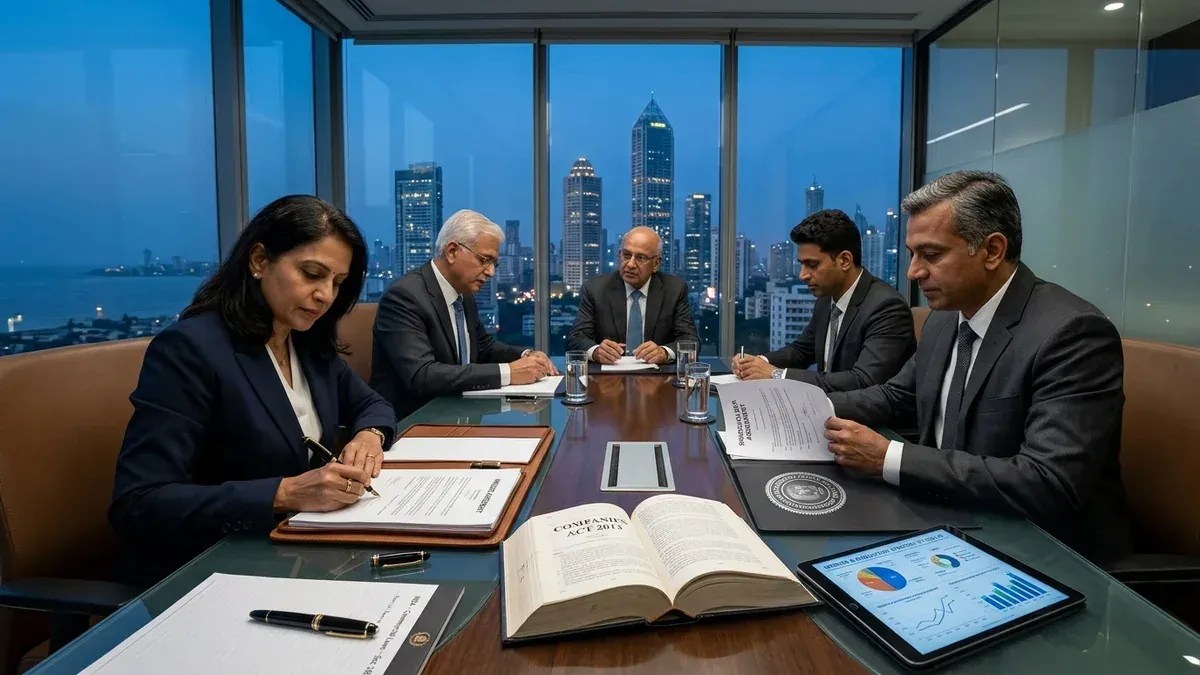
For decades, standard-form commercial contracts drafted by Public Sector Undertakings (PSUs), government departments, banks, and major corporations contained a notoriously skewed dispute resolution clause: in the event of dispute, the sole arbitrator would be nominated exclusively by the Managing Director, Chief Engineer, or General Manager of the very entity facing the claim.
This partisan model violated the fundamental maxim of natural justice: nemo judex in causa sua (no one shall be a judge in their own cause). Through landmark rulings starting with TRF Ltd (2017) and culminating in Perkins Eastman (2020), the Supreme Court struck down unilateral arbitrator appointments, establishing that neutral Section 11 appointments by the High Court are paramount.
Under Section 11 of the Arbitration Act, High Courts appoint independent arbitrators when parties fail to agree. The Supreme Court in Perkins Eastman and TRF Ltd ruled that unilateral arbitrator appointment clauses—where one party or its Managing Director appoints the sole arbitrator—are void ab initio and unenforceable in law.
1. The Perkins Eastman Doctrine: Total Bar on Unilateral Appointments
In Perkins Eastman Architects DPC v. HSCC (India) Ltd. (2020) 2 SCC 760, the Supreme Court decisively settled the law:
- Ineligibility of Interested Parties: A person who has an interest in the outcome or decision of the dispute cannot be appointed as an arbitrator under Section 12(5) read with the Seventh Schedule.
- Bar on Nomination: If an individual (such as a Managing Director) is disqualified from acting as an arbitrator, he cannot nominate another person as sole arbitrator either.
- Void Ab Initio: Any appointment made under a unilateral clause without mutual agreement is non-est and can be challenged immediately under Section 11(6) or Section 14.
2. Scope of High Court Inquiry under Section 11(6A)
Under Section 11(6A) added by the 2015 Amendment and affirmed by the 7-Judge Constitution Bench in In Re Interplay (2023):
"The High Court or Supreme Court's jurisdiction under Section 11 is strictly confined to examining the prima facie existence of the arbitration agreement. Questions of limitation, arbitrability, or accord and satisfaction are left for the arbitral tribunal to decide under Section 16."
The referral court conducts a summary review; unless the claim is palpably dead or barred by time on the face of the record, the court must refer parties to arbitration.
3. Validity of PSU Panels of Arbitrators
A fierce battlefront involves government panels (e.g., Railways or NHAI panels of 3 or 5 retired engineers):
- Narrow Panels Struck Down: In Voestalpine Schienen and Central Organisation for Railway Electrification (CORE), courts held that forcing a private contractor to choose from a narrow panel of 3 or 4 ex-employees violates neutrality.
- Broad-Based Panels: A panel is lawful only if it is expansive, diverse, and includes retired judges, technical experts, and non-departmental professionals.
- High Court Appoints Outside Panel: If the panel lacks institutional independence, the High Court under Section 11 bypasses the panel and appoints a retired Supreme Court or High Court judge.
Landmark Judicial Precedents & Statutory Authorities
Courts and appellate tribunals across Delhi NCR (Faridabad, Saket, Tis Hazari, Gurugram, High Courts) strictly apply these authoritative Supreme Court benchmarks:
The Supreme Court reaffirmed the three mandatory golden tests for grant of interlocutory injunctions under Order XXXIX Rules 1 and 2 of the Code of Civil Procedure: (i) strong prima facie case, (ii) balance of convenience tilted in applicant's favor, and (iii) imminent threat of irreparable injury not compensable in monetary damages. The Court held that temporary relief cannot be granted mechanically without judicial application of mind.