
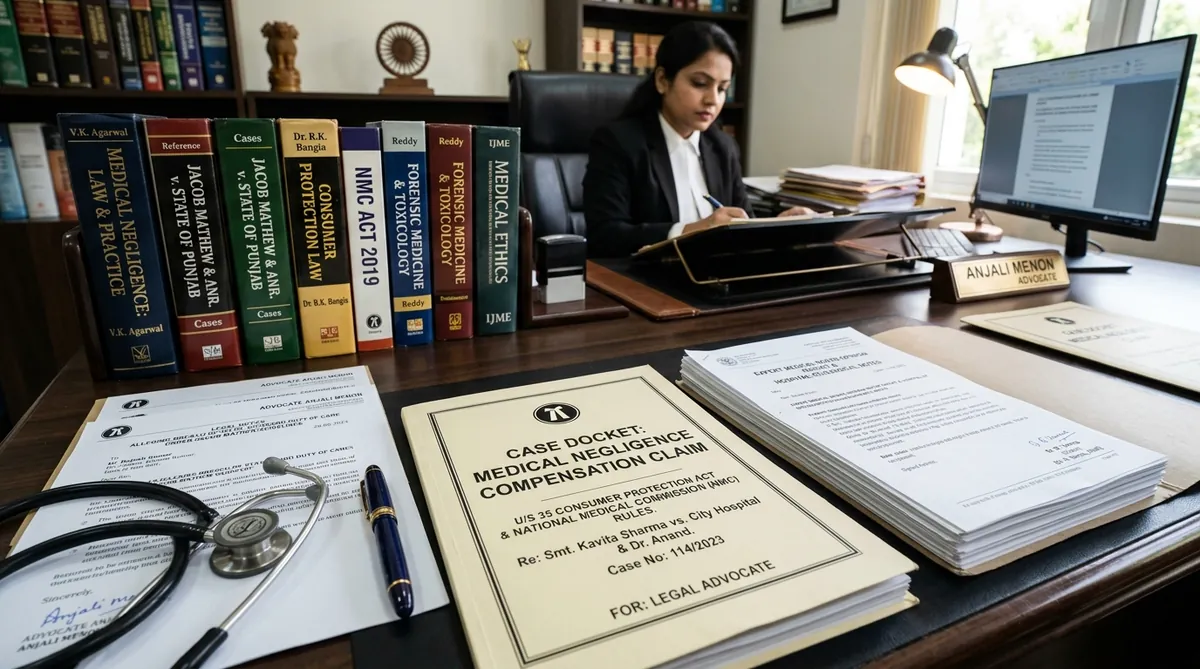
In traditional civil litigation and consumer malpractice complaints, the fundamental maxim ei qui affirmat, non ei qui negat, incumbit probatio governs: the burden of proving medical malpractice rests squarely upon the patient. However, a conscious or unconscious patient undergoing general anesthesia on an operating table possesses zero visibility into the surgeons' intra-operative actions, sterilization breaches, or instrument counts.
To prevent grave injustice where severe surgical errors occur inside closed theaters, Indian courts apply the historic evidentiary doctrine of Res Ipsa Loquitur (the thing speaks for itself). As affirmed in landmark Supreme Court rulings such as V. Kishan Rao v. Nikhil Super Speciality Hospital (2010), certain surgical catastrophes speak with such eloquence that negligence is presumed without requiring expert testimony.
The doctrine of Res Ipsa Loquitur (the thing speaks for itself) applies in medical negligence where surgical errors are so blatant that negligence is inferred from the occurrence itself. When foreign instruments or sponges are left inside patients, the burden of proof reverses onto the operating surgeons and hospital.
1. Three Cardinal Conditions for Res Ipsa Loquitur
For the doctrine to apply and reverse the burden of proof onto the healthcare provider:
- Exclusive Control: The surgical theater, instruments, drugs, and patient's physical body must have been under the sole management and exclusive control of the defendant doctors and hospital.
- Improbability of Non-Negligent Occurrence: The accident must be of such a nature that in the ordinary course of things, it does not happen if those who have the management use proper reasonable care.
- No Contributory Act by Patient: The patient must not have contributed to the catastrophe (which is self-evident when under general anesthesia).
2. Classic Applications in Indian Surgical Negligence
The Supreme Court and NCDRC have applied Res Ipsa Loquitur across recurring surgical disasters:
"Leaving surgical swabs, sponges, arterial forceps, or scissors inside the abdominal cavity post-cesarean or laparotomy is a classic res ipsa loquitur scenario. The presence of the foreign object inside the patient's body establishes negligence on the face of the record, shifting the burden onto the surgical team."
- Wrong-Site / Wrong-Limb Surgery: Amputating the healthy left leg instead of the gangrenous right limb, or extracting healthy teeth.
- Anesthetic Hypoxia: Failure to connect endotracheal tubes properly, causing prolonged cerebral hypoxia and vegetative state in routine surgeries.
- Mismatch Blood Transfusion: Infusing mismatched ABO/Rh blood units during trauma surgery resulting in acute hemolytic crisis.
3. The Legal Impact: Shifting the Evidentiary Burden
Once Res Ipsa Loquitur is successfully triggered by placing radiological reports (X-rays, CT scans showing foreign bodies) on record:
- No Expert Evidence Required: In V. Kishan Rao, the Supreme Court held that the consumer commission cannot insist on the complainant producing expert evidence from another doctor.
- Presumption of Negligence: The legal presumption operates against the hospital; the burden shifts to the hospital to demonstrate how the event occurred despite following standard sponge and instrument count protocols.
- Joint and Several Liability: Both the primary operating surgeon and the hospital administration (nursing staff responsible for mop counts) are held jointly and severally liable for compensatory damages.
Landmark Judicial Precedents & Statutory Authorities
Courts and appellate tribunals across Delhi NCR (Faridabad, Saket, Tis Hazari, Gurugram, High Courts) strictly apply these authoritative Supreme Court benchmarks:
The Supreme Court established that statutory authorities and commercial real estate developers fall strictly within the jurisdiction of Consumer Protection Forums for deficiency of service. In Experion Developers, the Court ruled that one-sided builder-buyer agreements containing punitive forfeiture clauses constitute unfair trade practices, entitling homebuyers to full refund with commercial interest upon unreasonable possession delays.