
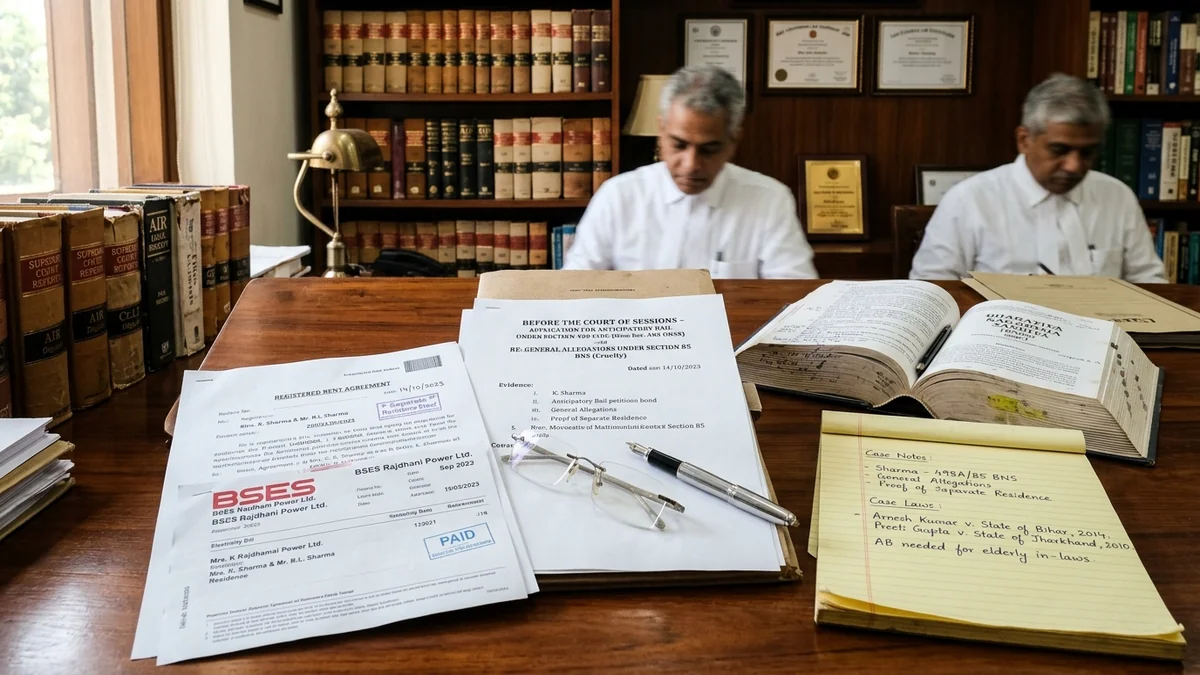
Section 85 of the Bharatiya Nyaya Sanhita, 2023 (BNS) (formerly Section 498A of the Indian Penal Code, 1860) was enacted with the noble objective of curbing dowry harassment and matrimonial cruelty against women. However, judicial experience over four decades has revealed widespread abuse: when marital discord erupts, complainants frequently rope in every member of the husband's family—including elderly grandparents, married sisters living in other cities, and distant uncles—in a sweeping, retaliatory dragnet.
The Supreme Court of India in Preeti Gupta v. State of Jharkhand (2010), Geeta Mehrotra (2012), and the definitive judgment in Kahkashan Kausar @ Sonam v. State of Bihar (2022 6 SCC 599) has condemned this tendency. High Courts across India, exercising inherent powers under Section 528 of the BNSS (Section 482 CrPC), actively quash cruelty FIRs against in-laws where allegations are vague, omnibus, and devoid of specific overt acts.
Under Section 85 BNS, criminal cruelty FIRs frequently implicate distant relatives, elderly in-laws, and non-resident siblings. The Supreme Court in Kahkashan Kausar affirmed that general and omnibus allegations without specific active roles cannot sustain criminal trial, directing High Courts to quash such proceedings under Section 528 BNSS.
1. The Kahkashan Kausar Doctrine: Bar Against General & Omnibus Allegations
In Kahkashan Kausar @ Sonam v. State of Bihar, a three-judge bench of the Supreme Court quashed criminal proceedings against the husband's mother and sisters, laying down cardinal principles:
"General and omnibus allegations against in-laws without attributing any specific role or overt act of harassment cannot be the basis for prosecuting them under Section 498A (now Section 85 BNS). Allowing such prosecutions to proceed is an abuse of the process of the court."
Merely stating that "all family members demanded dowry and harassed me" without specifying dates, specific demands, or physical incidents is fatal to the prosecution of relatives.
2. Separate Residence as a Conclusive Quashing Shield
One of the most effective evidentiary defenses in High Court quashing petitions under Section 528 BNSS is proving separate residence:
- Married Sisters and Brothers-in-Law: Producing lease agreements, utility bills, or employment contracts proving the sibling has lived in another city or abroad since before the marriage.
- Elderly In-Laws Living Separately: Establishing that the husband and wife resided in an independent rented apartment or nuclear household away from the parental home.
As held in K. Subba Rao v. State of Telangana (2018), relatives who do not share a common household with the couple cannot be presumed to be involved in day-to-day matrimonial friction.
3. Procedure for Quashing In-Laws' Names in High Court
To protect family members from arrest and the trauma of criminal trial, counsel should file a petition under Section 528 BNSS before the High Court, annexing:
- The copy of the FIR or Police Complaint;
- Proof of independent address and separate household living (Aadhaar, Voter ID, Utility Bills);
- Interim prayer seeking stay of arrest or stay of trial proceedings against the in-laws during the pendency of the quashing petition.
Landmark Judicial Precedents & Statutory Authorities
Courts and appellate tribunals across Delhi NCR (Faridabad, Saket, Tis Hazari, Gurugram, High Courts) strictly apply these authoritative Supreme Court benchmarks:
The Constitution Bench settled that anticipatory bail under Section 438 CrPC (Section 482 BNSS) should not routinely be limited to a fixed time frame, reaffirming that personal liberty under Article 21 cannot be curtailed on vague apprehensions. In Satender Kumar Antil, the Supreme Court mandated that investigating agencies and magistrates strictly adhere to procedural compliance under Section 41A (Section 35 BNSS), establishing that arrests must be justified by exceptional necessity rather than mechanical executive exercise.