
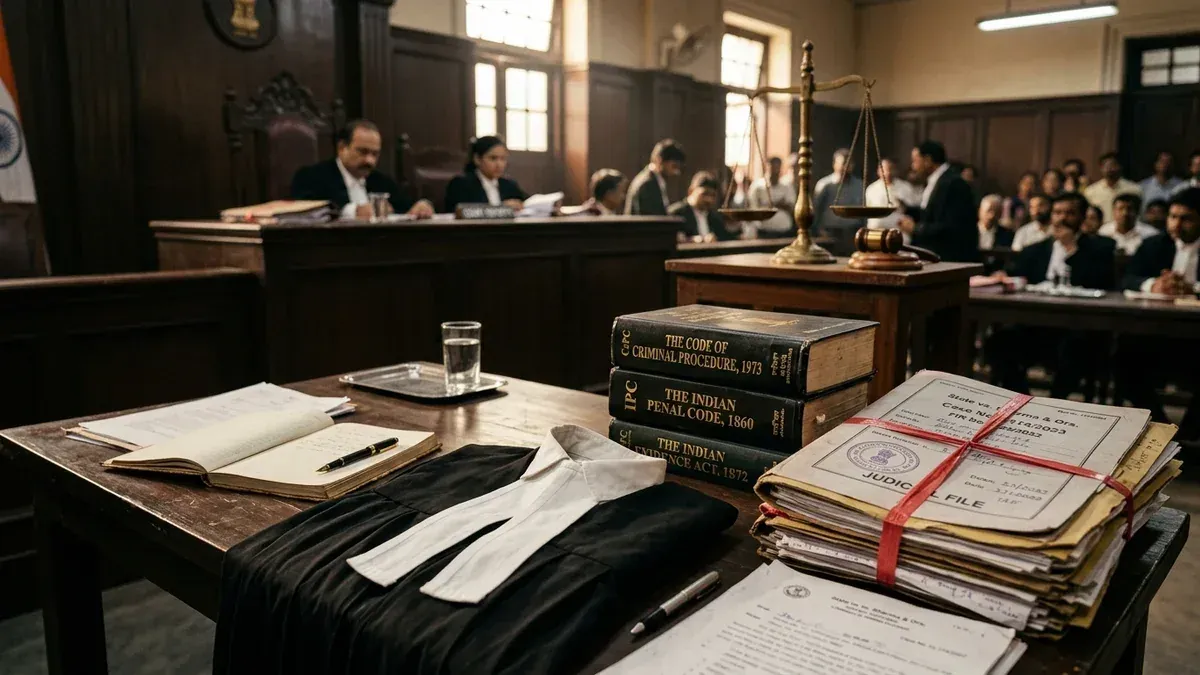
Criminal trials in India notoriously span years, if not decades, imposing devastating financial costs, emotional trauma, and career stagnation upon undertrials. To provide a pragmatic, restorative exit route from protracted criminal litigation, the Bharatiya Nagarik Suraksha Sanhita, 2023 (BNSS) codifies Plea Bargaining under Chapter XXIII (Sections 289 to 299, replacing Chapter XXI-A of the Code of Criminal Procedure, 1973).
Unlike informal or coerced guilty pleas, statutory plea bargaining is a strictly supervised judicial process that enables the accused and the victim to negotiate a "Mutually Satisfactory Disposition" (MSD). In exchange for compensating the victim, the accused secures guaranteed statutory sentence reductions—sparing them severe incarceration and providing an immediate, non-appealable conclusion to the criminal case.
Under Chapter XXIII BNSS, plea bargaining provides a formal statutory mechanism for pre-trial settlement in offences punishable by up to seven years imprisonment. Accused individuals can negotiate mutually satisfactory dispositions with victims, securing significant sentence reductions to one-fourth or one-half without the risks of public trial conviction.
1. Eligibility Criteria for Plea Bargaining under BNSS
Plea bargaining is not available across all criminal offences. Under Section 289 BNSS, it applies strictly where:
- Maximum Penalty Threshold: The offence is punishable with imprisonment for a term not exceeding seven years.
- Excluded Categories: Plea bargaining is strictly prohibited for:
- Offences affecting the socio-economic conditions of the country (notified economic crimes);
- Offences committed against women (e.g. cruelty, harassment);
- Offences committed against children below the age of fourteen years; and
- Cases where the accused has previously been convicted of the same offence (habitual offenders).
2. The Process: Working Out a Mutually Satisfactory Disposition
The plea bargaining process proceeds in structured stages:
- Voluntary Application: The accused files an application accompanied by an affidavit stating that the plea is voluntary and detailing previous convictions.
- In-Camera Judicial Examination: The court examines the accused in-camera (without police or prosecutor present) to verify that the application is filed without coercion or duress.
- Negotiation Meeting: The court issues notice to the Public Prosecutor, investigating officer, and victim to participate in a meeting to work out a mutually satisfactory disposition, including victim compensation.
3. Statutory Sentencing Discounts under Section 293 BNSS
When an MSD is finalized, Section 293 BNSS mandates significant sentencing relief:
| Statutory Situation | Sentencing Benefit Mandated by Law |
|---|---|
| Probation Eligible | Court may release the accused on probation under the Probation of Offenders Act or Section 401 BNSS. |
| Minimum Sentence Prescribed | Court may sentence the accused to half of the minimum punishment provided for that offence. |
| No Minimum Sentence Prescribed | Court may sentence the accused to one-fourth of the punishment provided or extendable for such offence. |
Under Section 295 BNSS, the judgment delivered in plea bargaining is final, and no appeal lies to any court, except by way of a special leave petition under Article 136 or writ petition under Article 226.
Landmark Judicial Precedents & Statutory Authorities
Courts and appellate tribunals across Delhi NCR (Faridabad, Saket, Tis Hazari, Gurugram, High Courts) strictly apply these authoritative Supreme Court benchmarks:
The Supreme Court laid down the classic seven illustrative categories where the High Court must exercise inherent powers under Section 482 CrPC (Section 528 BNSS) to quash FIRs and criminal proceedings to prevent abuse of judicial process. The Bench held that where the allegations in the FIR, even if taken at face value, do not disclose the commission of any cognizable offence, or where the prosecution is manifestly attended with mala fide motives, the criminal proceedings are liable to be quashed at the threshold.