
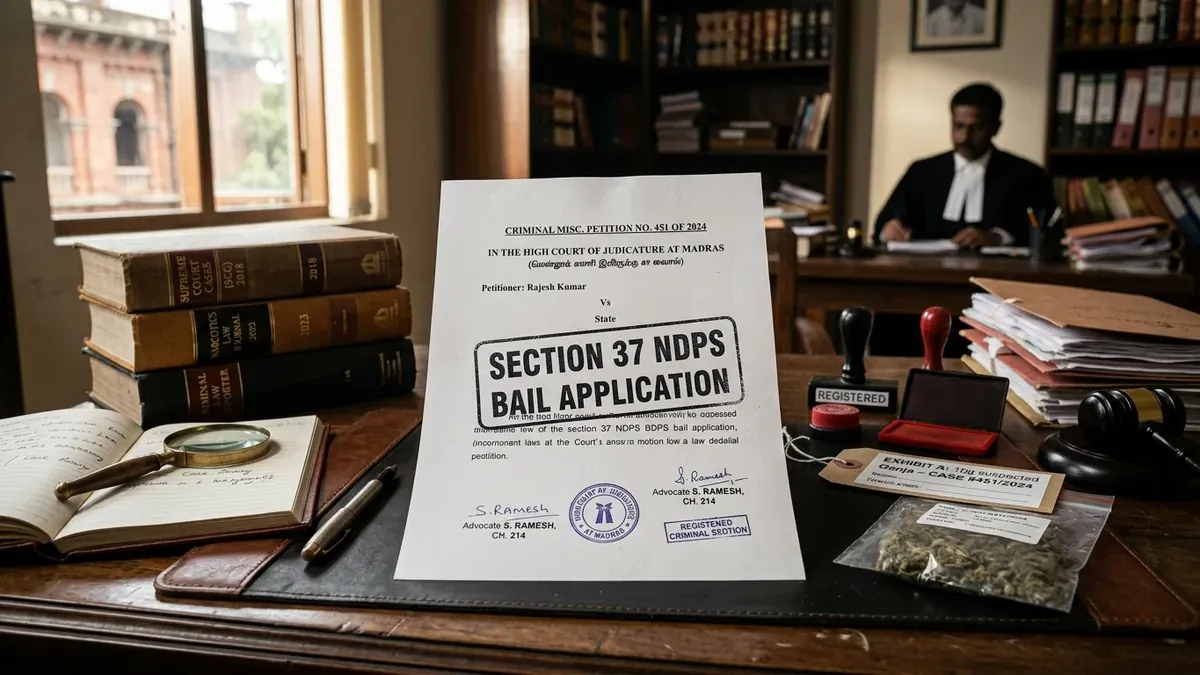
Section 50 of the Narcotic Drugs and Psychotropic Substances Act, 1985 (NDPS Act) represents one of the most vital constitutional and procedural safeguards available to an accused person. Recognizing the draconian nature of the penalties under the NDPS Act—including mandatory minimum sentences of 10 to 20 years rigorous imprisonment—Parliament enacted Section 50 to prevent false implication, ensure transparency in searches, and safeguard personal liberty.
The interpretation of Section 50 has been settled by Constitution Benches of the Supreme Court of India in State of Punjab v. Baldev Singh (1999) and Vijaysinh Chandubha Jadeja v. State of Gujarat (2011). Non-compliance with the mandatory requirements of Section 50 is not a mere procedural irregularity; it is a fatal flaw that goes to the root of the prosecution's case, rendering recovery of contraband inadmissible and entitling the accused to complete acquittal.
Under Section 50 NDPS Act, an officer must inform the suspect of their statutory right to be searched before a Gazetted Officer or Magistrate. Failure to inform the suspect of this right vitiates the personal search, rendering recovery inadmissible and mandating complete acquittal under Supreme Court constitutional bench rulings.
1. The Mandatory Language of Section 50 NDPS Act
Section 50(1) prescribes the exact statutory procedure that must precede the personal search of an individual suspected of carrying narcotic drugs or psychotropic substances:
"When any officer duly authorised under section 42 is about to search any person under the provisions of section 41, section 42 or section 43, he shall, if such person so requires, take such person without unnecessary delay to the nearest Gazetted Officer of any of the departments mentioned in section 42 or to the nearest Magistrate."
The Supreme Court has authoritatively held that the phrase "if such person so requires" imposes an affirmative, non-negotiable obligation upon the investigating officer to expressly inform the suspect of their statutory right to be searched before a Gazetted Officer or a Magistrate.
2. Constitution Bench Landmarks: Baldev Singh and Vijaysinh Jadeja
The legal parameters governing Section 50 have been cemented through two historic Constitution Bench decisions of the Supreme Court:
The Supreme Court laid down the classic seven illustrative categories where the High Court must exercise inherent powers under Section 482 CrPC (Section 528 BNSS) to quash FIRs and criminal proceedings to prevent abuse of judicial process. The Bench held that where the allegations in the FIR, even if taken at face value, do not disclose the commission of any cognizable offence, or where the prosecution is manifestly attended with mala fide motives, the criminal proceedings are liable to be quashed at the threshold.
| Landmark Judgment | Bench Strength | Fundamental Holding |
|---|---|---|
| State of Punjab v. Baldev Singh (1999) 6 SCC 172 | 5-Judge Bench | Held that informing the suspect of their right is mandatory. Non-compliance vitiates the recovery, rendering it inadmissible evidence, vitiating the trial and conviction. |
| Vijaysinh Chandubha Jadeja v. State of Gujarat (2011) 1 SCC 609 | 5-Judge Bench | Held that "substantial compliance" is unacceptable; the officer must strictly inform the suspect. Giving an option to be searched by the investigating officer himself is unlawful. |
3. Personal Body Search vs. Bags, Vehicles, and Premises
One of the most frequent legal disputes during NDPS trials is whether Section 50 applies when contraband is recovered from a bag, suitcase, or vehicle in the possession of the accused:
- Applicability to Body Searches: Section 50 applies exclusively to the personal search of the physical body, clothing, pockets, or garments worn by the suspect.
- Bags and Conveyances: In State of Himachal Pradesh v. Pawan Kumar (2005 4 SCC 350), the Supreme Court ruled that Section 50 does not apply to the search of a bag, briefcase, container, or vehicle carried or driven by the person.
- The Composite Search Exception: Crucially, in Dilip v. State of M.P. (2007) and SK. Raju v. State of West Bengal (2018), the Supreme Court held that where police conduct both a personal body search AND a bag search, Section 50 compliance is mandatory. Failure to follow Section 50 during the combined search vitiates the entire seizure.
4. Critical Flaws in Section 50 Notice That Guarantee Acquittal
Trial courts and High Courts routinely record acquittals when defense counsel successfully establishes any of the following defective notice patterns:
- Giving Third Option: Stating in the notice: "You have the right to be searched before a Gazetted Officer, Magistrate, OR by me (the IO)." This third option dilutes statutory protection and invalidates the notice (State of Rajasthan v. Parmanand 2014 SC).
- Joint Notice to Multiple Accused: Issuing a single combined notice to two or more co-accused violates individual statutory rights, rendering consent null and void.
- Oral Notice Without Independent Witnesses: Notice given orally without contemporaneous independent public witnesses signing the notice and refusal/consent memo.
- Gazetted Officer Part of Raiding Party: Bringing an officer from the same police team/station who is not an independent Gazetted Officer.
5. Cross-Examination Strategy for Defense Advocates
To secure an acquittal based on Section 50 non-compliance, cross-examination of the Investigating Officer (IO) and recovery witnesses must target:
- Contemporaneity: Demanding production of the daily diary (DD) entry and logbooks proving the exact time of Section 50 notice issuance relative to the recovery panchnama.
- Language Comprehension: Establishing that the notice was written in Hindi or English while the accused only understood Punjabi, Tamil, or Bengali, with no certified translator present.
- Offer of Magistrate First: Demonstrating that the IO merely arranged a Gazetted Officer instead of offering the superior option of being produced before a Judicial Magistrate.