
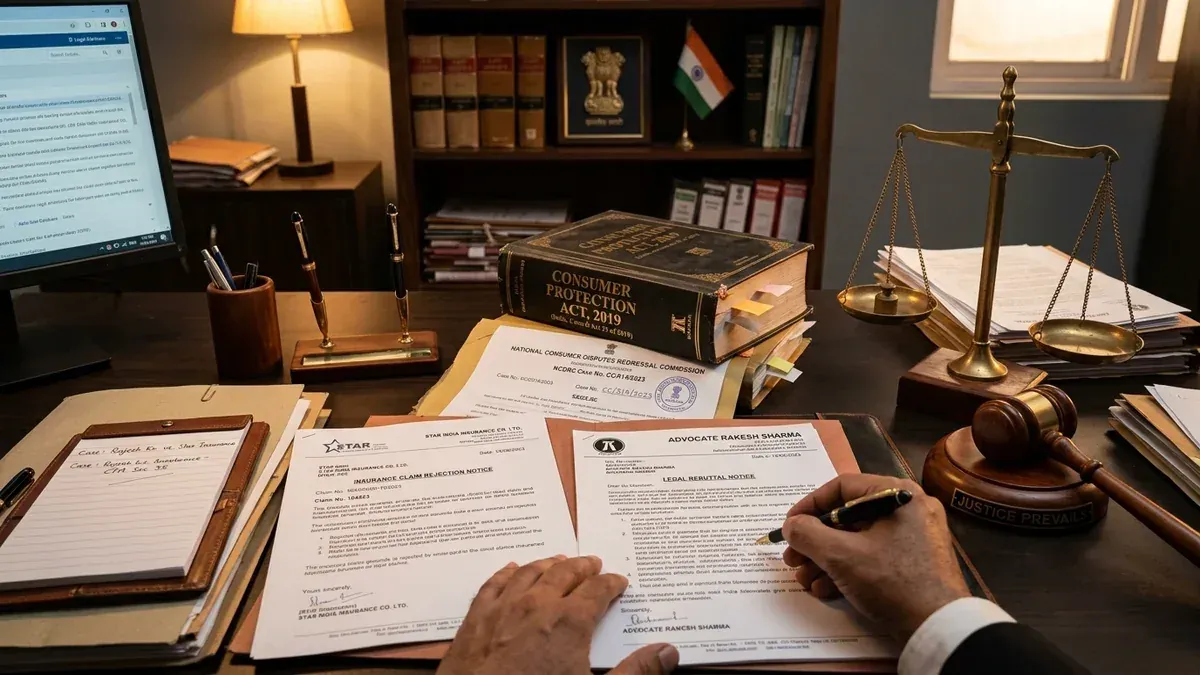
When a consumer dispute escalates through the appellate hierarchy, litigating parties frequently find themselves aggrieved by an order passed by the State Consumer Disputes Redressal Commission (SCDRC)—whether in an interim procedural matter, an order refusing to condone delay, an interlocutory stay decision, or an appellate final decree. Under the Consumer Protection Act, 2019, there is no automatic second appeal on pure questions of fact to the National Consumer Disputes Redressal Commission (NCDRC) at New Delhi. Instead, Parliament enacted a specialized, supervisory supervisory mechanism embodied in Section 58(1)(b) of the Consumer Protection Act, 2019 (which replaced Section 21(b) of the 1986 Act).
Revisional jurisdiction before the NCDRC is not a routine forum for dissatisfied litigants to re-argue their factual grievances or seek a second bite at the evidentiary cherry. In seminal constitutional rulings including Rubi (Chandra) Dutta v. United India Insurance Co. Ltd. (2011) 11 SCC 269 and Sunil Kumar Maity v. State Bank of India (2022) SCC OnLine SC 77, the Supreme Court of India circumscribed the revisional boundaries of the National Commission. Section 58(1)(b) exists strictly to correct patent jurisdictional excesses, unauthorized assumption of powers, failure to exercise jurisdiction vested by law, or serious procedural illegality that strikes at the root of natural justice.
Under Section 58(1)(b) of the Consumer Protection Act 2019, the National Consumer Commission (NCDRC) exercises revisional jurisdiction over State Commissions solely to correct jurisdictional errors, unauthorized assumptions of power, or patent material illegality. Revisions cannot be used as second appeals to re-appreciate concurrent factual evidence already established by lower consumer forums.
1. The Jurisdictional Triad under Section 58(1)(b) CPA 2019
The statutory foundation of the NCDRC's revisional authority is codified in Section 58(1)(b) of the Consumer Protection Act, 2019. The statute prescribes:
"Section 58. Jurisdiction of National Commission.— (1) Subject to the other provisions of this Act, the National Commission shall have jurisdiction—
(b) to call for the records and pass appropriate orders in any consumer dispute which is pending before or has been decided by any State Commission where it appears to the National Commission that such State Commission has exercised a jurisdiction not vested in it by law, or has failed to exercise a jurisdiction so vested, or has acted in the exercise of its jurisdiction illegally or with material irregularity."
Modeled directly upon Section 115 of the Code of Civil Procedure, 1908, this statutory text restricts revisional review to the classic "Jurisdictional Triad":
- Exercise of Jurisdiction Not Vested by Law: Where the State Commission entertained a matter completely barred by limitation under Section 69, exceeded its pecuniary threshold (exceeding ₹2 Crores or entertaining claims below ₹50 Lakhs without original jurisdiction), or adjudicated a subject-matter exclusively committed to another statutory tribunal.
- Failure to Exercise Jurisdiction So Vested: Where the State Commission erroneously refused to hear an appeal on merits, wrongly rejected an application for condonation of delay without considering documented sufficient cause, or summarily dismissed a complaint without giving reasons.
- Acting Illegally or with Material Irregularity: Where the State Commission committed a patent violation of statutory procedure, decided a dispute in blatant breach of principles of natural justice (audi alteram partem), or relied upon documents never served upon the opposing party.
- Correcting Illegal Recall / Review Orders: In Rajeev Hitendra Pathak v. Achyut Kashinath Karekar (2011) 9 SCC 541, a three-judge bench of the Supreme Court held that neither the District Forum nor the State Commission has any inherent power to review, recall, or set aside its own ex-parte final orders. Where a State Commission unlawfully recalls an ex-parte order without statutory authorization, an NCDRC Revision Petition under Section 58(1)(b) is the mandatory statutory vehicle to quash the illegal recall.
2. Revision vs. Statutory Appeal: Why NCDRC Cannot Re-Appreciate Evidence
The most pervasive error committed by revision petitioners before the NCDRC is treating the Revision Petition as an Appeal in disguise. Petitioners routinely file lengthy synopses challenging the credibility of witnesses, re-interpreting surveyor reports, or arguing that the State Commission preferred one reasonable view of facts over another.
The Supreme Court established unambiguous jurisprudence barring this approach in Rubi (Chandra) Dutta v. United India Insurance Co. Ltd. (2011) 11 SCC 269. Justice Surinder Singh Nijjar ruled:
"The revisional powers of the National Commission are very limited. They can be exercised only if there is a jurisdictional error, or failure to exercise jurisdiction, or material irregularity. The National Commission cannot interfere with concurrent findings of fact recorded by the District Forum and State Commission unless such findings are perverse, arbitrary, or based on no evidence at all. A revision cannot be converted into a full-fledged appeal on facts."
This principle was powerfully reaffirmed in Sunil Kumar Maity v. State Bank of India (2022) SCC OnLine SC 77. The Supreme Court set aside an order of the NCDRC wherein the National Commission had overturned the concurrent factual findings of the District and State Commissions regarding bank negligence. The Supreme Court held that where two lower consumer forums have arrived at a concurrent finding of fact upon assessing the record, the NCDRC in revisional jurisdiction has zero legal authority to substitute its own factual inferences merely because a different view is plausible.
The only exception permitting factual intervention is perversity—specifically where the State Commission has ignored decisive material evidence or relied on conjectures without a shred of documentary backing. As held in H.P. State Forest Co. v. United India Insurance, establishing perversity requires showing that no reasonable judicial tribunal could have arrived at the finding on the basis of the admitted evidence.
3. Limitation Period (90 Days), Delay Condonation & Pre-Deposit Protocols
A Revision Petition before the NCDRC is subject to strict procedural and temporal parameters governed by the Consumer Protection (Consumer Commission Procedure) Regulations, 2020:
- Limitation Period of 90 Days: Under Regulation 14(1) of the 2020 Regulations, a Revision Petition against an order of the State Commission must be filed within ninety (90) days from the date of the order or the date of receipt of the free certified copy.
- Strict Standards for Condoning Delay: Where a petition is filed beyond 90 days, the petitioner must file a comprehensive Application for Condonation of Delay explaining each day's delay with documentary evidence. In the seminal ruling of Anshul Aggarwal v. New Okhla Industrial Development Authority (2011) 14 SCC 578, the Supreme Court held that the special periods of limitation prescribed under consumer protection laws must be strictly enforced. The Court ruled that entertaining stale revisions filed after substantial unexplained delays defeats the legislative object of summary consumer justice. Government bodies, statutory development authorities, and corporate insurers cannot plead bureaucratic file movement or departmental procedures as sufficient cause for condoning delay.
- Pre-Deposit of 50% for Statutory Appeals vs. Revisions: While Section 51(1) second proviso of CPA 2019 mandates a 50% pre-deposit for filing regular appeals before the State Commission, Revision Petitions under Section 58(1)(b) against interlocutory or appellate orders do not contain an automatic statutory pre-deposit clause. However, as a matter of judicial practice, the NCDRC will not grant a stay of execution of the monetary decree unless the revision petitioner deposits 50% to 100% of the awarded sum with the Commission's registry.
4. Interim Relief, Execution Stays & The Bar on Article 227 High Court Writs
A critical procedural battleground in NCDRC revisions is securing or opposing an Interim Stay of Execution. When an aggrieved builder or insurer files a revision petition, the successful consumer often simultaneously presses execution proceedings under Section 71 (civil attachment) or Section 72 (criminal arrest warrants) before the District or State Commission.
The mere filing or pendency of a Revision Petition before the NCDRC does NOT operate as an automatic stay of the impugned order or ongoing execution proceedings. In Atma Ram Properties (P) Ltd. v. Federal Motors (P) Ltd. (2005) 1 SCC 705, the Supreme Court laid down that an appellate or revisional court granting stay of a money decree must balance equities by imposing reasonable terms, including directing the deposit of the decretal sum or furnishing solvent bank guarantees.
If the NCDRC grants a conditional stay subject to depositing 50% of the amount within six weeks, and the revision petitioner fails to deposit the funds within the stipulated deadline, the stay order automatically lapses without requiring a formal vacating order, and the executing consumer forum can immediately proceed with warrants of arrest and bank attachments.
Equally critical is the jurisdictional interface between NCDRC Revisions and High Court Writ Petitions under Article 226/227 of the Constitution. Aggrieved corporate litigants frequently seek to bypass the NCDRC at New Delhi by filing supervisory writ petitions before their local High Courts under Article 227. The Supreme Court in Cicily Kallarackal v. Vehicle Factory (2012) 8 SCC 524 and recently in Universal Sompo General Insurance Co. Ltd. v. Suresh Chand Jain (2023) SCC OnLine SC 877 issued a stern constitutional prohibition:
"The Consumer Protection Act provides a complete, self-contained statutory code with a hierarchical appellate and revisional structure. High Courts cannot entertain petitions under Article 226 or 227 of the Constitution against orders passed by State Consumer Commissions when an efficacious, specialized statutory remedy of Revision lies before the National Commission under Section 58(1)(b). Entertaining writ petitions against consumer orders creates parallel jurisdictions and defeats the legislative mandate of expeditious consumer justice."
Therefore, any attempt by a corporate opponent to stall consumer execution by filing an Article 227 petition in the High Court is liable to be dismissed at the threshold on grounds of alternative statutory remedy.
5. Practical Trial Checklist: Drafting High-Impact Revision Petitions Before NCDRC
Advocates drafting or contesting Revision Petitions before the National Consumer Commission at New Delhi must follow this rigorous trial methodology:
- Frame Grounds Strictly Within the Jurisdictional Triad: Never plead general dissatisfaction with the verdict. Explicitly categorize your grounds under: (a) Jurisdictional excess, (b) Failure to exercise jurisdiction, or (c) Patent material irregularity violating natural justice.
- Attach Free Certified Copy and Translation: The NCDRC registry strictly mandates filing a certified copy of the impugned State Commission order. If the proceedings or evidence before the District/State Commission were in a regional language (Hindi, Marathi, Tamil, etc.), ensure certified true English translations are annexed under Regulation 14.
- Prepare a Clean Chronology of Events: Annex a clear, paginated List of Dates and Synopsis highlighting the exact procedural dates, dates of certified copy application and delivery, and demonstrating that the revision is instituted within the 90-day threshold.
- Highlight Perversity in Fact-Finding: If challenging a concurrent finding of fact, your petition must demonstrate legal perversity—i.e., that the lower forum ignored vital documentary evidence on record or reached a conclusion that no reasonable person acquainted with the law could possibly reach.
- File an Early Caveat: If you successfully won before the State Commission, immediately file a Caveat under Section 148A CPC before the NCDRC Registry to prevent your corporate adversary from obtaining an ex-parte stay order behind your back.
Landmark Judicial Precedents & Statutory Authorities
Courts and appellate tribunals across Delhi NCR (Faridabad, Saket, Tis Hazari, Gurugram, High Courts) strictly apply these authoritative Supreme Court benchmarks:
The Supreme Court established that statutory authorities and commercial real estate developers fall strictly within the jurisdiction of Consumer Protection Forums for deficiency of service. In Experion Developers, the Court ruled that one-sided builder-buyer agreements containing punitive forfeiture clauses constitute unfair trade practices, entitling homebuyers to full refund with commercial interest upon unreasonable possession delays.