
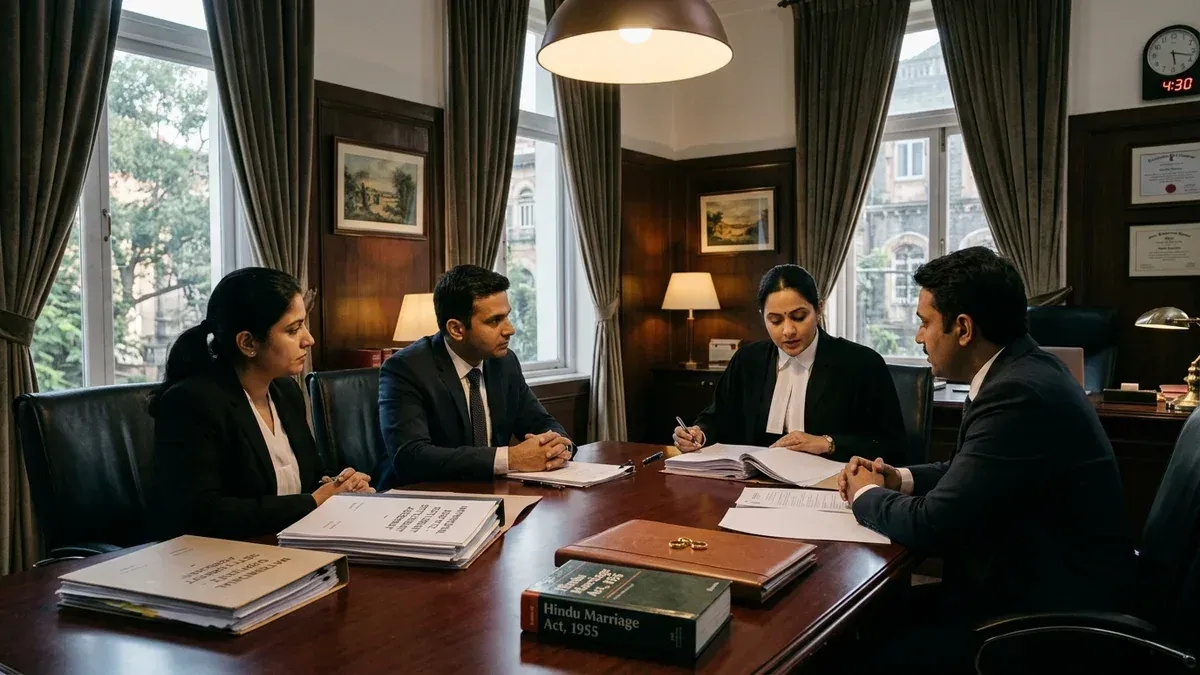
In India, adult citizens possess an unfettered constitutional right to choose their life partner irrespective of caste, religion, or community. In historic verdicts such as Shafin Jahan v. Asokan K.M. (Hadiya Case) (2018) and Shakti Vahini v. Union of India (2018), the Supreme Court unequivocally held that the right to marry a person of one's choice is an integral facet of the Right to Life and Personal Liberty under Article 21 of the Constitution.
Despite these constitutional guarantees, inter-faith and inter-caste couples frequently encounter grave perils: death threats from family members, "khap panchayat" decrees, and false kidnapping/rape FIRs lodged under Section 137 or 64 BNS (Sections 363/376 IPC) by the woman's relatives. Approaching the High Court for emergency protection is often a life-saving necessity.
Consenting adult inter-faith or inter-caste couples facing threats of honor violence or illegal police detention can file an urgent writ petition under Article 226 before the High Court. High Courts issue immediate directions to police chiefs to provide safe housing, transit protection, and restrain hostile family members.
1. Constitutional Right to Partner Choice under Article 21
The jurisprudence governing protection of consenting adult couples rests on unassailable constitutional principles:
- Autonomy of Adults: Two consenting adults who have attained the age of majority (18 for women, 21 for men) require no third-party consent—whether from parents, caste elders, or religious bodies—to cohabit or marry.
- State Protection Mandate: In Shakti Vahini, the Supreme Court issued nationwide directives to State Governments to establish Special Cells and Safe Houses in every district to accommodate threatened couples.
- Restraint on Police Interference: Police cannot act as moral vigilantes or detain adult women under the guise of "counseling" or parental custody.
2. Procedure for Filing an Article 226 Protection Writ
An urgent writ petition for police protection before the High Court requires specific pleadings and annexures:
"The petition names the State, the Commissioner of Police / SSP, the local Station House Officer (SHO), and the hostile private family members as respondents, praying for mandamus directing the police to ensure the life, limb, and liberty of the petitioners."
- Proof of Age: Certified Class 10 Matriculation Certificates, Passports, or Aadhaar cards establishing majority.
- Proof of Marriage or Cohabitation: Marriage Certificate under Special Marriage Act, religious nikahnama/aryasamaj certificate, or notarized live-in agreement.
- Prior Police Representation: Written representation sent via speed post and email to the SSP/SHO reporting specific threats, annexed to prove police inaction.
3. Typical Relief Granted by the High Court
Upon hearing the counsel and interacting with the couple:
- Immediate Protection Order: The High Court directs the jurisdictional SHO to provide their personal contact number and assign beat officers to patrol the couple's residence.
- Safe Transit: Directing police marshals to escort the couple safely out of the court premises to prevent kidnapping by relatives waiting outside.
- Protection from Coercive Arrest: Restraining police from taking coercive steps against the husband in any criminal complaint lodged by the girl's parents without High Court permission.
Landmark Judicial Precedents & Statutory Authorities
Courts and appellate tribunals across Delhi NCR (Faridabad, Saket, Tis Hazari, Gurugram, High Courts) strictly apply these authoritative Supreme Court benchmarks:
The Supreme Court reaffirmed the three mandatory golden tests for grant of interlocutory injunctions under Order XXXIX Rules 1 and 2 of the Code of Civil Procedure: (i) strong prima facie case, (ii) balance of convenience tilted in applicant's favor, and (iii) imminent threat of irreparable injury not compensable in monetary damages. The Court held that temporary relief cannot be granted mechanically without judicial application of mind.