
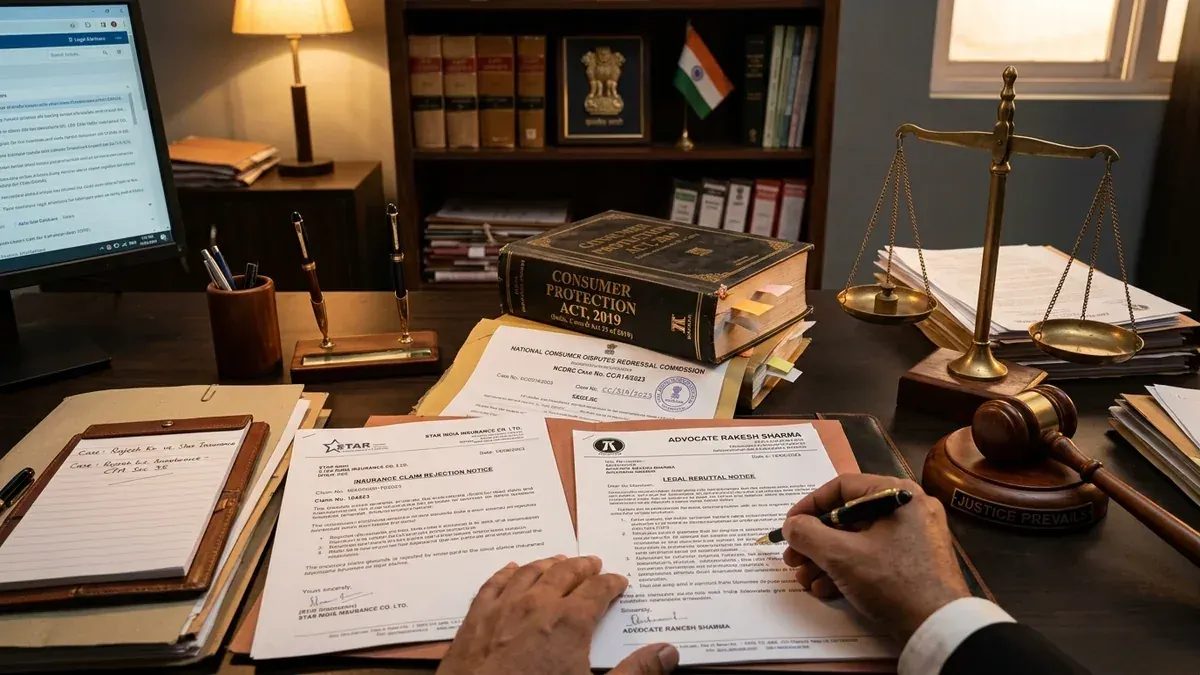
Every academic year, hundreds of thousands of Indian students and their parents invest their life savings, take high-interest personal loans, or exhaust retirement funds to enroll in commercial coaching institutes (such as FIITJEE, Allen, Aakash, Resonance, or specialized UPSC academies) and private professional universities. In a predatory commercial pattern, these institutions aggressively demand non-refundable, advance lump-sum tuition fees covering two, three, or four academic years upfront at the time of admission. When a student subsequently leaves the institute—whether due to securing admission in a premier government college through early counseling, encountering sub-standard teaching quality, suffering severe mental health depression, or facing family financial emergencies—institutions summarily refuse any refund.
Administrators point triumphantly to fine-print clauses in admission enrollment forms declaring: "Fees once paid shall not be refunded under any circumstances whatsoever." Furthermore, several institutions unlawfully confiscate the student's original high school marksheets, transfer certificates, and migration dossiers to extort remainder course fees. This commercial exploitation has been decisively struck down by the Supreme Court of India, the National Consumer Commission (NCDRC), the University Grants Commission (UGC), the All India Council for Technical Education (AICTE), and the CCPA Guidelines for Prevention and Regulation of Misleading Advertisements and Coaching Centers (2024). Under Indian consumer protection law, education cannot be transformed into commercial racketeering, and institutions retaining unearned fees are held guilty of egregious unfair trade practices.
Private coaching institutes and educational colleges cannot retain lump-sum multi-year fees if a student leaves mid-course. Under Supreme Court rulings, UGC guidelines, and CCPA standards, arbitrary non-refund clauses represent unfair trade practices. Consumer courts consistently order pro-rata refunds of unearned tuition, return of original educational certificates, and substantial compensation for harassment.
1. The Jurisdictional Divide: Statutory Universities vs. Private Coaching Enterprises
In educational fee litigation, opposing institutions invariably raise a threshold preliminary objection: they cite Supreme Court judgments in Maharshi Dayanand University v. Surjeet Kaur (2010) 11 SCC 159 and P.T. Koshy v. Ellen Charitable Trust (2012) SCC OnLine SC 315 to argue that "education is not a commodity, educational institutions are not service providers, and students are not consumers."
Indian consumer jurisprudence has drawn a clear, authoritative jurisdictional divide that completely dismantles this institutional defense:
- Statutory Universities Conducting Statutory Examinations: The bar established in Maharshi Dayanand University applies exclusively to statutory universities, school boards (CBSE, ICSE), and public examination bodies conducting statutory degrees, curriculum syllabi, or public examinations. These bodies exercise sovereign statutory educational functions and are exempt from consumer court jurisdiction for pure curriculum/evaluation disputes.
- Commercial Coaching Centers & Private Ed-Tech Aggregators: Commercial coaching academies, competitive test preparatory institutes (JEE, NEET, CLAT, CAT, UPSC), vocational centers, and private vocational colleges are commercial service providers. In FIITJEE Ltd. v. Dr. Minathi Rath (2012) 1 CPJ 194 (NC) and Brilliant Tutorials v. Ashwani Sharma, the National Commission held that coaching institutes do not confer sovereign statutory degrees; they provide coaching services for commercial consideration and fall squarely within the definition of "service" under Section 2(42) of CPA 2019.
- Deceptive Admissions in Unapproved Colleges: In the landmark authority of Buddhist Mission Dental College & Hospital v. Bhupesh Khurana (2009) 4 SCC 473, the Supreme Court held that where a private educational college admitted students by falsely claiming affiliation to a university or regulatory council (Dental Council of India), it amounted to gross misrepresentation and unfair trade practice. The Court ordered the college to refund the entire admission fees with 12% interest and awarded ₹1 Lakh additional compensation to each student for the loss of valuable academic years.
- Supreme Court Clarification in P.K. Bhasin: The Supreme Court and High Courts have repeatedly affirmed that when an institution undertakes commercial advertising, promises rank guarantees, collects multi-year commercial fees, and delivers private tutoring, any deficiency or refusal of lawful refund is fully justiciable before District, State, and National Consumer Commissions.
2. UGC & AICTE Fee Refund Guidelines: Mandatory Slabs & Certificate Retention Bans
For undergraduate colleges, postgraduate universities, and technical institutions, the University Grants Commission (UGC) and AICTE issue annual binding statutory notifications governing fee refunds. The landmark UGC Fee Refund Policy establishes mandatory refund percentages tied to the date of formal withdrawal:
| Percentage of Tuition Fee Refunded | Point of Time When Notice of Withdrawal Is Received |
|---|---|
| 100% Refund (Max ₹1,000 deduction) | 15 days or more before the formally-notified last date of admission. |
| 90% Refund | Less than 15 days before the formally-notified last date of admission. |
| 80% Refund | 15 days or less after the formally-notified last date of admission. |
| 50% Refund | 30 days or less, but more than 15 days, after formally-notified last date. |
Under the UGC Mandate, institutions are legally prohibited from deducting more than ₹1,000 as a processing fee if withdrawal occurs before the start of classes. Furthermore, the UGC and AICTE have enacted an absolute prohibition against the retention of original certificates: colleges cannot demand or retain original high school diplomas, degree certificates, or character certificates under the threat of fee forfeiture. Withholding original documents violates fundamental educational rights and constitutes actionable extortion.
Under the UGC (Redressal of Grievances of Students) Regulations, 2023, every higher education institution is legally obligated to establish a Student Grievance Redressal Committee (SGRC) headed by an Ombudsperson. Any student whose fee refund is delayed beyond 30 days can approach the Ombudsperson directly. If an institution fails to comply with refund orders, the UGC is empowered to take severe punitive actions, including recommending revocation of deemed university status, freezing central educational development grants, and derecognizing specific professional degree courses.
3. Unfair Trade Practice of Multi-Year Lump-Sum Fees: CCPA Standards 2024
The National Consumer Commission has repeatedly declared that collecting advance tuition fees for two, three, or four academic years at the inception of a course is an Unfair Trade Practice under Section 2(47) of CPA 2019. In FIITJEE Ltd. v. Sangeeta Kakar (2019) and Sehgal School of Competition v. Dalbir Singh (2009) 3 CPC 187 (NC), the NCDRC ruled:
"No educational or coaching institution can collect advance fees for the entire duration of a multi-year program upfront. Students must be granted the liberty to pay fees on an annual, semester, or installment basis. If a student leaves after attending a few weeks or months because the coaching standard did not match expectations or the student felt overwhelmed, the institution cannot retain the fees for the unstudied remaining duration. Retaining advance fees for services not rendered constitutes unjust enrichment."
This jurisprudence was codified into sovereign executive regulations under the CCPA Guidelines for Prevention and Regulation of Dark Patterns and Misleading Advertisements in Coaching Centers (2024). The CCPA mandates:
- Mandatory Pro-Rata Refund of Unearned Tuition: If a student leaves after six months of a two-year coaching course, the institution is legally obligated to calculate pro-rata tuition for the six months received and refund the remaining eighteen months' advance tuition in full within 30 days.
- Voidness of Boilerplate "Non-Refundable" Disclaimers: Unilateral printed clauses stating "Fees non-refundable under any circumstances" are classified as Unfair Contract Terms under Section 2(46) of CPA 2019 and are null and void ab initio.
- Penalties on False Rank Guarantees: Coaching institutes publishing deceptive advertisements claiming "100% selection guarantees" or using photos of toppers who merely purchased postal mock tests face penalties up to ₹50 Lakhs from the CCPA.
A parallel battleground involves Hostel, Mess, and Transportation Fees. Private engineering and medical universities routinely demand ₹1.5 Lakhs to ₹3 Lakhs annually for on-campus boarding and meals, refusing to refund a single rupee if a student vacates the hostel mid-term. In Registrar, Andhra University v. Janjanam Sreedevi and multiple SCDRC decisions, consumer courts held that hostel accommodation and mess catering are separable auxiliary contracts. An institution cannot charge for meals never consumed or electricity never used, and must refund unexpired hostel and mess deposits on a pro-rata monthly basis.
4. Certificate Retention as Extortion: Compensatory Awards & Manu Solanki Clarification
When an educational college or deemed university refuses to issue a transfer certificate, migration certificate, or release original 10th and 12th standard marksheets until the student pays the remainder course fees for years not studied, the institution commits a severe civil and tortious wrong.
In Islamic Academy of Education v. State of Karnataka (2003) 6 SCC 697, a constitution bench of the Supreme Court held that educational institutions cannot indulge in profiteering or capitation fees, nor can they demand advance fees for future semesters. Following this precedent, the NCDRC in Kalinga Institute of Industrial Technology (KIIT) v. Prasant Kumar Nayak held that retaining original certificates to force payment of balance fees for subsequent semesters is illegal coercion.
A pivotal development occurred in the National Commission's larger bench judgment in Manu Solanki v. Vinayaka Mission University (2020) CPJ 210 (NC). The NCDRC clarified that while statutory institutions imparting core academic education are not covered under CPA for matters of admission, examination results, and degree conferment, disputes involving non-academic auxiliary services—such as arbitrary retention of original migration certificates, boarding hostels, mess catering, transport facilities, and commercial coaching classes—constitute actionable deficiency in service fully remediable before Consumer Commissions.
Where the withholding of original certificates prevents a student from securing admission in another university or causes the loss of an entire academic year, Consumer Commissions award massive compensatory damages against the errant college. Decrees routinely award the immediate return of all original documents, complete refund of unearned fees with 9% interest, and punitive damages ranging between ₹2 Lakhs and ₹5 Lakhs for mental harassment, trauma, and academic career destruction.
5. Practical Legal Checklist: Securing Immediate Fee Refunds from Recalcitrant Institutes
Aggrieved students and parents seeking immediate fee refunds should execute the following tactical legal steps:
- Issue an Immediate Written Notice of Withdrawal via Registered Email: The date of withdrawal is decisive for refund slab calculations. Send a formal withdrawal email to the Director, Dean, and Accounts Section immediately upon deciding to leave. Explicitly state the exact reason (e.g., selection in government college, health grounds, or dissatisfaction with faculty).
- Cite UGC Slabs and CCPA 2024 Coaching Guidelines: In your written demand, quote the specific clause of the UGC Fee Refund Policy or CCPA Guidelines 2024, warning the management that non-compliance will invite regulatory reporting to the UGC Malpractices Cell and CCPA Director-General.
- Demand Immediate Release of Original Certificates under Acknowledgment: If the college retains original certificates, issue a 48-hour legal demand notice highlighting that withholding personal identity documents constitutes criminal breach of trust under Section 316 BNS / 406 IPC.
- File an Urgent Consumer Complaint under Section 35 CPA 2019: If the institute refuses refund after 15 days, institute a formal consumer complaint before the District Consumer Commission having jurisdiction over the coaching branch or the student's residence.
- Seek Interim Direction for Return of Certificates: Move an urgent interlocutory application under Section 38(8) CPA 2019 on day one praying for an interim mandatory injunction directing the institute to deposit all original marksheets and certificates into court within 48 hours to prevent loss of the student's academic year.
- Claim Mental Trauma & Career Disruption Damages: In your complaint, explicitly claim punitive damages under Section 39(1)(d) of CPA 2019. In Neeraj Kumar v. FIITJEE Ltd., the State Commission affirmed that coaching institutes subjecting students to severe psychological stress by threatening to ruin their careers must pay substantial damages for emotional harassment, physical exhaustion, and litigation costs.
Landmark Judicial Precedents & Statutory Authorities
Courts and appellate tribunals across Delhi NCR (Faridabad, Saket, Tis Hazari, Gurugram, High Courts) strictly apply these authoritative Supreme Court benchmarks:
The Supreme Court established that statutory authorities and commercial real estate developers fall strictly within the jurisdiction of Consumer Protection Forums for deficiency of service. In Experion Developers, the Court ruled that one-sided builder-buyer agreements containing punitive forfeiture clauses constitute unfair trade practices, entitling homebuyers to full refund with commercial interest upon unreasonable possession delays.