
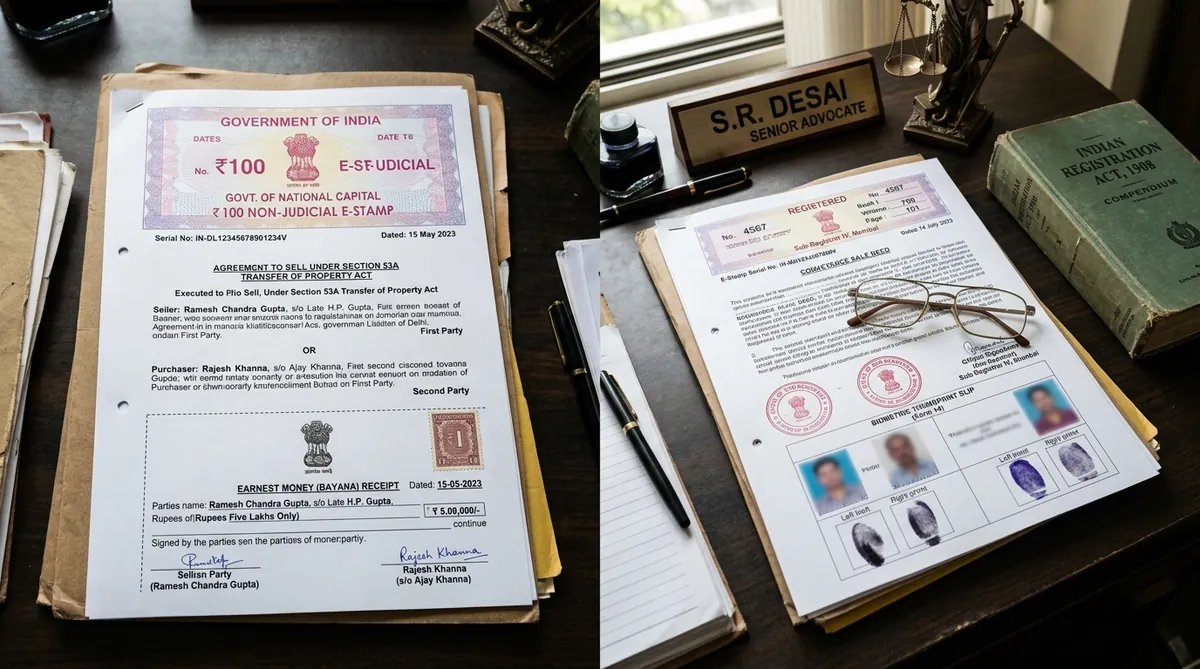
Real estate transactions in India are frequently exposed to sophisticated fraud, ranging from forged General Power of Attorney (GPA) documents and impersonation before the Sub-Registrar to sale deeds executed through undue influence or bouncing consideration cheques. When a fraudulent deed is registered, it casts a severe cloud on the true owner's title.
Unlike administrative revenue entries, a registered sale deed cannot be revoked by the Sub-Registrar unilaterally. The aggrieved owner's sole legal remedy lies in filing a civil suit for cancellation of the instrument under Section 31 of the Specific Relief Act, 1963, requiring compliance with stringent limitation and evidentiary thresholds.
Section 31 of the Specific Relief Act, 1963 allows an aggrieved person to seek judicial cancellation of a void or voidable sale deed that threatens serious injury. Grounds include forgery, impersonation, undue influence, or non-payment of consideration. Under Article 59 of the Limitation Act, suits must be filed within three years.
1. Statutory Scope of Section 31 Specific Relief Act
Section 31 provides equitable relief to extinguish instruments that threaten legal rights:
- Void vs. Voidable Instruments: A deed is void ab initio when executed through forgery, impersonation, or lack of title. A deed is voidable when executed through fraud, coercion, misrepresentation, or failure of consideration.
- Apprehension of Serious Injury: The plaintiff must satisfy the court that leaving the registered sale deed outstanding causes reasonable apprehension of serious commercial or legal injury.
- Notification to Sub-Registrar: Under Section 31(2), when the court cancels a registered sale deed, it sends a copy of its decree to the Sub-Registrar's office, who endorses cancellation on the registered copy in Book No. 1.
2. Substantive Grounds for Cancellation & Supreme Court Precedents
Civil Courts evaluate cancellation suits against rigorous legal tests:
The Supreme Court settled that plea of adverse possession under Article 65 of the Limitation Act can be used affirmatively by a plaintiff as a sword to seek a declaration of title, not merely as a defensive shield. In Suraj Lamp, the Court held that immovable property can only be legally conveyed through a registered deed of conveyance; transactions executed through General Power of Attorney (GPA), Sale Agreement, and Will do not confer legal title in immovable property.
"In Dahiben v. Arvindbhai Kalyanji Bhanusali (2020), the Supreme Court clarified that non-payment of part consideration does not automatically render a sale deed void if ownership was unconditionally transferred; however, fraudulent deception at inception justifies cancellation."
— Supreme Court of India ((2020) 7 SCC 366)
- Impersonation & Forgery: Where the true owner never signed the deed or appeared before the Sub-Registrar, the deed is a nullity and transfers zero title (Nemo dat quod non habet).
- Forged GPA / Power of Attorney: Following the landmark ruling in Suraj Lamp & Industries v. State of Haryana (2012), sales executed on unregistered, fabricated, or revoked GPAs are invalid and subject to cancellation.
- Vulnerable Persons & Undue Influence: Where deeds are procured from elderly, illiterate, or ailing owners through coercion or misrepresentation without independent legal advice.
3. Procedural Essentials: Limitation, Court Fees & Injunctions
Executing a successful cancellation suit demands strict compliance with procedural rules:
- Strict 3-Year Limitation (Article 59): Under Article 59 of the Limitation Act, 1963, a suit to cancel an instrument must be filed within three years from the date when the facts entitling the plaintiff to cancellation first became known to them.
- Court Fee Valuation: If the plaintiff is a party/executant to the deed, ad-valorem court fees on the instrument value are typically payable under the Court Fees Act, 1870. If the plaintiff is a non-executant third party seeking declaration that the forged deed does not bind them, fixed court fees under Section 7(iv)(c) often apply.
- Urgent Order 39 Injunction: The plaintiff must seek an ex-parte temporary injunction under Order 39 Rules 1 & 2 CPC to prevent the fraudulent purchaser from creating third-party rights, selling to innocent buyers, or altering physical possession.