
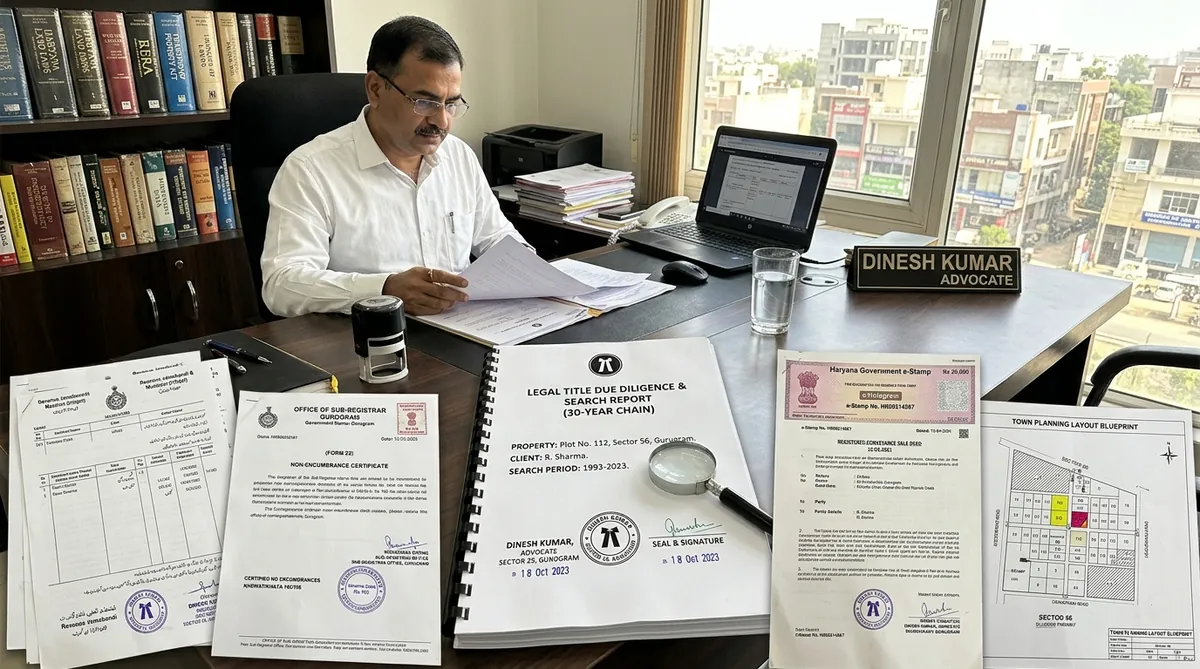
Purchasing residential properties or investment land in the name of one's spouse or children is a deeply ingrained familial and financial practice across India. However, following the stringent overhaul of the Prohibition of Benami Property Transactions Act, 1988 (PBPT Act) by the 2016 Amendment, the Income Tax Department's Benami Prohibition Units (BPU) have aggressively scrutinized such transactions.
Receiving a show-cause notice under Section 24 of the Benami Act can lead to provisional property attachment, confiscation by the Central Government, and rigorous criminal prosecution. Fortunately, the statute itself incorporates explicit exceptions designed to protect genuine family acquisitions financed through legitimate, documented earnings.
Under Section 2(9)(A)(b) of the Prohibition of Benami Property Transactions Act, property purchased by an individual in the name of their spouse or child is expressly excluded from benami classification, provided consideration was paid from known, legitimate income sources. Proving banking trails and tax disclosures rebuts confiscation notices effectively.
1. The Statutory Definition of Benami & Harsh Consequences
Under Section 2(9)(A) of the PBPT Act, a benami transaction occurs when:
- Dual Condition: A property is transferred to, or held by, a person (the benamidar), and the consideration for such property has been provided or paid by another person (the beneficial owner).
- Held for Immediate/Future Benefit: The property is held for the immediate or future benefit, direct or indirect, of the person who provided the consideration.
- Statutory Penalties: Under Section 27, properties established as benami are confiscated by the Central Government without compensation. Additionally, Section 53 prescribes rigorous imprisonment of up to 7 years and a monetary fine up to 25% of the fair market value.
2. The Statutory Exception for Spouse and Children
Recognizing legitimate Indian family structures, Parliament enacted a specific carve-out under Section 2(9)(A)(b):
"A transaction shall not be treated as benami where property is held by any person being an individual in the name of his spouse or in the name of any child of such individual and the consideration for such property has been provided or paid out of the known sources of the individual."
— Section 2(9)(A)(b), PBPT Act, 1988 (as amended)
To successfully establish this defense, two mandatory conditions must be satisfied:
- Biological/Spousal Relationship: The title holder must strictly be the lawful spouse or biological/adopted child of the person providing funds.
- Payment from Known Sources: The consideration must demonstrably originate from the funder's disclosed income, white banking channels, audited business withdrawals, or legitimate savings reported in Income Tax Returns (ITR).
3. Discharging the Onus of Proof & Apex Court Protections
When defending against Section 24 show-cause notices from the Initiating Officer (IO):
- Documentary Proof: The beneficial owner must produce bank account statements showing direct RTGS/cheque debit to the seller, ITR filings covering the year of acquisition, and loan sanctions.
- Custody of Documents & Possession: Demonstrating that the family resides together and that the acquisition was intended for family welfare rather than concealing unaccounted wealth.
- Non-Retroactivity Protection: In Union of India v. Ganpati Dealcom Pvt. Ltd. (2022), the Supreme Court declared that the expanded penal provisions introduced by the 2016 Amendment Act cannot be applied retrospectively to transactions conducted prior to October 25, 2016.
Landmark Judicial Precedents & Statutory Authorities
Courts and appellate tribunals across Delhi NCR (Faridabad, Saket, Tis Hazari, Gurugram, High Courts) strictly apply these authoritative Supreme Court benchmarks:
The Supreme Court reaffirmed the three mandatory golden tests for grant of interlocutory injunctions under Order XXXIX Rules 1 and 2 of the Code of Civil Procedure: (i) strong prima facie case, (ii) balance of convenience tilted in applicant's favor, and (iii) imminent threat of irreparable injury not compensable in monetary damages. The Court held that temporary relief cannot be granted mechanically without judicial application of mind.