
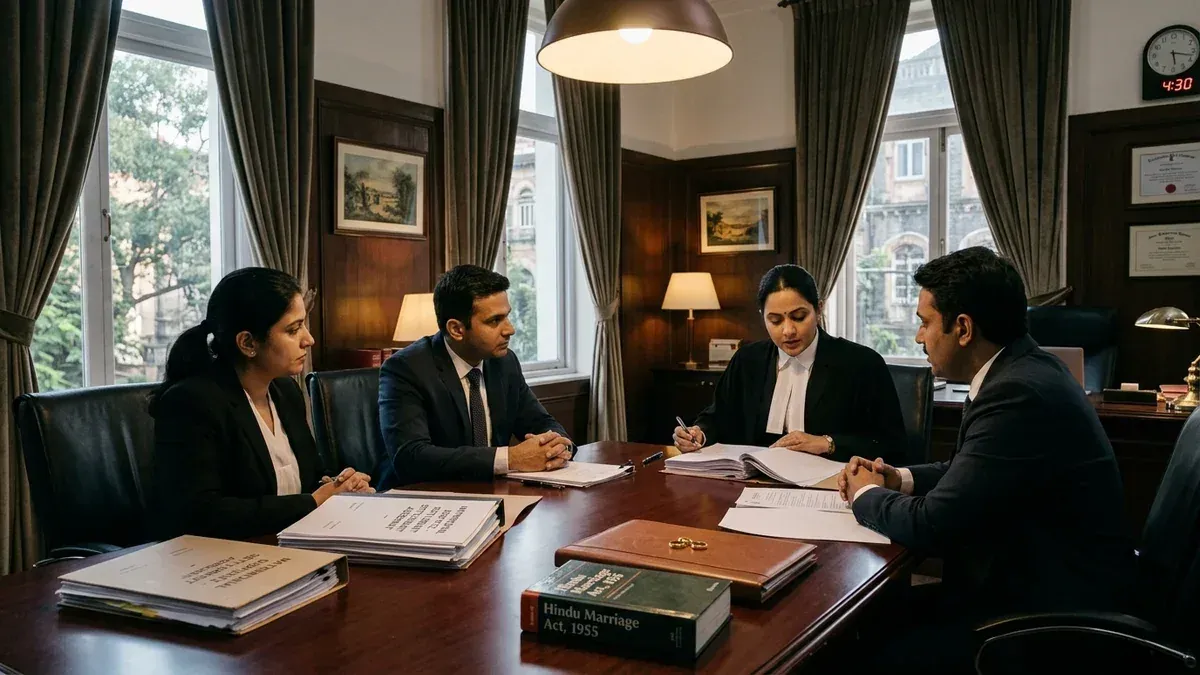
In Indian matrimonial personal law and criminal jurisprudence, few concepts are as culturally revered, economically significant, and litigated as Stridhan. Originating in classical Hindu jurisprudence, Stridhan denotes all movable and immovable properties, gold jewelry, silver ornaments, cash, vehicles, securities, and household articles gifted to a woman before, at the time of, or subsequent to her marriage by her parents, relatives, husband, or in-laws.
Unlike general marital property, Stridhan is NOT joint matrimonial wealth. As authoritatively declared by the historic Three-Judge Bench of the Supreme Court of India in Pratibha Rani v. Suraj Kumar (1985) 2 SCC 370, Stridhan remains the absolute, exclusive, and inalienable property of the woman. The husband and his family members hold Stridhan merely in the fiduciary capacity of custodians or trustees. If the marriage breaks down and the husband or in-laws refuse to return the Stridhan articles upon demand, they commit the serious criminal offence of Criminal Breach of Trust, formerly punishable under Section 405/406 of the Indian Penal Code, 1860 (IPC), now recodified as Section 316 of the Bharatiya Nyaya Sanhita, 2023 (BNS).
Conversely, in contemporary matrimonial litigation, Stridhan claims are frequently subject to catastrophic distortion and abuse. When matrimonial discord emerges, estranged spouses and their families often exchange wildly conflicting claims. Complainants frequently submit astronomical, fabricated lists claiming hundreds of tolas of gold and luxury automobiles that were never given, seeking the arrest of aged in-laws. In defense, husbands and in-laws routinely falsely deny having received even basic wedding gifts.
To resolve this evidentiary nightmare, Parliament framed a mandatory statutory shield: Rule 2 of the Dowry Prohibition (Maintenance of Lists of Presents to the Bride and Bridegroom) Rules, 1985. This rule establishes a strict legal protocol for preparing and executing signed, contemporaneous inventories of wedding presents at the time of solemnization. This treatise provides an exhaustive analysis of Stridhan jurisprudence under the BNS, the mandatory mechanics of Rule 2 compliance, and the strategic protocols for recovering or defending Stridhan in criminal and Family Courts.
Stridhan is a woman's absolute property under the Supreme Court's landmark Pratibha Rani doctrine. Spouses and in-laws hold it merely as trustees. Refusal to return Stridhan upon demand constitutes Criminal Breach of Trust under Section 316 BNS. Executing signed inventories under Rule 2 Dowry Prohibition Rules 1985 establishes conclusive ownership.
1. The Legal Concept of Stridhan and the *Pratibha Rani* Trust Doctrine
To understand the criminal dimensions of Stridhan, one must examine the landmark Three-Judge Bench decision of the Supreme Court of India in Pratibha Rani v. Suraj Kumar (1985) 2 SCC 370. In this historic verdict, the Supreme Court permanently settled the nature of a woman's ownership over her wedding gifts:
The Core Legal Principles Laid Down in Pratibha Rani v. Suraj Kumar:
"1. Absolute Ownership: Stridhan property is the absolute property of a Hindu woman. She has complete dominion, control, and ownership over it, and can dispose of it in any manner she likes.
2. Fiduciary Trust Relationship: When a married woman enters her matrimonial home and deposits her ornaments, jewelry, and gifts with her husband or in-laws for safekeeping, the husband and his relatives hold the property purely in trust, as bailees or trustees.
3. Refusal Constitutes Criminal Breach of Trust: The moment the wife demands the return of her Stridhan and the husband or in-laws refuse, retain, or convert the property to their own use, the fiduciary trust is breached. The retention constitutes a full-fledged criminal offence under Section 406 IPC (now Section 316 BNS)."
The Supreme Court held that the existence of a marital relationship does not extinguish a woman's property rights or shield a dishonest spouse from the criminal law. In Rashmi Kumar v. Mahesh Kumar Bhada (1997) 2 SCC 397, the Apex Court reiterated: "The properties gifted to her before the marriage, at the time of marriage, or at the time of giving birth to children are her Stridhan properties. For the said properties, the husband is only a custodian, and if he fails to return the same on demand, he is liable to be prosecuted for criminal breach of trust."
In Bobbili Ramakrishna Raju Yadav v. State of Andhra Pradesh (2016) 3 SCC 309, the Supreme Court clarified that a criminal prosecution under Section 406 IPC / Section 316 BNS is completely independent of civil proceedings. A wife is not relegated to filing a protracted civil suit; she possesses an absolute statutory right to invoke criminal law against her husband and in-laws for misappropriating her Stridhan.
2. Criminal Breach of Trust under Section 316 BNS: Statutory Ingredients
The offence of Criminal Breach of Trust is codified under Section 316 of the Bharatiya Nyaya Sanhita, 2023, replacing the erstwhile Sections 405 and 406 of the Indian Penal Code:
Section 316(1), Bharatiya Nyaya Sanhita, 2023 (Old Section 405 IPC):
"Whoever, being in any manner entrusted with property, or with any dominion over property, dishonestly misappropriates or converts to his own use that property, or dishonestly uses or disposes of that property in violation of any direction of law prescribing the mode in which such trust is to be discharged, or of any legal contract, express or implied, which he has made touching the discharge of such trust, or wilfully suffers any other person so to do, commits 'criminal breach of trust'."
Section 316(2), BNS, 2023 (Old Section 406 IPC):
"Whoever commits criminal breach of trust shall be punished with imprisonment of either description for a term which may extend to five years, or with fine, or with both."
To sustain a valid conviction under Section 316 BNS in a Stridhan prosecution, the complainant must establish four indispensable statutory ingredients:
- Entrustment of Property: Proof that specific, identifiable Stridhan articles were physically entrusted to the custody of the accused (e.g., handing over gold necklaces to the mother-in-law for placement in a joint bank locker).
- Dominion Over Property: Proof that the accused exercised control, possession, and dominion over the articles to the exclusion of the wife.
- Unequivocal Demand and Refusal: Proof of a clear, formal demand made by the wife (such as a written legal notice or registered communication) requesting the immediate return of her Stridhan, followed by an express refusal or failure to return by the accused.
- Dishonest Misappropriation (Mens Rea): Proof that the retention, pledge, sale, or conversion of the property was done dishonestly with intent to cause wrongful gain to the accused or wrongful loss to the wife.
In Sangeeta Balkrishna Tarke v. Balkrishna Tarke (Bombay HC 2024), the High Court emphasized that general, omnibus allegations that "in-laws kept all jewelry" without specifying which relative received which specific ornaments do not satisfy the threshold of Section 316 BNS. Specificity in entrustment is paramount.
3. Mandatory Compliance: Rule 2 Dowry Prohibition Rules, 1985
To prevent both the extortionate demand for dowry and the subsequent fabrication of exaggerated Stridhan claims, the Central Government framed the Dowry Prohibition (Maintenance of Lists of Presents to the Bride and Bridegroom) Rules, 1985 under Section 9 of the Dowry Prohibition Act, 1961.
Rule 2 establishes a mandatory, binding statutory protocol that must be executed at the time of the wedding solemnization:
Rule 2, Dowry Prohibition (Maintenance of Lists of Presents) Rules, 1985:
"1. The list of presents which are given at the time of the marriage to the bride shall be maintained by the bride.
2. The list of presents which are given at the time of the marriage to the bridegroom shall be maintained by the bridegroom.
3. Every list of presents... shall—
(a) be prepared in writing at the time of the marriage or as soon as possible after the marriage;
(b) contain a brief description of each present;
(c) contain the approximate value of the present;
(d) contain the name of the person who has given the present; and
(e) where the person giving the present is related to the bride or bridegroom, a statement of the relationship.
4. The list of presents shall be signed by both the bride and the bridegroom."
Compliance with Rule 2 produces profound evidentiary consequences in criminal trials:
| Statutory Requirement | Evidentiary Value for the Wife (Complainant) | Protective Shield for Husband & In-Laws |
|---|---|---|
| Contemporaneous Writing | Provides unimpeachable proof of the existence, weight, and valuation of jewelry given at marriage. | Prevents the wife's family from manufacturing retrospective claims of non-existent gifts years later. |
| Signed by Both Spouses | Establishes the husband's formal admission of receipt and acknowledgment of Stridhan items. | Limits the husband's liability strictly to the items acknowledged in writing under his signature. |
| Identification of Giver | Confirms whether gifts were customary presents exempt from the definition of illegal dowry under Section 3(2) DPA. | Shields in-laws from false claims regarding gifts allegedly presented by distant third parties. |
4. Distinguishing Stridhan from Unlawful Dowry under Section 316 BNS & DPA
A critical distinction in criminal practice is the legal demarcation between Stridhan and Dowry:
- Dowry (Section 2, Dowry Prohibition Act, 1961): Dowry means any property or valuable security given or agreed to be given directly or indirectly as consideration for the marriage. Demanding or giving dowry is a non-bailable criminal offence punishable with a minimum of five years imprisonment under Section 3 DPA.
- Customary Stridhan Presents (Section 3(2) DPA): Section 3(2) of the Dowry Prohibition Act explicitly exempts customary presents given to the bride or bridegroom at the time of marriage without any demand, provided that such presents are entered in the lists maintained in accordance with the 1985 Rules, and are of customary value commensurate with the financial status of the giver.
- The Legal Trap for Complainants: In Neera Singh v. State (Govt. of NCT of Delhi) (2007) 138 DLT 152, the Delhi High Court warned that when a complainant's parents claim they paid massive cash amounts of ₹50 Lakhs or gave luxury vehicles as "dowry demands," the parents themselves admit to committing an offence under Section 3 of the Dowry Prohibition Act by giving dowry. By categorizing wedding items as customary Stridhan presents under Rule 2, the family protects its legal standing while establishing exclusive ownership.
5. Strategic Litigation Protocol: Recovering Stridhan and Defending Against False Claims
Whether seeking the urgent return of Stridhan or defending against fabricated, extortionate inventories, litigants must adhere to a structured legal roadmap:
Operational Checklist: Stridhan Recovery and Defense Blueprint
- For Wives Seeking Recovery of Stridhan:
- Assemble the comprehensive documentary foundation: original jewelry purchase invoices, BIS Hallmark certificates, credit card payment receipts, and wedding video footage showing the wearing and presentation of ornaments.
- Issue a formal Statutory Notice of Demand via Registered Post with Acknowledgment Due (RPAD) calling upon the husband and in-laws to return the specific Stridhan items within 15 days. Specify the bank locker location where the items are held.
- Simultaneously invoke multi-forum remedies:
- File a criminal complaint under Section 316 BNS (Criminal Breach of Trust) and Section 85 BNS (Cruelty) before the police or Magistrate under Section 175(3) BNSS.
- File an application under Section 19(8) and Section 12 of the PWDVA, 2005 before the Magistrate seeking an immediate ex-parte residence and return-of-Stridhan order.
- Pray for a Search Warrant under Section 96 BNSS (old Section 93 CrPC) or Section 103 BNSS to empower police to search the matrimonial home and open bank lockers to seize Stridhan.
- For Husbands and In-Laws Defending Against Exaggerated Claims:
- Demand strict production of Rule 2 Lists of Presents executed at the time of solemnization. If no signed list exists, highlight the violation of statutory rules.
- Challenge financial capacity: Subpoena the Income Tax Returns (ITRs) of the wife's parents under Section 106 BSA to demonstrate that the claimed hundreds of tolas of gold far exceed the family's declared taxable income, establishing financial impossibility.
- Preserve Bank Locker Records: Secure certified bank visitor logbooks showing that the wife operated the bank locker independently on multiple occasions post-separation, demonstrating that she withdrew her personal jewelry prior to leaving the matrimonial home.
- Proactively deposit undisputed personal belongings (clothes, appliances, personal gifts) into court during bail or anticipatory bail proceedings to establish bona fides and eliminate custodial interrogation grounds.
Through strict statutory compliance with Rule 2 of the 1985 Rules and precise application of the *Pratibha Rani* doctrine, families can safeguard the sacred sanctity of wedding gifts while defending against vindictive litigation abuse.
Landmark Judicial Precedents & Statutory Authorities
Courts and appellate tribunals across Delhi NCR (Faridabad, Saket, Tis Hazari, Gurugram, High Courts) strictly apply these authoritative Supreme Court benchmarks:
The Supreme Court mandated comprehensive procedural guidelines across all maintenance proceedings in India (Section 125 CrPC / Section 144 BNSS, DV Act, HMA Section 24), requiring both spouses to file comprehensive Affidavits of Assets and Liabilities. The Bench established that maintenance must be awarded from the date of application to prevent procedural delays from prejudicing dependent spouses and minor children.