
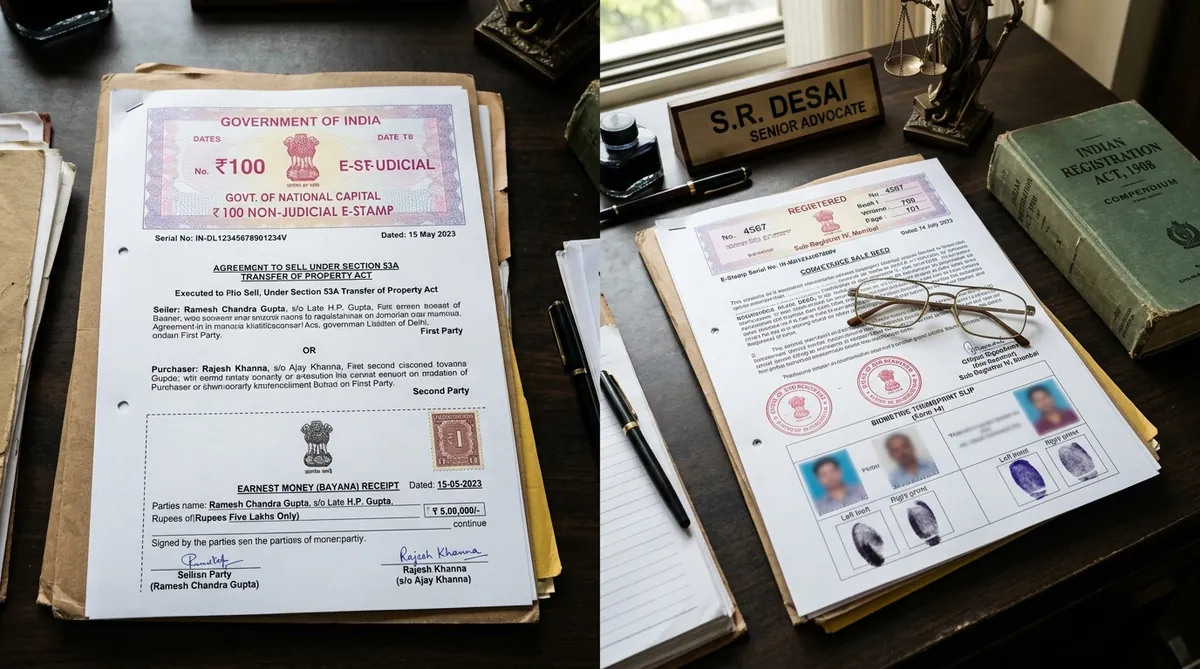
Under the historical framework of the Specific Relief Act, 1963, specific performance of a contract was regarded as an exceptional, equitable, and purely discretionary remedy. Civil courts routinely declined to enforce contractual covenants, directing aggrieved parties to settle for monetary damages under Section 73 of the Indian Contract Act unless damages were proven wholly inadequate.
The enactment of the Specific Relief (Amendment) Act, 2018 fundamentally revolutionized Indian commercial and property jurisprudence. By replacing judicial discretion with a mandatory statutory command under amended Section 10, Parliament established specific performance as the standard statutory rule, bringing certainty to property conveyances and commercial infrastructure contracts.
The Specific Relief (Amendment) Act 2018 fundamentally transformed Indian contract litigation by amending Section 10, replacing discretionary equitable relief with a mandatory statutory command. Civil courts are now legally obligated to grant specific performance of contracts, subject only to narrow limited statutory exceptions specified under Section 11(2), 14, and 16.
1. The Section 10 Paradigm Shift: 'Court May' to 'Court Shall'
Prior to October 2018, Section 20 of the Specific Relief Act vested courts with wide discretion to refuse specific performance, even where a valid contract existed.
The 2018 Amendment repealed old Section 20 and substituted Section 10 with explicit, mandatory terminology:
"The specific performance of a contract shall be enforced by the court subject to the provisions contained in sub-section (2) of section 11, section 14 and section 16."
— Section 10, Specific Relief Act, 1963 (as amended by Act 18 of 2018)
- Elimination of Discretion: The deliberate legislative substitution of the permissive word "may" with the mandatory word "shall" obligates the civil court to decree specific performance once execution of a valid agreement is proved.
- Damages No Longer the Default: The traditional burden of proving that monetary compensation was inadequate has been completely dismantled. Specific performance is now an entitlement rather than an indulgence.
2. Non-Enforceable Contracts: Statutory Exceptions under Section 14
The court's mandatory duty to enforce contracts is circumscribed only by the narrow statutory boundaries set out in Section 14:
- Substituted Performance: Where a party has obtained substituted performance of contract in accordance with the provisions of Section 20.
- Continuous Duty Supervision: A contract the performance of which involves the performance of a continuous duty which the court cannot supervise (e.g., complex multi-year management covenants).
- Personal Qualifications: A contract which is so dependent on the personal qualifications of the parties that the court cannot enforce specific performance of its material terms (such as employment, artistic performances, or specialized partnerships).
- Determinable Contracts: A contract which is in its nature determinable (e.g., commercial agreements containing clauses allowing termination by either party at will or by giving simple notice).
3. Prospective Applicability: Katta Sujatha Reddy & B. Santoshamma
The legal question of whether the 2018 amendment applies retrospectively to pending suits or contracts executed before October 1, 2018 caused conflicting High Court opinions until the Supreme Court intervened:
- Prospective Nature Settled: In Katta Sujatha Reddy v. Siddamsetty Infra Projects Pvt. Ltd. (2022) SCC OnLine SC 1079, the Supreme Court held that the 2018 amendments create substantive rights and liabilities, making them strictly prospective. Contracts executed before October 1, 2018 continue to be governed by the unamended, discretionary regime.
- Enforcing Partial Performance: In B. Santoshamma v. D. Sarala (2020) 19 SCC 80, the Supreme Court highlighted the legislative intent to enforce contract sanctity, granting partial specific performance under Section 12 where the vendor held title to only a share of the contracted land.
Landmark Judicial Precedents & Statutory Authorities
Courts and appellate tribunals across Delhi NCR (Faridabad, Saket, Tis Hazari, Gurugram, High Courts) strictly apply these authoritative Supreme Court benchmarks:
The Supreme Court reaffirmed the three mandatory golden tests for grant of interlocutory injunctions under Order XXXIX Rules 1 and 2 of the Code of Civil Procedure: (i) strong prima facie case, (ii) balance of convenience tilted in applicant's favor, and (iii) imminent threat of irreparable injury not compensable in monetary damages. The Court held that temporary relief cannot be granted mechanically without judicial application of mind.