
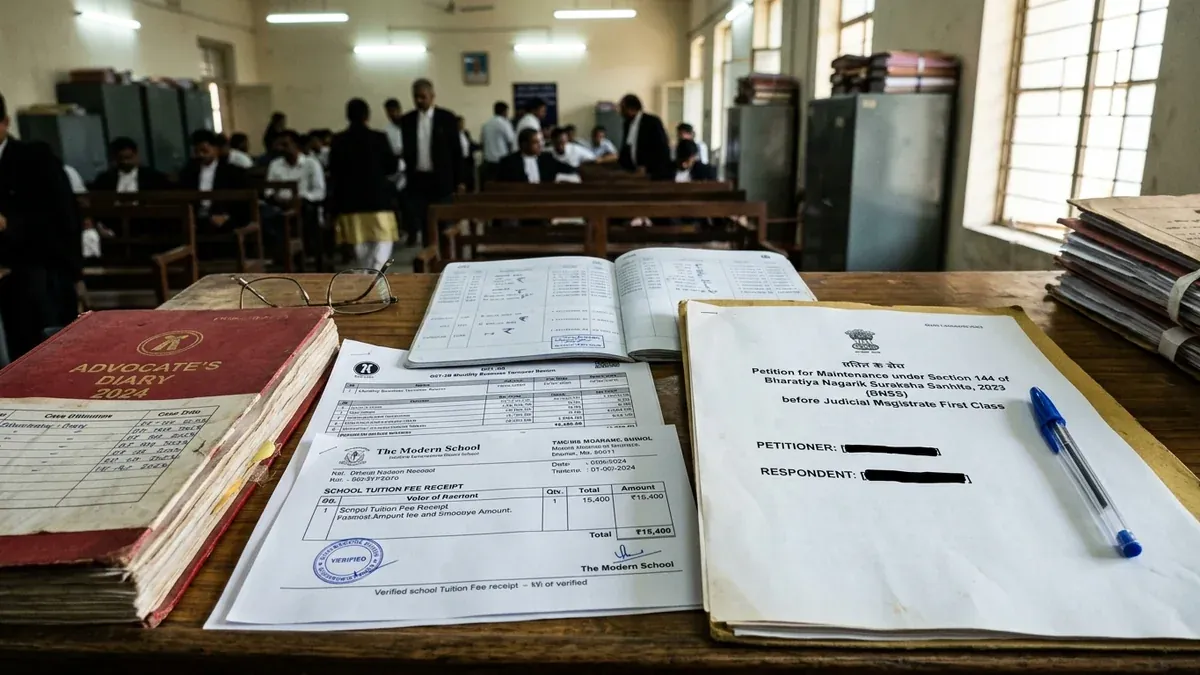
Section 144 of the Bharatiya Nagarik Suraksha Sanhita, 2023 (BNSS) carries forward the venerable social justice provisions of Section 125 of the erstwhile Code of Criminal Procedure, 1973 (CrPC). Designed as a summary, quasi-criminal measure to prevent destitution and vagrancy, Section 144 empowers Judicial Magistrates of the first class to order monthly maintenance for wives, legitimate or illegitimate minor children, and aged parents who are unable to maintain themselves.
However, with the rapid socio-economic transformation of urban India, maintenance litigation has increasingly collided with the reality of highly qualified, professionally employed working wives. Courts across India are routinely called upon to strike a delicate balance between providing genuine interim support and preventing maintenance from becoming an instrument of commercial extortion or disincentive to work.
Under Section 144 BNSS, Magistrates can award monthly maintenance to wives, minor children, and parents unable to maintain themselves. While interim maintenance applications must be decided within 60 days, defense counsel can prove the wife's independent income, voluntary abandonment, or adultery to successfully reduce or defeat claims.
1. Statutory Architecture of Section 144 BNSS
Section 144(1) BNSS states that if any person having sufficient means neglects or refuses to maintain:
- His wife, unable to maintain herself; or
- His legitimate or illegitimate minor child, whether married or not, unable to maintain itself; or
- His father or mother, unable to maintain himself or herself;
A Magistrate of the first class may, upon proof of such neglect or refusal, order such person to make a monthly allowance for the maintenance. Crucially, under the second proviso to Section 144(1), an application for interim maintenance and litigation expenses must be disposed of within sixty days from the date of service of notice to the respondent.
2. The Working Wife Defense: Earning Capacity vs. Actual Earnings
A critical legal battleground in Section 144 litigation is whether an educated wife capable of earning is entitled to maintenance:
"There is a legal distinction between 'capable of earning' and 'actually earning'. Merely because the wife holds professional degrees (MBA, B.Tech, LLB) does not automatically disentitle her to maintenance if she sacrificed her career to raise children. However, if she voluntarily abandoned her lucrative employment to extract maintenance, courts will impute income to her."
— Delhi High Court in Damanpreet Kaur v. Meet Verma (2019)
Where the wife is actively employed and earning an income sufficient to maintain her matrimonial standard of living, the Supreme Court in Bhagwan Dutt v. Kamla Devi affirmed that her independent income must be factored in, leading to dismissal or substantial reduction of maintenance claims.
3. Statutory Disqualifications under Section 144(4) BNSS
Under Section 144(4) BNSS, a wife is legally barred from receiving any maintenance or interim allowance if:
- Living in Adultery: The husband proves through tangible documentary or electronic evidence that the wife is residing in an adulterous relationship.
- Refusal to Live Together Without Just Ground: The wife refuses to live with her husband without any sufficient or justifiable reason (e.g. unsubstantiated dowry claims).
- Mutual Separation: The parties are living separately by mutual agreement or consent.
Landmark Judicial Precedents & Statutory Authorities
Courts and appellate tribunals across Delhi NCR (Faridabad, Saket, Tis Hazari, Gurugram, High Courts) strictly apply these authoritative Supreme Court benchmarks:
The Supreme Court mandated comprehensive procedural guidelines across all maintenance proceedings in India (Section 125 CrPC / Section 144 BNSS, DV Act, HMA Section 24), requiring both spouses to file comprehensive Affidavits of Assets and Liabilities. The Bench established that maintenance must be awarded from the date of application to prevent procedural delays from prejudicing dependent spouses and minor children.