
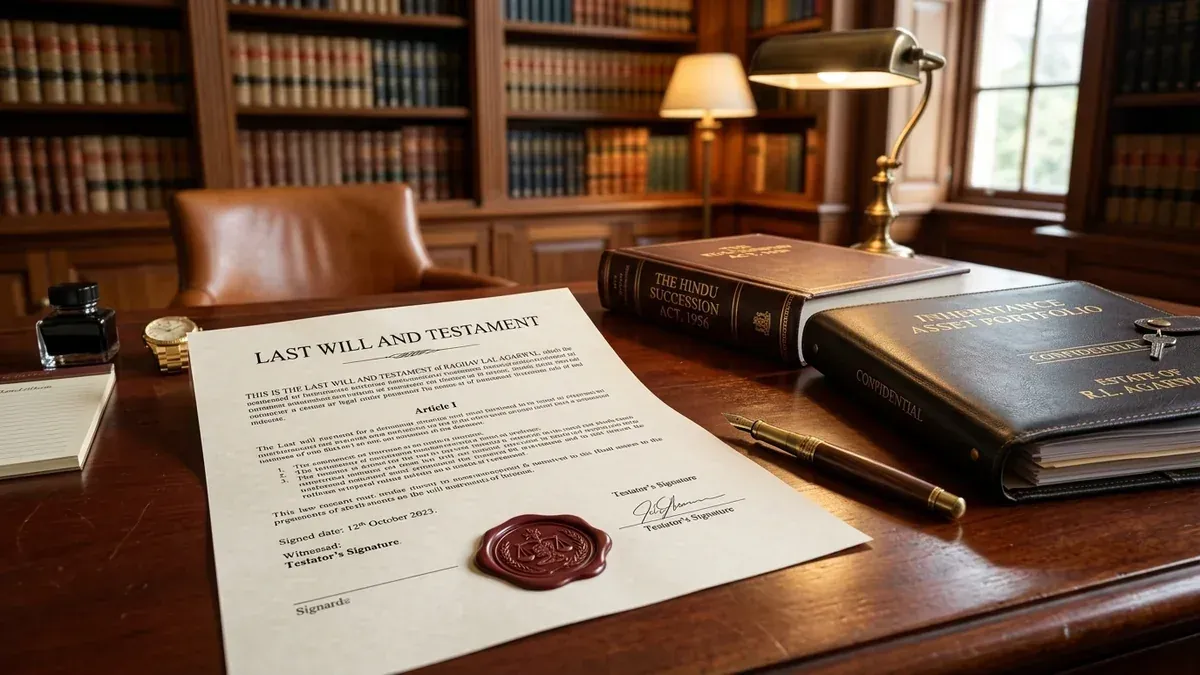
Under traditional property jurisprudence governed by Section 126 of the Transfer of Property Act, 1882, an unconditional, registered gift deed of immovable property is irrevocable once accepted by the donee. For generations, unscrupulous adult children exploited this rigid legal protection: they persuaded aging, emotionally vulnerable parents to transfer their life savings, residential homes, or ancestral land through registered gift deeds on the verbal promise of lifelong care—only to subject them to severe physical abuse, starvation, or outright expulsion once title was safely transferred.
To combat this heartbreaking social evil, Parliament enacted a radical statutory remedy: Section 23 of the Maintenance and Welfare of Parents and Senior Citizens Act, 2007. Overriding the Transfer of Property Act and the Registration Act, Section 23 creates a revolutionary legal fiction: where a senior citizen transfers property on the condition of receiving care and maintenance, and the transferee child subsequently neglects or abuses them, the law presumes that the transfer was procured by fraud, coercion, or undue influence, empowering the Maintenance Tribunal to summarily declare the gift deed void.
However, securing the cancellation of a gift deed before the Sub-Divisional Magistrate (SDM) acting as Maintenance Tribunal requires navigating acute legal hurdles. Following the strict Supreme Court ruling in Sudesh Chhikara v. Ramti Devi (2022), parents and estate counsel must understand the vital difference between conditional and unconditional gift deeds, how tribunals evaluate neglect, and how to craft bulletproof maintenance clauses that prevent children from successfully challenging tribunal orders before High Courts.
Under Section 23 of the Senior Citizens Act 2007, a Maintenance Tribunal can declare property transfers or gift deeds void if transferee children fail to provide basic physical amenities. Deemed executed through fraud or undue influence, such conditional deeds are revocable upon establishing neglect, restoring absolute ownership to senior parents.
1. Statutory Architecture of Section 23: The Legal Fiction of Fraud
The core statutory power enabling Maintenance Tribunals to nullify property conveyances is codified under Section 23 of the Senior Citizens Act, 2007:
"Section 23(1): Where any senior citizen who, after the commencement of this Act, has transferred by way of gift or otherwise, his property, subject to the condition that the transferee shall provide the basic amenities and basic physical needs to the transferor and such transferee refuses or fails to provide such amenities and physical needs, the said transfer of property shall be deemed to have been made by fraud or coercion or under undue influence and shall at the option of the transferor be declared void by the Tribunal."
Section 23 incorporates three distinct statutory limbs:
- Temporal Pre-Condition: The transfer must have taken place after the commencement of the Act in that specific State (e.g., in Delhi, the Act was notified in 2008; transfers prior to 2008 cannot be nullified under Section 23).
- The Conditional Transfer Requirement: The transfer must be subject to the condition that the transferee shall provide basic amenities and physical needs (food, clothing, residence, medical care).
- The Deeming Fiction of Fraud: Upon proof of failure to maintain, the tribunal does not require extensive common law evidence of fraud; the statute automatically deems the deed to have been executed under fraud or undue influence, terminating title.
- Protection Against Third Parties (Section 23(2)): Where a senior citizen has a right to receive maintenance out of an estate and such estate is transferred to a third party with notice of the right, the right may be enforced against the transferee.
Importantly, Section 23 applies not only to formal gift deeds, but to any transfer made "by way of gift or otherwise." This broad phrasing empowers tribunals to review and nullify release deeds, relinquishment deeds (Haq Tyag), or family settlement transfers where a senior citizen surrendered their property shares to a child based on unfulfilled promises of maintenance.
2. The Landmark Sudesh Chhikara Ruling: Express vs. Implied Conditions
For years, High Courts were deeply divided on whether the condition of providing maintenance had to be expressly written into the four corners of the gift deed, or whether it could be inferred from the natural parent-child relationship. This controversy was authoritatively resolved by the Supreme Court in Sudesh Chhikara v. Ramti Devi ((2022) SCC OnLine SC 1684):
The Supreme Court reaffirmed the three mandatory golden tests for grant of interlocutory injunctions under Order XXXIX Rules 1 and 2 of the Code of Civil Procedure: (i) strong prima facie case, (ii) balance of convenience tilted in applicant's favor, and (iii) imminent threat of irreparable injury not compensable in monetary damages. The Court held that temporary relief cannot be granted mechanically without judicial application of mind.
"The Supreme Court held that for Section 23(1) to apply, two conditions must be cumulatively satisfied: firstly, the transfer must be subject to the condition that the transferee shall provide basic amenities and basic physical needs; and secondly, the transferee must have failed or refused to provide the same. If the transfer deed is an absolute, unconditional gift out of natural love and affection containing no condition of maintenance, Section 23 cannot be invoked to cancel the deed."
This decision represents a seismic shift in estate litigation. If an elderly parent executes a standard, unvarnished gift deed prepared by a local deed writer reciting merely "out of natural love and affection," an ungrateful child can argue before the High Court that the Maintenance Tribunal lacked jurisdiction under Section 23 to revoke the transfer!
However, numerous High Courts (including the Delhi High Court in Sunny Paul v. State NCT of Delhi and the Punjab & Haryana High Court) have clarified that where surrounding contemporaneous evidence, mutual undertakings, or family settlement records confirm that the gift was conditional, the tribunal retains jurisdiction to revoke the instrument.
3. Procedural Framework: Filing before the SDM Maintenance Tribunal
Unlike civil court trials that drag on for decades under the Code of Civil Procedure, proceedings before the Maintenance Tribunal are summary, swift, and citizen-friendly:
- Filing the Application (Section 5 read with Section 23): The senior citizen files a petition before the Sub-Divisional Magistrate (SDM) designated as the Maintenance Tribunal of the sub-division where the senior citizen resides or where the property is situated.
- Statutory Bar on Legal Practitioners (Section 17): Under Section 17 of the Act, no party to a proceeding before a Tribunal or Appellate Tribunal can be represented by a legal practitioner as of right. While advocates frequently assist in drafting petitions, proceedings are conducted directly before the presiding magistrate or through designated Maintenance Officers.
- Mandatory 90-Day Adjudication Window: Under Section 5(4), the Tribunal must endeavor to dispose of the application within 90 days from the date of service of notice to the children.
- Restoration of Title & Eviction of Transferee: Upon declaring the gift deed void, the Tribunal directs the Sub-Registrar to cancel the registered deed in revenue records, mutates the property back into the parent's name, and directs local police under Section 22 to evict the abusive children from the premises.
Can Tribunals Cancel Transfers Made by Children to Third-Party Buyers?
A devious strategy often employed by children facing Section 23 proceedings is to quickly execute a sham sale deed or agreement to sell in favor of an outside third-party buyer. Under Section 23(2) of the Act, if the third-party purchaser had notice of the senior citizen's maintenance rights or if the transfer was executed pendente lite during tribunal proceedings, the tribunal can declare the subsequent transfer void and direct cancellation in revenue records, restoring unencumbered ownership to the elderly parent.
4. Harmonization: Senior Citizens Act vs. Daughter-in-Law's Domestic Violence Rights
A fierce battleground in urban property litigation arises when an elderly parent seeks to cancel a gift deed or evict a son and daughter-in-law under the Senior Citizens Act, while the daughter-in-law resists eviction by claiming a statutory right of residence in a "shared household" under Section 17 and 19 of the Protection of Women from Domestic Violence Act, 2005 (PWDVA).
The Supreme Court Harmonization Test: S. Vanitha (2021)
In the landmark three-judge ruling in S. Vanitha v. Deputy Commissioner, Bengaluru Urban ((2021) 15 SCC 730), the Supreme Court harmonized these two competing social welfare statutes:
- Non-Obstante Clause Balance: Both statutes contain overriding non-obstante clauses. The Court held that the Senior Citizens Act cannot be utilized as a mechanical, collusive tool by a husband and his parents to evict a distressed daughter-in-law from her matrimonial shared household.
- Equitable Judicial Assessment: The Maintenance Tribunal must evaluate the competing claims. If the daughter-in-law is genuinely a victim of domestic violence, the tribunal can direct the son to provide alternative accommodation or rental maintenance before enforcing property restoration in favor of the elderly parents.
5. Preventive Drafting Protocol: How Parents Must Structure Gift Deeds
To ensure complete legal safety under Section 23 of the Senior Citizens Act, estate planners and elderly property owners must abandon standard unconditional gift deed templates:
- Mandatory Statutory Recital: The gift deed must explicitly recite: "This gift is executed subject to the express condition under Section 23 of the Senior Citizens Act, 2007 that the Donee shall continuously provide all basic amenities, food, shelter, clothing, medical care, and emotional welfare to the Donor throughout their natural life."
- Explicit Revocation Trigger Clause: Incorporate a specific clause: "In the event the Donee fails or refuses to provide such care, this gift deed shall automatically be deemed to have been executed under undue influence and fraud, and the Donor reserves the absolute right to have the same declared void under Section 23 of the Act."
- Retention of Life Interest: The parent should reserve an exclusive, registered Life Interest (Life Estate) in the property, retaining the exclusive right to reside in and enjoy rental income from the premises during their lifetime.
- Incorporate Immediate Eviction Clause: Specify that upon violation of the maintenance covenant, the donee child's occupation shall instantly transform into that of an unauthorized trespasser subject to immediate police eviction under Rule 22.
- Execute Tripartite Undertakings: Where multiple children are involved, have all adult siblings sign a contemporaneous tripartite family covenant acknowledging that the gift is made strictly conditional upon continuous parental care, thereby eliminating any subsequent claims that the gift was an absolute reward for past services.
Senior citizens must also ensure that they maintain an independent diary or electronic communication record of all requests made for medical care or maintenance allowances. If the child transfers the property to an offshore NRI sibling or attempts to raise bank mortgages against the gifted asset, contemporaneous documentation enables the Maintenance Tribunal to immediately issue freezing orders restraining banks and registrar offices under Section 23(2) of the Act.