
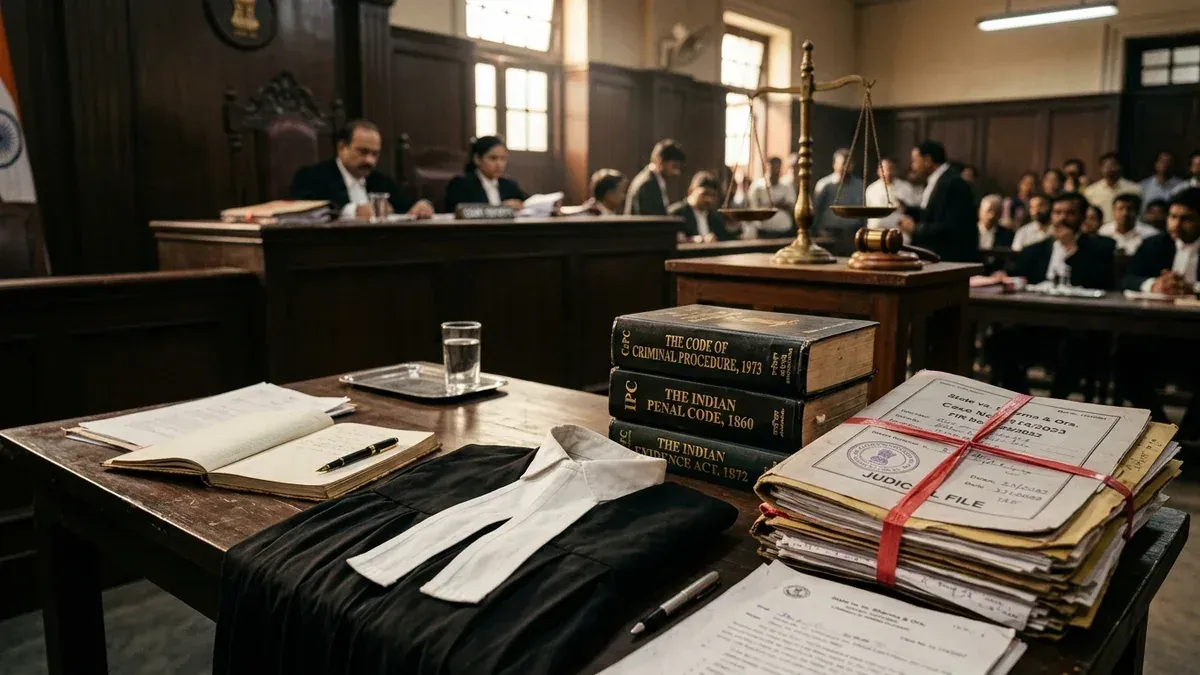
A widespread procedural myth persists in trial courts across Delhi NCR, Gurugram, and Faridabad: whenever an accused moves a High Court under Section 482 of the Code of Criminal Procedure, 1973 (now Section 528 of the Bharatiya Nagarik Suraksha Sanhita, 2023 [BNSS]) to quash an FIR, the police hurriedly file a Final Report / Charge-Sheet under Section 173 CrPC (Section 193 BNSS). Public prosecutors routinely contend that once a charge-sheet is filed or cognizance is taken by the trial Magistrate, the petition to quash the FIR becomes infructuous and the High Court loses jurisdiction.
That procedural hurdle was conclusively dismantled by the Supreme Court of India in Anand Kumar Mohatta & Anr. v. State (NCT of Delhi) (2019) 11 SCC 706. A division bench comprising Justice R. Banumathi and Justice Indira Banerjee ruled that the High Court's inherent power to prevent abuse of process is plenary and can be exercised at any stage, whether during investigation, upon submission of charge-sheet, or even after charges are framed.
The High Court's inherent power under Section 482 CrPC / Section 528 BNSS is not restricted to the pre-chargesheet stage. If the allegations in the FIR and charge-sheet do not disclose the essential ingredients of a cognizable offence, or if a civil dispute is deliberately given a criminal cloak, the High Court has a solemn duty to quash both the FIR and the resultant charge-sheet to prevent judicial harassment.
1. Why Police Charge-Sheets Do Not Oust High Court Jurisdiction
In Anand Kumar Mohatta, the Supreme Court addressed the practical hardship faced by litigants who are forced into repetitive filings:
- No Multiplicity of Petitions: If an accused files an FIR quashing petition, and during its pendency police submit a charge-sheet, requiring the accused to withdraw the petition and file a fresh one causes unnecessary procedural delay and legal costs.
- Amendment of Pending Petition: The accused can simply move an application for amendment of the pending Section 482 CrPC / Section 528 BNSS petition, incorporating prayers to quash the newly filed charge-sheet and the summoning order passed by the Magistrate.
- Abuse of Process Does Not Expire: If the original FIR was an abuse of police machinery, filing a formal charge-sheet based on the same defective allegations cannot sanitize or validate the illegality.
2. Distinguishing Commercial Disputes from Criminal Cheating
The factual matrix of Anand Kumar Mohatta offers a classic blueprint for corporate directors and business owners embroiled in commercial disputes:
| Element | Civil Breach of Contract | Criminal Offence of Cheating (Sec 420 IPC / 318 BNS) |
|---|---|---|
| Mental State at Inception | Parties entered transaction with bona fide intention; performance failed later due to business dispute. | Fraudulent, deceptive, or dishonest intention existed from the very beginning. |
| Security Deposit Disputes | Retention of refundable security deposit during lease dispute is a civil debt. | Cannot be converted into criminal breach of trust (Sec 406 IPC / 316 BNS) without dishonest misappropriation. |
| Proper Forum | Civil Court, Arbitration Tribunal, or Commercial Court. | Criminal Court (Magistrate trial). Initiating criminal proceedings to coerce civil payment is an abuse of process. |
3. Key Grounds for Quashing After Charge-Sheet Filing
Under the landmark guidelines formulated in State of Haryana v. Bhajan Lal (1992) and reinforced in Anand Kumar Mohatta (2019), High Courts will quash a charge-sheet under five primary conditions:
- Absence of Mens Rea at Inception: The complaint fails to allege that the accused had dishonest intention on the date the contract or transaction was executed.
- Purely Commercial or Contractual Nature: The transaction is governed by a written commercial agreement, lease deed, or partnership deed providing for civil remedies or arbitration.
- Absurdity of Allegations: The factual claims in the charge-sheet are so inherently improbable that no prudent person could ever conclude there is sufficient ground for proceeding.
- Retaliatory / Malicious Prosecution: Criminal complaint filed as a counterblast after the accused issued a legal notice or filed a civil recovery suit.
- Absence of Specific Role: Vague, omnibus allegations roping in family members, non-executive directors, or sleeping partners without specific individual overt acts.
Ready High Court Quashing Petition Draft: Section 528 BNSS / 482 CrPC
IN THE HIGH COURT OF DELHI AT NEW DELHI / HIGH COURT OF PUNJAB & HARYANA AT CHANDIGARH

CRIMINAL MISCELLANEOUS PETITION NO. ________ OF 2026

IN THE MATTER OF:
[Petitioner Name], S/o [Father Name]
R/o [Address]                                ...PETITIONER
                             VERSUS
1. State (NCT of Delhi / Haryana)
2. [Complainant Name]                        ...RESPONDENTS

PETITION UNDER SECTION 528 OF THE BHARATIYA NAGARIK SURAKSHA SANHITA, 2023
(SECTION 482 OF THE CODE OF CRIMINAL PROCEDURE, 1973) FOR QUASHING OF FIR NO. [FIR Number]
REGISTERED AT P.S. [Police Station] AND THE RESULTANT CHARGE-SHEET AND SUMMONING ORDER

MOST RESPECTFULLY SHOWETH:

1. That the Petitioner is a law-abiding citizen and has been falsely implicated in the above-mentioned FIR registered under Sections 316 / 318 of BNS, 2023 (Sections 406 / 420 IPC).
2. That the disputes between the Petitioner and Respondent No. 2 arise entirely out of a commercial agreement dated [Date], involving mutual accounting claims and retention of refundable security deposit.
3. That in terms of the binding Supreme Court judgment in Anand Kumar Mohatta v. State (NCT of Delhi) (2019) 11 SCC 706, the submission of a charge-sheet does not bar this Hon'ble Court from exercising its inherent powers to quash criminal proceedings where a civil dispute has been dressed in criminal attire.
4. That the FIR and charge-sheet contain no averment demonstrating fraudulent intention at the inception of the contract.
5. That continuation of criminal trial before the learned trial Magistrate constitutes a gross abuse of the process of law.

PRAYER:
It is therefore respectfully prayed that this Hon'ble Court may graciously be pleased to quash FIR No. [Number], the resultant charge-sheet, and all consequential proceedings pending before the learned trial Magistrate.

PETITIONER
THROUGH COUNSEL
Official Landmark Case Brief
Read our full certified brief: Anand Kumar Mohatta v. State (NCT of Delhi) (2019) Judgment Analysis. Our criminal defence advocates regularly represent corporate clients, founders, and private individuals in quashing petitions before the Delhi High Court and Punjab & Haryana High Court.

Advocate Kishan Kumar
Criminal, Civil & Debt Recovery Advocate • Bar Council of Delhi