
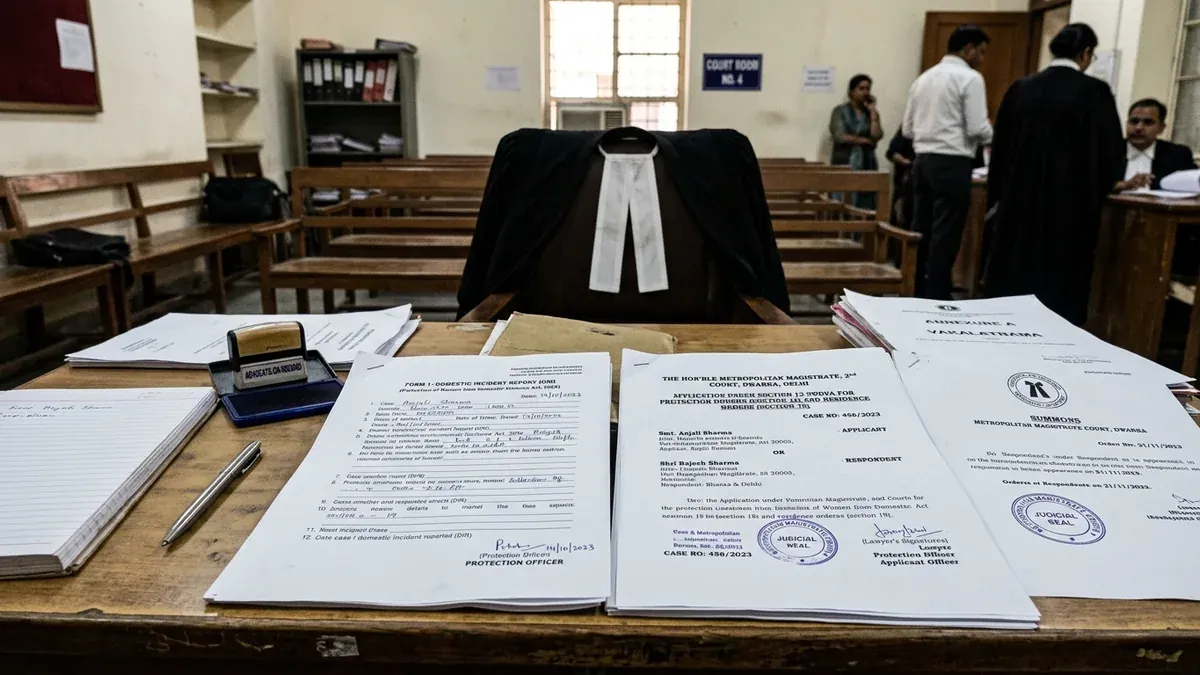
The enactment of the Protection of Women from Domestic Violence Act, 2005 was intended to provide civil-law protective remedies to women suffering domestic abuse. Over the last two decades, however, Section 12 DV applications have increasingly become an instrument of tactical leverage in matrimonial litigation—routinely naming entire extended families, including married sisters-in-law living abroad, elderly grandparents, and distant relatives.
Because summoning under the DV Act subjects family members to prolonged, humiliating court appearances, High Courts across India actively exercise their inherent powers under Section 528 of the Bharatiya Nagarik Suraksha Sanhita, 2023 (BNSS) (formerly Section 482 CrPC) to weed out vexatious complaints and strike off innocent relatives.
High Courts possess inherent jurisdiction under Section 528 BNSS (Section 482 CrPC) to quash malicious Domestic Violence complaints. Petitions are routinely quashed where distant in-laws lived separately, no domestic relationship existed in a shared household, or civil property and matrimonial disputes were converted into criminal harassment.
1. Maintainability of Section 528 BNSS Petitions Against DV Complaints
A historic jurisdictional debate centered on whether Section 482 CrPC / Section 528 BNSS applies to DV Act proceedings, given that PWDVA is predominantly a quasi-civil statute:
- Full Bench Precedents: Full Benches of the Delhi, Bombay, and Madras High Courts have held that since the procedure before the Magistrate is governed by the Criminal Procedure Code (under Section 28 PWDVA), High Court inherent powers are fully maintainable.
- Abuse of Process: Inherent powers can be invoked at the threshold to prevent harassment and abuse of judicial process where no prima facie case is made out.
2. Primary Grounds for Quashing Against Relatives
High Courts apply rigorous scrutiny before permitting DV proceedings to continue against in-laws:
"In Kamlesh Devi v. Jaipal (2019), the Supreme Court affirmed that where the complainant and respondents did not live together in a shared household and vague, omnibus allegations are raised without specific incidents of violence, the DV petition is liable to be quashed."
- Absence of Shared Household: Demonstrating through lease deeds, property registries, or overseas employment that married sisters or brothers resided independently in separate cities.
- Omnibus Allegations: Sweeping claims that "all family members taunted for dowry" without dates, specific times, or roles are rejected as legally unsustainable.
- Pure Commercial/Property Dispute: Quashing complaints filed by estranged daughters-in-law seeking to grab properties exclusively owned and purchased by senior citizen in-laws.
3. Necessary Evidence for Section 528 BNSS Petition
Counsel filing for quashing in the High Court must annex undisputed unimpeachable documentary evidence:
- Certified copies of the Section 12 DV Application and Domestic Incident Report (DIR);
- Proof of independent residences (Aadhaar cards, utility bills, rental agreements);
- Passport copies or visa stamps establishing overseas physical residence during the alleged incidents of abuse.
Landmark Judicial Precedents & Statutory Authorities
Courts and appellate tribunals across Delhi NCR (Faridabad, Saket, Tis Hazari, Gurugram, High Courts) strictly apply these authoritative Supreme Court benchmarks:
The Supreme Court laid down the classic seven illustrative categories where the High Court must exercise inherent powers under Section 482 CrPC (Section 528 BNSS) to quash FIRs and criminal proceedings to prevent abuse of judicial process. The Bench held that where the allegations in the FIR, even if taken at face value, do not disclose the commission of any cognizable offence, or where the prosecution is manifestly attended with mala fide motives, the criminal proceedings are liable to be quashed at the threshold.