
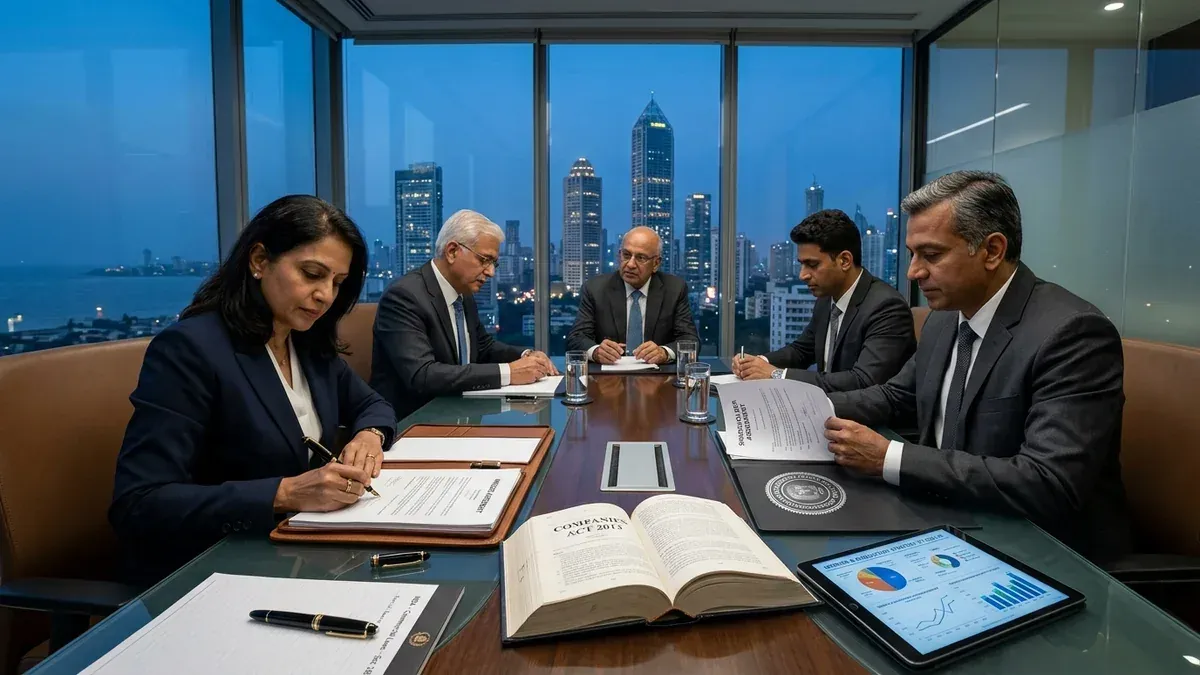
When the Insolvency and Bankruptcy Code, 2016 (IBC) was originally operationalized, Section 4 established an astonishingly low minimum default threshold of just INR 1 Lakh for triggering the Corporate Insolvency Resolution Process (CIRP). In practice, this microscopic threshold transformed the National Company Law Tribunal (NCLT) into an aggressive, low-cost debt collection forum. Operational suppliers, logistics vendors, and small contractors routinely issued statutory demand notices under Section 8, threatening to dismantle and liquidate multimillion-dollar companies over minor disputed commercial balances.
Recognizing that this weaponization threatened to overwhelm tribunal infrastructure and push viable micro, small, and medium enterprises (MSMEs) into premature liquidation, the Central Government executed a seismic statutory shift. On March 24, 2020, the Ministry of Corporate Affairs (MCA) issued Notification S.O. 1205(E) under the proviso to Section 4, elevating the minimum default threshold by one-hundred-fold—from INR 1 Lakh to INR 1 Crore (ten million rupees).
This dramatic elevation overnight shut the doors of the NCLT for tens of thousands of trade creditors and sub-crore debt holders. In the landmark judgment of Manish Kumar v. Union of India (2021), the Supreme Court upheld the constitutional validity of this threshold increase. Consequently, commercial litigators and corporate credit managers must understand how the INR 1 Crore threshold is calculated, the strict rules against aggregating operational debts, when interest can be added to cross the threshold, and the high-speed alternative debt recovery remedies available outside the IBC.
The Ministry of Corporate Affairs raised the minimum default threshold under Section 4 IBC from one lakh to one crore rupees to shield MSMEs. Creditors holding claims below one crore cannot initiate CIRP before NCLT, but retain robust statutory remedies under MSMED Council arbitration, commercial summary suits, and Section 138.
1. Statutory Evolution of Section 4: From 1 Lakh to 1 Crore
The statutory foundation of the threshold bar resides in Section 4 of the Insolvency and Bankruptcy Code, 2016:
Section 4, Insolvency and Bankruptcy Code, 2016:
"(1) This Part shall apply to matters relating to the insolvency and liquidation of corporate debtors where the minimum amount of the default is one lakh rupees:
Provided that the Central Government may, by notification, specify such minimum amount of default of higher value, which shall not be more than one crore rupees."
On March 24, 2020, exercising the statutory power delegated under the proviso, the Central Government notified: "the Central Government hereby specifies one crore rupees as the minimum amount of default for the purposes of the said section."
The sudden elevation was immediately challenged by small creditors who argued that it violated Article 14 of the Constitution by creating arbitrary discrimination between large and small creditors, denying micro-enterprises equal access to insolvency resolution.
In Manish Kumar v. Union of India ((2021) 5 SCC 1), a three-judge bench of the Supreme Court rejected this challenge in its entirety. The Court held that:
- IBC is Not a Debt Recovery Mechanism: The primary objective of the IBC is corporate reorganization, economic preservation, and maximizing asset value—not acting as a summary recovery court for small debts.
- Legislative Wisdom in Economic Policy: The legislature possesses wide latitude to classify creditors and establish monetary limits to prevent the flooding of adjudicating authorities with petty commercial disputes.
- Protection of MSMEs: Subjecting viable corporate debtors to corporate death (CIRP) over defaults below INR 1 Crore was disproportionate and economically destructive.
Regarding prospective versus retrospective application, the NCLAT in Jumbo Paper Products v. Hansraj Agrofresh Pvt. Ltd. (2021) and P.S. Fasteners Pvt. Ltd. clarified that the threshold notification is strictly prospective. Applications filed before the NCLT prior to March 24, 2020, remain governed by the old INR 1 Lakh threshold; however, every application presented on or after March 24, 2020, must independently meet the INR 1 Crore threshold on the date of filing.
2. Calculating the INR 1 Crore: Principal, Interest, and the Aggregation Trap
In commercial practice, many outstanding trade balances hover between INR 60 Lakhs and INR 95 Lakhs. Creditors frequently seek creative mechanisms to bridge the deficit to cross the magic INR 1 Crore barrier. This has generated intense litigation around two key doctrines:
A. Can Contractual Interest be Added to Cross INR 1 Crore?
For operational creditors under Section 9, does "default" include accrued interest? In Prashant Agarwal v. Vikash Parasrampuria ((NCLAT Delhi, 2022)) and CBRE South Asia Pvt. Ltd. v. United Concepts ((2022)), the NCLAT laid down the governing principles:
- Express Contractual Term Required: Interest can be aggregated with principal debt to reach INR 1 Crore only if there is an explicit, unambiguous contractual agreement, purchase order term, or signed agreement stipulating interest for delayed payments.
- Unilateral Invoice Terms are Insufficient: Merely printing "Interest @ 18% or 24% p.a. will be charged if not paid within 30 days" at the bottom of an invoice does not constitute a binding agreement to pay interest, unless the corporate debtor explicitly acknowledged or accepted that term in writing.
- No Statutory or Equitable Interest under IBC: The NCLT is not a civil court empowered to grant equitable or statutory interest under the Interest Act, 1978. In the absence of a documented contract for interest, only the principal debt is considered for the Section 4 threshold.
B. The Aggregation Trap: Can Multiple Creditors Jointly File?
A common inquiry from micro-suppliers is whether multiple vendors holding unpaid bills of INR 20 Lakhs, 30 Lakhs, and 50 Lakhs can combine their claims to jointly initiate Section 9 CIRP against a common debtor.
The Fundamental Distinction Between Section 7 and Section 9 Aggregation:
- Financial Creditors (Section 7): Permitted to Aggregate: Under Section 7(1), financial creditors can file an application either "singly or jointly with other financial creditors". A syndicate of lenders or debenture holders can pool distinct financial debts to cross the INR 1 Crore threshold.
- Operational Creditors (Section 9): Strictly Prohibited from Aggregating: In Sadashiv Nominees Pvt. Ltd. v. Mastek Ltd. and Vishal Chelani, the NCLAT ruled that Section 9 contains no statutory provision for joint filing. Each operational creditor must independently satisfy the Section 4 threshold of INR 1 Crore. Multiple suppliers cannot club separate invoices or assign debts to a common SPV for the sole purpose of crossing the threshold!
3. Alternative Recovery Remedies for Debts Below INR 1 Crore
Being barred from the NCLT does not leave creditors powerless. In fact, seasoned commercial litigators recognize that alternative statutory fora often deliver faster monetary recovery than the IBC, which routinely results in devastating 80% to 90% haircuts for operational creditors during resolution:
| Statutory Remedy | Governing Authority | Key Procedural Advantages |
|---|---|---|
| MSEFC Delayed Payment Reference | Section 18, MSMED Act, 2006 | Mandatory statutory compound interest at 3x RBI bank rate; overrides arbitration clauses; debtor must deposit 75% of award under Section 19 to challenge award. |
| Commercial Summary Suit | Order XXXVII, CPC & Commercial Courts Act, 2015 | Fast-track disposal for bills of exchange, cheques, and written contracts; defendant must prove substantial defense to obtain leave to defend. |
| Pre-Institution Mediation & Commercial Suit | Section 12A, Commercial Courts Act, 2015 | Mandatory mediation within 3 to 5 months; mediated settlement status equivalent to a court decree under Section 74 Arbitration Act. |
| Cheque Bounce Criminal Prosecution | Section 138 & 143A, Negotiable Instruments Act, 1881 | Personal criminal liability of signatory directors; interim compensation up to 20% under Section 143A payable within 60 days. |
Among these remedies, the MSMED Act mechanism is widely regarded as the most potent weapon for micro and small suppliers. The Supreme Court in Silpi Industries v. Kerala State Transport Corporation (2021) and Gujarat State Civil Supplies Corporation v. Mahakali Foods (2023) affirmed that the MSMED Act is a special enactment with overriding effect over the Arbitration and Conciliation Act, 1996. Any enterprise holding a valid Udyam Registration prior to the date of supply can compel arbitration before the MSEFC regardless of any forum selection clause in the debtor's purchase order.
4. Pre-Packaged Insolvency (PPIRP): The Debtor-Initiated Window for Sub-Crore Debts
While creditors cannot drag corporate debtors to NCLT for defaults below INR 1 Crore, the IBC offers a specialized, debtor-initiated restructuring window under Chapter III-A (Sections 54A to 54P) known as the Pre-Packaged Insolvency Resolution Process (PPIRP):
- Applicability and Threshold: Under Section 54A, PPIRP is available exclusively to corporate debtors classified as MSMEs under Section 7(1) of the MSMED Act. Via Notification S.O. 1543(E) dated April 9, 2021, the Central Government specified INR 10 Lakhs as the minimum default threshold for PPIRP.
- Debtor-in-Possession Model: Unlike normal CIRP where the existing board of directors is ousted and replaced by a Resolution Professional under Section 17, under Section 54H the existing management continues to operate the company as a going concern throughout PPIRP.
- Swift Timelines: The process must be concluded within 120 days from admission, preserving customer relationships, brand goodwill, and employment while restructuring balance sheet liabilities.
Thus, while small creditors cannot initiate hostile insolvency under Section 9, an MSME debtor facing financial distress can proactively initiate PPIRP for defaults between INR 10 Lakhs and INR 1 Crore to restructure its financial obligations under judicial supervision.
5. Strategic Recovery Blueprint: Auditing Claims and Structuring Enforcement
For credit managers, procurement heads, and legal practitioners managing debts near the INR 1 Crore line, a structured assessment protocol is essential:
Actionable Creditor Enforcement Protocol:
- Verify Realized Principal vs Unilateral Interest: Review all executed purchase orders and master service agreements. If your principal debt is INR 85 Lakhs and you calculated INR 20 Lakhs interest, determine whether the debtor explicitly executed a signed agreement specifying that interest rate. If not, do not issue a Section 8 demand notice—it will be rejected with costs at admission.
- Examine Udyam Registration Timing: Check whether your enterprise possessed an active Udyam Certificate on the date the contract was executed and services delivered. If yes, immediately initiate MSEFC recovery under Section 18 MSMED Act rather than spending money on high-court commercial litigation.
- Check for Section 138 Cheque Bounce Grounds: If security cheques or PDC instalments were dishonored, serve a formal statutory demand notice within 30 days of the bank return memo. Pursue criminal proceedings against the Managing Director simultaneously with civil recovery.
- Evaluate Pre-Institution Commercial Mediation: If the claim is purely contractual, initiate pre-institution mediation under Section 12A of the Commercial Courts Act. This freezes limitation, compels the debtor to appear before a trained mediator, and often results in structured settlement agreements without protracted trial.
- Avoid Unlawful Debt Assignment Aggregation: Do not attempt to buy out debts from other vendors to cross INR 1 Crore. The NCLT treats debt assignment executed shortly before filing specifically to bypass Section 4 as an abuse of judicial process under Section 65 IBC, attracting penalties up to INR 1 Crore.
Landmark Judicial Precedents & Statutory Authorities
Courts and appellate tribunals across Delhi NCR (Faridabad, Saket, Tis Hazari, Gurugram, High Courts) strictly apply these authoritative Supreme Court benchmarks:
The Supreme Court upheld the constitutional validity of the Insolvency and Bankruptcy Code, 2016, establishing that the paramount objective of the Code is corporate resolution and maximization of asset value rather than debt recovery. The Court underscored that the commercial wisdom of the Committee of Creditors (CoC) is non-justiciable and entitled to primacy in resolution plan approvals.