
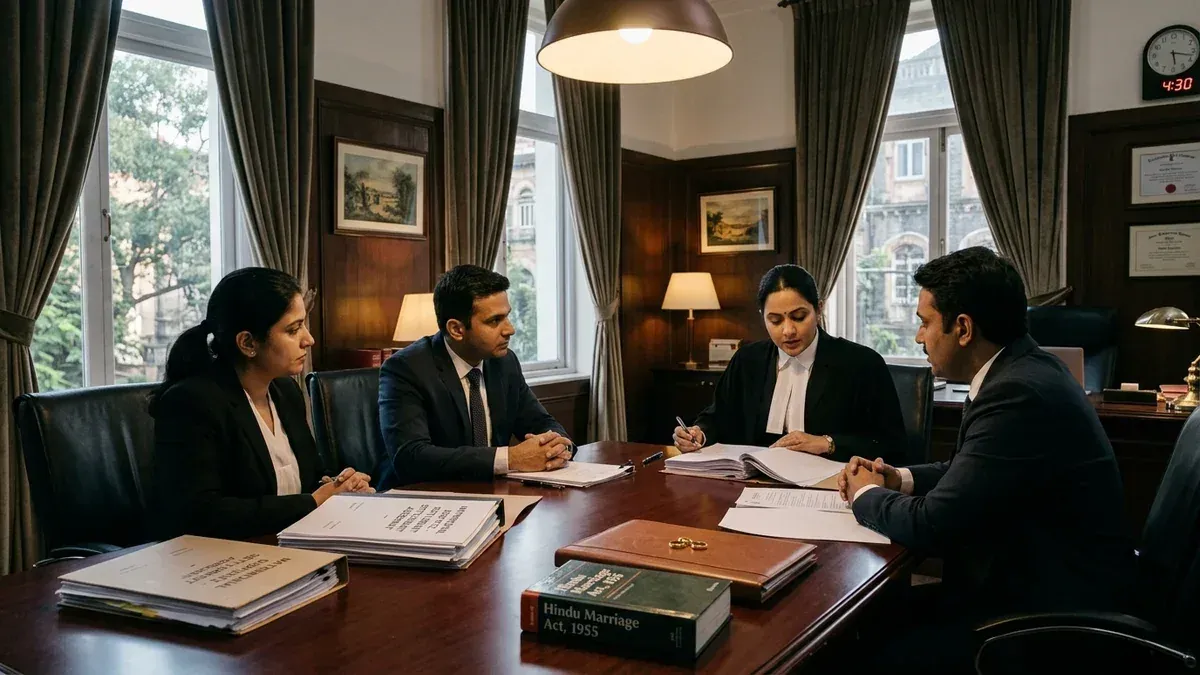
When a marriage has irretrievably broken down and both spouses mutually agree to part ways with dignity, Section 13B of the Hindu Marriage Act, 1955 (HMA) provides the statutory framework for Mutual Consent Divorce. Traditionally, Section 13B(2) mandated an agonizing six-month waiting period—often referred to as the "cooling-off period"—between the First Motion and the Second Motion, intended to give couples an opportunity for reconciliation.
However, where couples have been living separately for years, where court-directed mediation has failed, and where permanent alimony, child custody, and Stridhan have already been fully resolved, forcing parties to wait another six months causes needless mental agony. In the landmark judgment of Amardeep Singh v. Harveen Kaur (2017 8 SCC 746), the Supreme Court of India authoritatively held that the six-month period under Section 13B(2) is directory, empowering Family Courts to waive the cooling-off period upon a formal application.
Under Section 13B(2) Hindu Marriage Act, the statutory six-month cooling-off period is directory, not mandatory. Following the Supreme Court ruling in Amardeep Singh, Family Courts can waive this waiting period where parties have lived apart for over a year, settled all financial disputes, and mediation has failed completely.
1. The Two-Motion Process under Section 13B HMA
Section 13B prescribes a two-tier procedure:
- First Motion (Section 13B(1)): Both spouses jointly file a petition stating that they have been living separately for a period of one year or more, that they have not been able to live together, and that they have mutually agreed that the marriage should be dissolved. Statements of both parties are recorded on oath.
- Second Motion (Section 13B(2)): On motion made by both parties not earlier than six months after the date of presentation of the petition and not later than eighteen months, the court, upon being satisfied that the consent was not obtained by force or fraud, passes a decree of divorce.
2. The Amardeep Singh Four-Point Waiver Test
In Amardeep Singh v. Harveen Kaur, the Supreme Court ruled that Family Courts can waive the six-month waiting period if the following four conditions are satisfied:
- The statutory period of one year of separation under Section 13B(1) plus six months under Section 13B(2) is already over before the First Motion;
- All efforts at mediation or conciliation under Section 9 of the Family Courts Act have been exhausted and failed, with no likelihood of reconciliation;
- The parties have genuinely settled all their differences relating to permanent alimony, custody of children, and return of Stridhan or any other pending claims; and
- The waiting period will only prolong the agony of the parties.
The waiver application can be filed as early as one week after the First Motion is recorded.
3. Overseas Litigants & Video Conferencing (VC) Facilities
For Non-Resident Indians (NRIs) or spouses residing in different states, the Supreme Court in Amardeep Singh and the Delhi High Court in Reena Banerjee affirmed that the physical presence of parties is not mandatory. Statements for both the First Motion and Second Motion can be recorded through official Video Conferencing facilities, with special power of attorney (GPA) holders representing parties for signing formal pleadings.
Landmark Judicial Precedents & Statutory Authorities
Courts and appellate tribunals across Delhi NCR (Faridabad, Saket, Tis Hazari, Gurugram, High Courts) strictly apply these authoritative Supreme Court benchmarks:
The Supreme Court formulated authoritative parameters governing mental cruelty under Section 13(1)(ia) of the Hindu Marriage Act, holding that sustained reprehensible conduct, prolonged separation, baseless character assassination, and total destruction of the matrimonial bond constitute actionable cruelty. The Bench held that where a marriage is irretrievably broken down, forcing estranged spouses to remain legally bound constitutes protracted mental cruelty.