
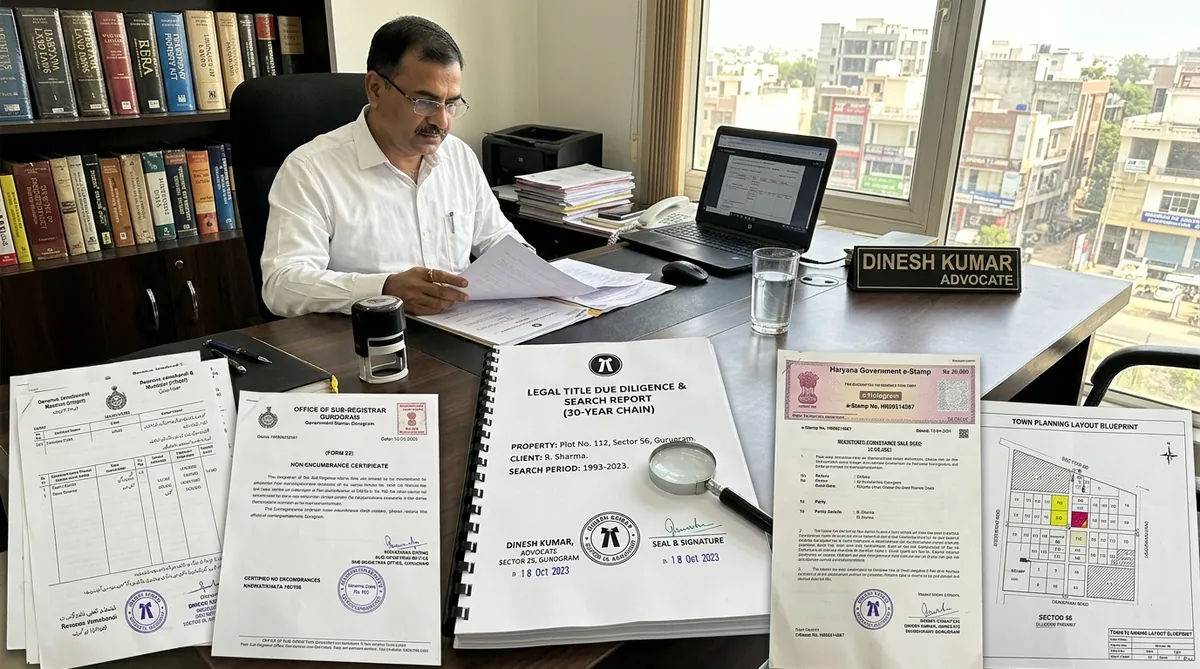
A widespread misconception among property buyers and real estate investors in India is that having one's name recorded in the land revenue register (Mutation or Dakhil Kharij) confers absolute ownership title. Unscrupulous sellers frequently produce recent Jamabandi or Khasra extracts to persuade buyers that their title is flawless.
In reality, Indian jurisprudence clearly segregates revenue records from title ownership. Through a long line of authoritative judgments, the Supreme Court of India has ruled that revenue entries exist solely for tax collection purposes. When fraudulent or erroneous mutations occur, aggrieved parties must understand the exact interplay between revenue forums and Civil Courts.
Mutation of land revenue records, including Jamabandi and Khasra Girdawari entries, is solely an administrative process to update fiscal liability for property tax collection. The Supreme Court has repeatedly held that revenue mutation neither creates, extinguishes, nor declares ownership title, which can only be established through registered conveyance deeds.
1. Landmark Supreme Court Jurisprudence: Mutation Does Not Confer Title
The legal character of revenue mutation has been settled across multiple apex court decisions:
The Supreme Court settled that plea of adverse possession under Article 65 of the Limitation Act can be used affirmatively by a plaintiff as a sword to seek a declaration of title, not merely as a defensive shield. In Suraj Lamp, the Court held that immovable property can only be legally conveyed through a registered deed of conveyance; transactions executed through General Power of Attorney (GPA), Sale Agreement, and Will do not confer legal title in immovable property.
"It is well-settled law that mutation of property in the revenue records neither creates nor extinguishes title, nor has it any presumptive value on title. Such entries are relevant only for fiscal purpose of collecting land revenue."
— Supreme Court in Bhimabai Mahadeo Kambekar v. Arthur Import & Export Co. (2019)
- Reiterated Precedents: This core principle was firmly reaffirmed in Sawarni v. Inder Kaur (1996), Balwant Singh v. Daulat Singh (1997), and Jitendra Singh v. State of Madhya Pradesh (2021).
- Title Requires Conveyance: Valid legal title can only be created, transferred, or extinguished by operation of law, registered sale deeds, gifts, partition decrees, or inheritance under personal succession statutes.
2. Understanding Revenue Records: Jamabandi, Khasra & Intiqal
To evaluate land records accurately, property owners must distinguish between key revenue documents:
- Jamabandi (Record of Rights): The foundational revenue document updated every five years, detailing ownership shares (Khewat), tenancy/cultivation holdings (Khatoni), and revenue assessments.
- Khasra Girdawari (Harvest Inspection): A bi-annual register maintained by the Patwari recording physical crop cultivation, possession status, and ground realities during Kharif and Rabi seasons.
- Intiqal (Mutation Register): The administrative record reflecting the transfer of land liability from one individual to another following inheritance, partition, or registered sale.
3. Remedies Against Fraudulent Mutations & Civil Court Supremacy
When an adverse or fraudulent mutation entry is made in collusion with revenue staff:
- Departmental Revenue Appeals: An aggrieved party can challenge the sanctioned mutation by filing an appeal before the Sub-Divisional Magistrate / Collector within the prescribed limitation (typically 30 to 60 days under State Land Revenue Acts), followed by a revision before the Commissioner or Financial Commissioner.
- Declaratory Suit in Civil Court: Revenue officers possess no statutory competence to decide disputed questions of title. The aggrieved rightful owner must file a regular civil suit under Section 34 of the Specific Relief Act, 1963 for a declaration of ownership and permanent injunction.
- Civil Decrees Bind Revenue Authorities: Once a competent Civil Court passes a declaratory decree establishing title, the revenue authorities are legally mandated to correct the Jamabandi and cancel contrary mutation entries.