
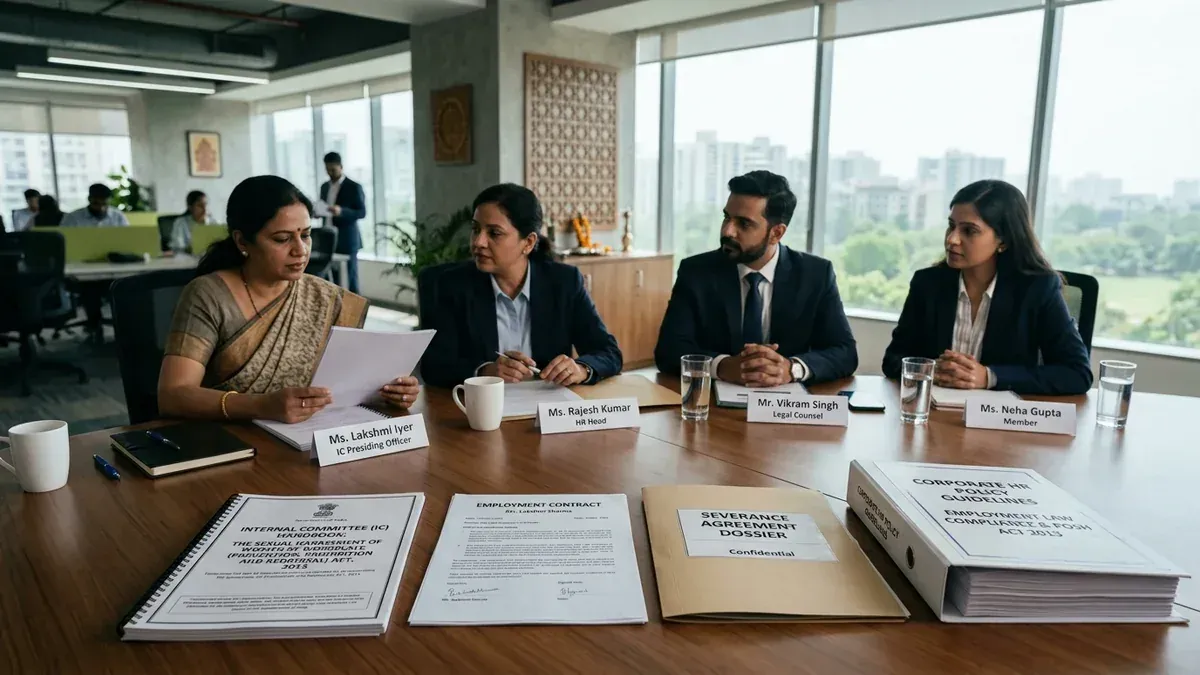
Despite progressive statutory mandates and heightened corporate awareness regarding workplace gender equity, pregnancy discrimination remains a persistent and pervasive reality across Indian corporate establishments. Female professionals, corporate executives, and contractual workers frequently face subtle marginalization or sudden employment termination shortly after disclosing their pregnancy or requesting statutory maternity leave. Under the guise of "performance deficiencies," "redundancy restructuring," or "contract non-renewal," employers attempt to evade the substantial financial and operational obligations imposed by maternity legislation.
To combat this form of workplace discrimination, Parliament enacted one of the most stringent protective provisions in Indian labour jurisprudence: Section 12 of the Maternity Benefit Act, 1961. Section 12 establishes a categorical, unconditional statutory prohibition restraining employers from dismissing, discharging, or terminating a woman employee during pregnancy or statutory maternity leave. Furthermore, the statute forbids any unilateral alteration of service conditions that operates to her disadvantage during this protected window.
In a series of landmark judgments—ranging from Municipal Corporation of Delhi v. Female Workers (Muster Roll) to the recent Supreme Court verdict in Dr. Kavita Yadav v. Secretary, Ministry of Health and Family Welfare (2024)—the constitutional courts have affirmed that maternity rights are an integral facet of the fundamental right to life, personal liberty, and human dignity under Article 21 of the Constitution. This comprehensive treatise analyzes the strict statutory protections of Section 12, the legal consequences of unlawful termination, the ultra-narrow exception of gross misconduct, and the judicial procedures for securing full back wages, reinstatement, and punitive damages.
Section 12 of the Maternity Benefit Act, 1961 strictly prohibits employers from discharging, dismissing, or altering service conditions of a female employee during pregnancy or maternity leave. Any termination notice issued during this protected statutory window is void ab initio, entitling the employee to full wages, reinstatement, and penal compensation.
1. Statutory Architecture of Section 12: The Absolute Prohibition of Dismissal
The core statutory protection that shields expectant and new mothers from predatory termination is codified in Section 12 of the Maternity Benefit Act, 1961:
Section 12, Maternity Benefit Act, 1961: Dismissal during absence of pregnancy:
"(1) When a woman absents herself from work in accordance with the provisions of this Act, it shall be unlawful for her employer to discharge or dismiss her during or on account of such absence, or to give notice of discharge or dismissal on such a day that the notice will expire during such absence, or to vary to her disadvantage any of the conditions of her service.
(2) (a) The discharge or dismissal of a woman at any time during her pregnancy, if the woman but for such discharge or dismissal would have been entitled to maternity benefit under section 5, shall not have the effect of depriving her of the maternity benefit or medical bonus:
Provided that where the dismissal is for any prescribed gross misconduct, the employer may, by order in writing communicated to the woman, deprive her of the maternity benefit or medical bonus or both."
A rigorous breakdown of this statutory text reveals five fundamental legal guarantees:
- Unlawful Nature of Dismissal: Sub-section (1) makes it per se "unlawful" to discharge or dismiss a female employee during her statutory absence. The word "unlawful" renders any termination notice issued during this period null, void ab initio, and legally inoperative.
- Prohibition of Pre-Dated Expiry Notices: Employers cannot circumvent the law by serving a termination notice prior to maternity leave structured so that the notice period expires while the employee is on maternity leave. The statute explicitly strikes down such notices.
- Protection Against Disadvantageous Service Variations: Employers are statutorily prohibited from reducing basic salary, demoting job designations, revoking contractual allowances, or withdrawing health insurance coverage while an employee is pregnant or absent on maternity leave.
- Preservation of Benefit Even After Dismissal: Under sub-section (2)(a), even if an employer unlawfully discharges a pregnant woman, such discharge cannot deprive her of the full twenty-six weeks of maternity benefit and statutory medical bonus.
- Application Across All Formats: The protections apply equally across private limited companies, multinational corporations, public sector undertakings, IT establishments, factories, shops, and professional firms employing ten or more persons.
2. Judicial Evolution: Constitutional Dignity and the Dr. Kavita Yadav Landmark
Indian courts have consistently interpreted maternity benefits not as an ex-gratia employer benevolence, but as a non-negotiable constitutional right rooted in Articles 14, 15(3), 21, and 42 of the Constitution of India:
The Supreme Court reaffirmed the three mandatory golden tests for grant of interlocutory injunctions under Order XXXIX Rules 1 and 2 of the Code of Civil Procedure: (i) strong prima facie case, (ii) balance of convenience tilted in applicant's favor, and (iii) imminent threat of irreparable injury not compensable in monetary damages. The Court held that temporary relief cannot be granted mechanically without judicial application of mind.
Landmark Precedents Governing Maternity Protection:
- Municipal Corporation of Delhi v. Female Workers (Muster Roll) ((2000) 3 SCC 224): The Supreme Court rejected the employer's contention that daily-wage and muster-roll women workers were not entitled to maternity benefit. The Court held that working women are entitled to maternity benefits regardless of whether their employment status is permanent, contractual, casual, or daily-wage. Denying maternity protection to temporary employees violates human dignity and international conventions.
- Dr. Kavita Yadav v. Secretary, Ministry of Health and Family Welfare ((2024) 1 SCC 421): In this historic ruling, the Supreme Court addressed whether a fixed-term contractual employee whose employment contract expired during pregnancy is entitled to the full twenty-six weeks of maternity benefit. The employer argued that maternity benefits terminate upon the contractual expiry date. A three-judge bench of the Supreme Court firmly rejected this argument, ruling that once an expectant mother satisfies the statutory qualifying condition of working eighty days in the preceding twelve months under Section 5(2), her entitlement to the full statutory maternity benefit survives the expiration of her employment contract!
- Neetu Choudhary v. State of NCT of Delhi ((Delhi High Court, 2019)): The High Court quashed the termination of a female contractual worker, holding that an employer cannot terminate a pregnant employee under the pretext of contractual termination or non-renewal. The court directed immediate reinstatement with complete back wages.
- Dr. Deepa Sharma v. State of Uttarakhand ((Uttarakhand High Court, 2017)): The High Court affirmed that maternity leave cannot be restricted on arbitrary internal employer guidelines. Statutory provisions of the Central Act override any conflicting internal employment contract terms.
3. The "Gross Misconduct" Exception: Scope, Burden, and Natural Justice
The only exception provided in Section 12(2)(a) where an employer may lawfully dismiss a pregnant employee and withhold maternity benefits is for "prescribed gross misconduct". However, the legal threshold for establishing this exception is extraordinarily high:
| Parameter | Statutory Requirement | Evidentiary Standard |
|---|---|---|
| Definition of Gross Misconduct | Rule 11, Maternity Benefit (Mines & Circus) Rules / State Rules | Must be an act of moral turpitude, embezzlement, physical violence, gross insubordination, or sabotage. Generic "performance issues" or "poor KPI" do not qualify! |
| Domestic Inquiry Requirement | Principles of Natural Justice & Standing Orders | The employer must issue a formal charge-sheet, conduct a fair domestic inquiry, and afford full opportunity of defense. Summary dismissals are void ab initio. |
| Written Communication of Deprivation | Section 12(2)(a) Proviso | The employer must pass a separate reasoned order in writing communicating the specific grounds of deprivation. Failure to communicate invalidates the withholding. |
| Statutory Appeal Window | Section 12(2)(b) | The dismissed woman has a statutory right to appeal within sixty days to the competent authority (Labour Commissioner / Inspector), whose decision is final. |
Employers routinely commit fatal procedural errors by issuing termination letters citing "restructuring" or "substandard productivity" while an employee is pregnant. Because these grounds do not constitute prescribed gross misconduct under the statutory rules, such terminations are immediately quashed by courts as direct violations of Section 12.
4. Legal Remedies: Reinstatement, Compensation, and Criminal Penalties
When an employer contravenes Section 12, the aggrieved employee has access to powerful civil, constitutional, and criminal enforcement mechanisms:
- Statutory Complaint under Section 17: Any woman deprived of maternity benefits or unlawfully dismissed can file a complaint before the Inspector appointed under the Act. Under Section 17(2), the Inspector has statutory authority to direct the employer to pay all overdue benefits, back wages, and statutory allowances forthwith.
- Criminal Prosecution under Section 21: Contravention of Section 12 is a punishable criminal offense. Section 21 prescribes mandatory imprisonment of not less than three months, extending up to one year, along with statutory fines. Corporate directors, human resource heads, and managing directors can be prosecuted personally for authorizing the unlawful termination.
- Writ Petitions under Article 226 / 32: For employees in government departments, public universities, statutory corporations, or government-aided bodies, high courts routinely issue Writs of Mandamus or Certiorari quashing termination orders and directing reinstatement with full continuity of service and back wages.
- Civil Claims for Damages & Mental Agony: In addition to statutory back wages, labour courts and high courts possess jurisdiction to award substantial punitive damages for mental harassment, obstetric trauma, and loss of livelihood suffered by expectant mothers during pregnancy.
5. Step-by-Step Defense Protocol for Expectant Employees
If you suspect or experience discriminatory action or termination during pregnancy, follow this structured legal response protocol:
Actionable Protection Sequence:
- Document Formal Pregnancy Notification: Always submit your formal notice of pregnancy and expected delivery date in writing (via official corporate email or registered speed post) accompanied by a medical certificate from a registered medical practitioner pursuant to Section 6. Maintain digital copies outside enterprise servers.
- Maintain Records of Service Continuity: Archive pay slips, attendance logs, and performance appraisals confirming that you completed at least eighty days of actual work in the twelve months preceding the expected delivery date under Section 5(2).
- Formally Rebut Substandard Performance Claims: If the employer suddenly initiates a Performance Improvement Plan (PIP) or issues negative appraisals shortly after your pregnancy disclosure, immediately reply in writing placing on record that previous appraisals were positive and that the sudden PIP is an attempt to evade Section 12 mandates.
- Challenge Any Termination Letter in Writing: Upon receipt of any dismissal, termination, or contract non-renewal notice, issue a formal written protest within 48 hours asserting that the termination violates Section 12 of the Maternity Benefit Act, 1961, and demanding immediate withdrawal.
- Approach the Labour Commissioner / High Court: If the employer refuses to withdraw the notice, file a complaint before the Labour Commissioner under Section 17, or initiate a writ petition / industrial dispute praying for quashing of the termination, reinstatement, and full twenty-six weeks maternity wages.
6. Transition to the Code on Social Security, 2020: What Lies Ahead
With the upcoming operationalization of the four new Labour Codes, the substantive protections of the Maternity Benefit Act, 1961 are integrated into Chapter VI (Sections 59 to 72) of the Code on Social Security, 2020:
- Retention of 26 Weeks Benefit: Section 60 of the Code preserves the mandatory twenty-six weeks paid maternity benefit for women with up to two surviving children.
- Explicit Non-Dismissal Clause under Section 72: Section 72 of the Code on Social Security replicates the exact prohibition of Section 12, making it unlawful for an employer to discharge, dismiss, or reduce wages of a woman during her pregnancy or maternity leave.
- Universal Coverage for Gig and Platform Workers: Crucially, the Code on Social Security extends welfare benefits to gig and platform workers, laying the foundation for extending social security and maternity protections to the gig economy.
In conclusion, Section 12 of the Maternity Benefit Act remains an unyielding statutory fortress. Employers who attempt to cut costs by terminating pregnant employees face immediate invalidation of termination orders, mandatory back wage liability, substantial compensation awards, and personal criminal prosecution under Indian labour jurisprudence.