
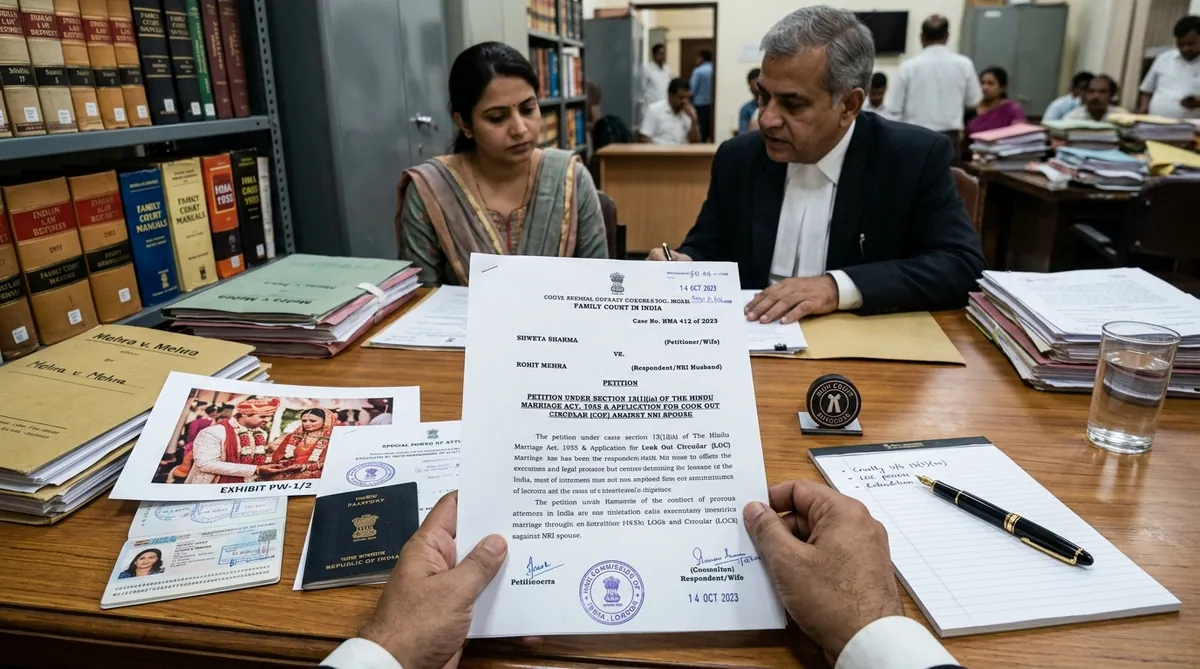
When cross-border matrimonial alliances fracture, one parent frequently relocates the minor child from their habitual foreign residence (such as the United States, United Kingdom, Canada, Australia, or UAE) to India without the consent of the other parent or in defiance of foreign custody injunctions. This phenomenon—often termed parental abduction—triggers complex international custody battles.
Unlike most Western democracies, India is not a signatory to the Hague Convention on the Civil Aspects of International Child Abduction, 1980. Consequently, foreign custody decrees or mirror orders cannot be mechanically executed in India. Instead, Indian High Courts exercising extraordinary writ jurisdiction under Article 226 conduct independent, welfare-centric inquiries.
In international child custody disputes where a parent removes a child to India without the other parent's consent, High Courts evaluate Habeas Corpus petitions strictly on the child's welfare rather than foreign court orders. India's non-accession to the Hague Abduction Convention ensures Indian courts independently assess custody, safety, and stability.
1. India's Non-Accession to Hague Convention: Legal Consequences
Because India has refrained from ratifying the Hague Abduction Convention, foreign court orders directing the immediate summary repatriation of a child are not binding:
- No Automatic Repatriation: Indian courts refuse to treat the child as an object to be mechanically returned based solely on comity of courts.
- Welfare Supreme: The paramount consideration under Section 7 and 17 of the Guardians and Wards Act, 1890 remains the holistic physical, emotional, and educational welfare of the child.
- Comity Yields to Best Interests: Foreign court jurisdiction must yield to the welfare principle if uprooting the child would cause psychological trauma.
2. Supreme Court Doctrine: Summary vs. Elaborate Inquiry
The Supreme Court of India in Nithya Anand Raghavan v. State (NCT of Delhi) (2017) and Yashita Sahu v. State of Rajasthan (2020) established the governing framework for High Courts:
The Supreme Court reaffirmed the three mandatory golden tests for grant of interlocutory injunctions under Order XXXIX Rules 1 and 2 of the Code of Civil Procedure: (i) strong prima facie case, (ii) balance of convenience tilted in applicant's favor, and (iii) imminent threat of irreparable injury not compensable in monetary damages. The Court held that temporary relief cannot be granted mechanically without judicial application of mind.
"The High Court in a Habeas Corpus petition must determine whether to conduct a summary inquiry to return the child to the foreign jurisdiction or an elaborate inquiry in India. If the child has developed deep roots in India, is integrated in Indian schooling, or faces domestic trauma abroad, the High Court will retain custody in India."
Where the removal is recent and the child has not developed roots in India, courts may order repatriation, provided the foreign parent undertakes to bear travel expenses, arrange independent accommodation, and submit to foreign court adjudication.
3. Key Defenses in Habeas Corpus Proceedings
A parent defending retention of the child in India can raise several formidable statutory defenses:
- Domestic Violence and Psychological Harm: Demonstrating through medical or police records that returning the mother/child abroad exposes them to severe domestic violence.
- Rootedness in India: Enrolling the child in reputable Indian schools, establishing family support structures, and demonstrating linguistic and cultural adaptation.
- Immigration/Visa Vulnerability: Demonstrating that the foreign jurisdiction has revoked the dependent parent's work authorization or visa, rendering lawful residence impossible without the abusive spouse.