
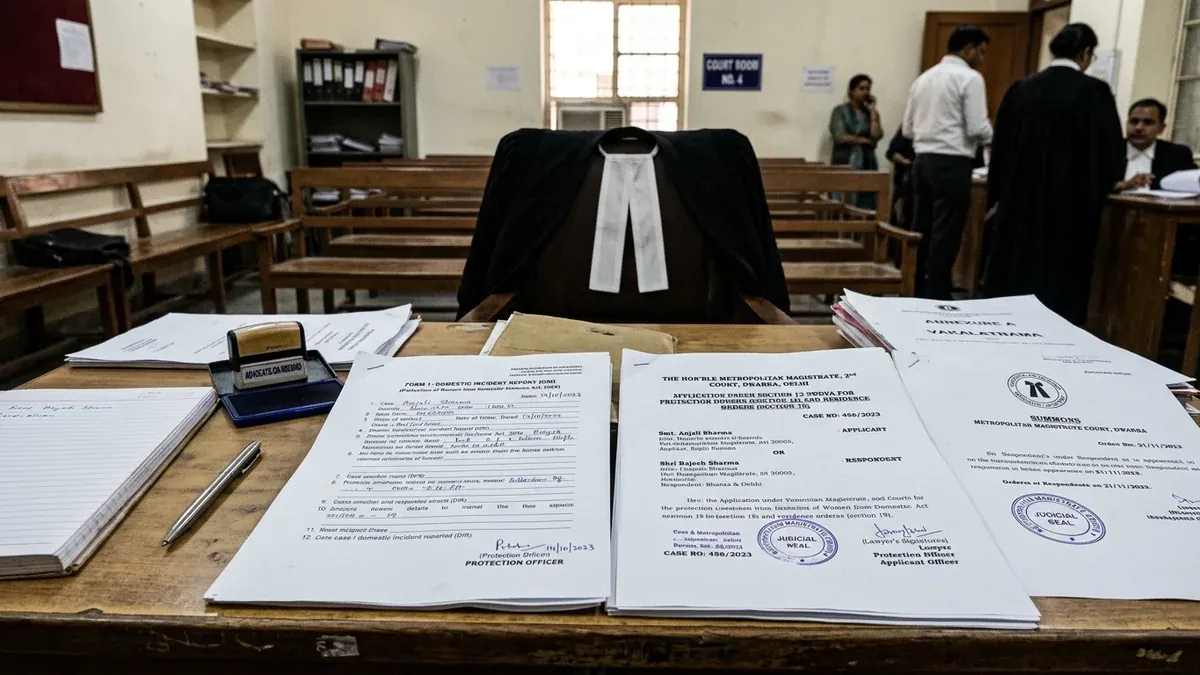
The right of a married woman to secure housing and resist arbitrary eviction from the matrimonial home is one of the most potent protections conferred by the Protection of Women from Domestic Violence Act, 2005 (PWDVA). Under Section 17 and Section 19 of the DV Act, an aggrieved woman is granted an absolute right to reside in a "Shared Household," backed by judicial residence orders restraining the husband and in-laws from dispossessing her.
For nearly fourteen years, in-laws routinely defeated residence claims by relying on the restrictive two-judge bench ruling in S.R. Batra v. Taruna Batra (2007), which held that a house owned exclusively by parents-in-law could not be a shared household. In a monumental three-judge bench judgment in Satish Chander Ahuja v. Sneha Ahuja (2020 10 SCC 788), followed by Prabha Tyagi v. Kamlesh Devi (2022), the Supreme Court overruled S.R. Batra, fundamentally transforming property and residence litigation in India.
Under Section 17 and 19 DV Act, a woman has a statutory right to reside in a shared household. In Satish Chander Ahuja, the Supreme Court overruled S.R. Batra, establishing that a shared household includes premises owned exclusively by in-laws where the daughter-in-law lived in a domestic relationship.
2. Overruling S.R. Batra: The Satish Chander Ahuja Ruling
In Satish Chander Ahuja, the Supreme Court explicitly discarded the narrow definition in S.R. Batra:
The Supreme Court mandated comprehensive procedural guidelines across all maintenance proceedings in India (Section 125 CrPC / Section 144 BNSS, DV Act, HMA Section 24), requiring both spouses to file comprehensive Affidavits of Assets and Liabilities. The Bench established that maintenance must be awarded from the date of application to prevent procedural delays from prejudicing dependent spouses and minor children.
- Inclusion of In-Laws' Self-Acquired Property: Even if the residential property belongs exclusively to the father-in-law or mother-in-law, if the daughter-in-law lived there after marriage as part of a joint domestic household, it is a "shared household" under Section 2(s).
- Protection Against Summary Eviction: Elderly in-laws cannot obtain summary eviction orders against their daughter-in-law under the Senior Citizens Act, 2007 without the court evaluating her residence rights under the DV Act.
- Balancing Conflicting Rights: The court must balance the right of elderly parents to live in peace against the right of the daughter-in-law to shelter, often directing the husband to provide equivalent alternative accommodation under Section 19(1)(f).
3. Past Residence Suffices: The Prabha Tyagi Clarification
In Prabha Tyagi v. Kamlesh Devi (2022 8 SCC 90), the Supreme Court further held that it is not necessary for the woman to be physically residing in the shared household on the date the domestic violence petition is filed. Even if she lived there at any stage in the past and was subsequently driven out, her right to seek re-entry and residence orders under Section 19 remains fully enforceable.