
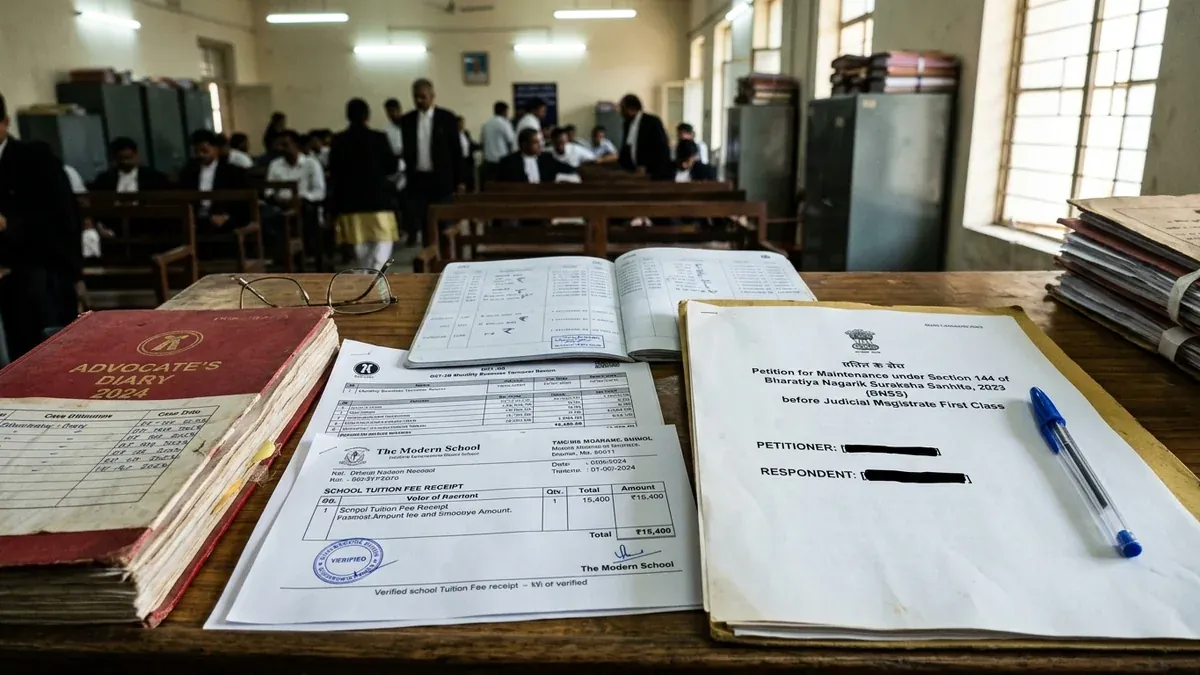
In matrimonial litigation across India, the determination of interim and permanent maintenance under Section 144 BNSS (125 CrPC), Section 24 of the Hindu Marriage Act, or Section 20 of the DV Act is almost universally plagued by a chronic vice: the systematic suppression and falsification of income. Businessmen, self-employed consultants, and corporate executives frequently depict themselves as insolvent or earning nominal wages to minimize alimony liabilities.
To combat this deliberate evasion, the Supreme Court in Rajnesh v. Neha (2020) mandated exhaustive disclosure affidavits covering over 50 specific financial indicators. Furthermore, Indian procedural law equips litigants with powerful statutory machinery to compel third-party institutions—such as banks, the Income Tax Department, the Registrar of Companies (ROC), and GST authorities—to produce hidden financial records directly into court.
When a spouse conceals actual income in maintenance proceedings, litigants can file an application under Section 94 BNSS (Section 91 CrPC) or Order 11 CPC to summon bank statements, income tax returns, company filings, and GST turnover. Deliberate non-disclosure invites adverse inferences and perjury prosecution under Section 215 BNSS.
1. Summoning Records under Section 94 BNSS (Section 91 CrPC)
Under Section 94 BNSS, whenever any Court considers that the production of any document or thing is necessary or desirable for the purposes of any inquiry or trial, it may issue a summons to the person or entity in whose possession such document is believed to be:
- Bank Account Statements: Directing bank managers to produce detailed ledgers, fixed deposits, foreign remittances, and locker records.
- Income Tax Authorities: Directing the jurisdictional Assessing Officer (ITO) to produce certified copies of ITR acknowledgments and computation sheets.
- Employer Records: Summoning Human Resources / Payroll departments for gross CTC breakdowns, annual bonuses, stock options (ESOPs), and perquisites.
2. Piercing Corporate Veils: GST and MCA Filings
Where the defaulting spouse operates proprietary businesses, private limited companies, or LLP shell entities:
"Parties cannot suppress income behind corporate curtains. By placing Ministry of Corporate Affairs (MCA) director master data, shareholding patterns, and GSTR-3B monthly turnover returns on record, courts will calculate the husband's real cash flow and standard of living."
- Credit Card Statements: Spending habits on luxury international travel, five-star clubs, and high-end electronics provide direct circumstantial proof of undisclosed wealth.
- Social Media Evidence: Instagram, LinkedIn, and Facebook posts displaying luxury vehicles, foreign holidays, and business ventures are admissible to contradict claims of poverty.
- Vehicle Registration: Vahan database searches revealing luxury automobiles registered in the spouse's name or family firms.
3. Consequences of Filing False Income Affidavits
Under the strict guidelines in Rajnesh v. Neha, filing a false income disclosure triggers severe judicial sanctions:
- Adverse Inference: Under Section 119 of the Bharatiya Sakshya Adhiniyam, 2023 (BSA), if a party withholds best evidence, the court presumes the evidence would be unfavorable, fixing maintenance based on lifestyle and earning capacity.
- Perjury Prosecution: Filing an application under Section 340 CrPC / Section 379 BNSS for prosecuting the spouse for perjury and false statements under oath.
- Striking Off Defense: Repeated failure to disclose assets can lead to striking off the respondent's defense in maintenance proceedings.
Landmark Judicial Precedents & Statutory Authorities
Courts and appellate tribunals across Delhi NCR (Faridabad, Saket, Tis Hazari, Gurugram, High Courts) strictly apply these authoritative Supreme Court benchmarks:
The Supreme Court mandated comprehensive procedural guidelines across all maintenance proceedings in India (Section 125 CrPC / Section 144 BNSS, DV Act, HMA Section 24), requiring both spouses to file comprehensive Affidavits of Assets and Liabilities. The Bench established that maintenance must be awarded from the date of application to prevent procedural delays from prejudicing dependent spouses and minor children.