
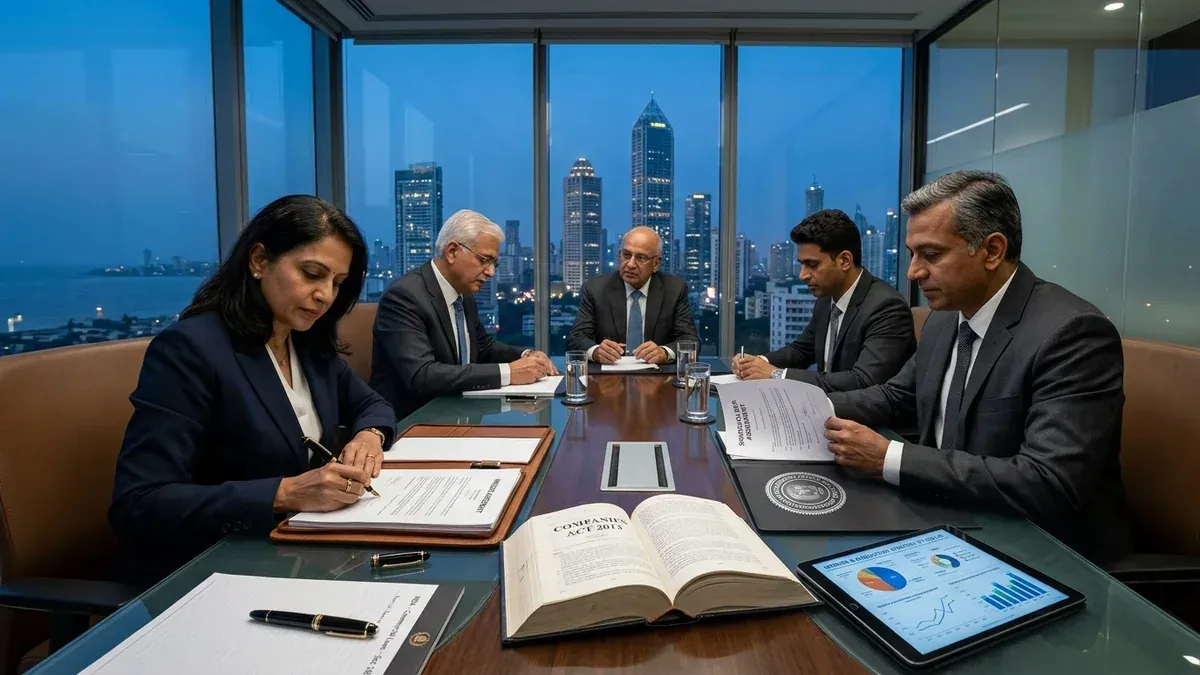
To expedite the resolution of commercial disputes and improve India's ease of doing business ranking, Parliament introduced a radical procedural filter through the 2018 amendment to the Commercial Courts Act, 2015: Section 12A. Under this provision, a plaintiff cannot directly file a commercial suit without first exhausting pre-institution mediation, unless the suit contemplates urgent interim relief.
For years, litigants and commercial law firms bypassed Section 12A by treating it as directory rather than mandatory. However, the landmark Supreme Court ruling in Patil Automation Pvt. Ltd. v. Rakheja Engineers Pvt. Ltd. (2022) declared Section 12A to be strictly mandatory, warning that any commercial suit filed without exhausting mediation or establishing genuine urgency must be summarily rejected at the doorstep.
Under Section 12A of the Commercial Courts Act 2015, pre-institution mediation through District Legal Services Authorities is mandatory before instituting commercial suits, unless urgent interim relief is sought. The Supreme Court in Patil Automation ruled that plaints filed without exhausting Section 12A must be rejected under Order 7 Rule 11 CPC.
1. The Mandatory Doctrine of Patil Automation
In Patil Automation (2022), a two-judge bench of the Supreme Court resolved conflicting High Court judgments:
- Substantive Legislative Mandate: Section 12A is not a procedural formality; it is a statutory bar designed to decongest commercial courts and foster amicable settlements.
- Rejection under Order 7 Rule 11: If a plaint is filed without exhausting Section 12A and without pleading genuine urgent interim relief, the Commercial Court has no discretion and must reject the plaint under Order 7 Rule 11(d) CPC.
- Prospective Application: The declaration was made effective from August 20, 2022, protecting older instituted suits while strictly enforcing the mandate on all subsequent filings.
2. The "Urgent Interim Relief" Exception
Section 12A(1) carves out a single statutory exception: "A suit, which does not contemplate any urgent interim relief, shall not be instituted unless the plaintiff exhausts the remedy of pre-institution mediation."
"In Yamini Manohar v. T.K.D. Keerthi (2023), the Supreme Court clarified that the contemplation of urgent interim relief is an objective test assessed from the plaint and interlocutory application. A plaintiff cannot invent an illusion of urgency merely to dodge mediation."
Genuine urgency typically encompasses freezing bank accounts before dissipation, restraining third-party transfers under Order 39 CPC, or Anton Piller search orders in trademark/patent infringement.
3. The Pre-Institution Mediation Process
The operational rules under the Commercial Courts (Pre-Institution Mediation and Settlement) Rules, 2018 prescribe:
- Application to DLSA: Filing Form-1 along with statutory fees before the Secretary of the District Legal Services Authority (DLSA).
- Three-Month Timeline: The mediator has three months to conduct the process, extendable by two months with mutual consent.
- Non-Starter Report: If the opposite party refuses to appear or participate, DLSA issues a "Non-Starter Report", fulfilling Section 12A and clearing the path for civil filing.
- Enforceability of Settlement: Under Section 12A(4), any settlement signed before DLSA possesses the status and effect of an arbitral award under Section 30(4) of the Arbitration Act, directly executable as a decree.
Landmark Judicial Precedents & Statutory Authorities
Courts and appellate tribunals across Delhi NCR (Faridabad, Saket, Tis Hazari, Gurugram, High Courts) strictly apply these authoritative Supreme Court benchmarks:
The Supreme Court reaffirmed the three mandatory golden tests for grant of interlocutory injunctions under Order XXXIX Rules 1 and 2 of the Code of Civil Procedure: (i) strong prima facie case, (ii) balance of convenience tilted in applicant's favor, and (iii) imminent threat of irreparable injury not compensable in monetary damages. The Court held that temporary relief cannot be granted mechanically without judicial application of mind.