
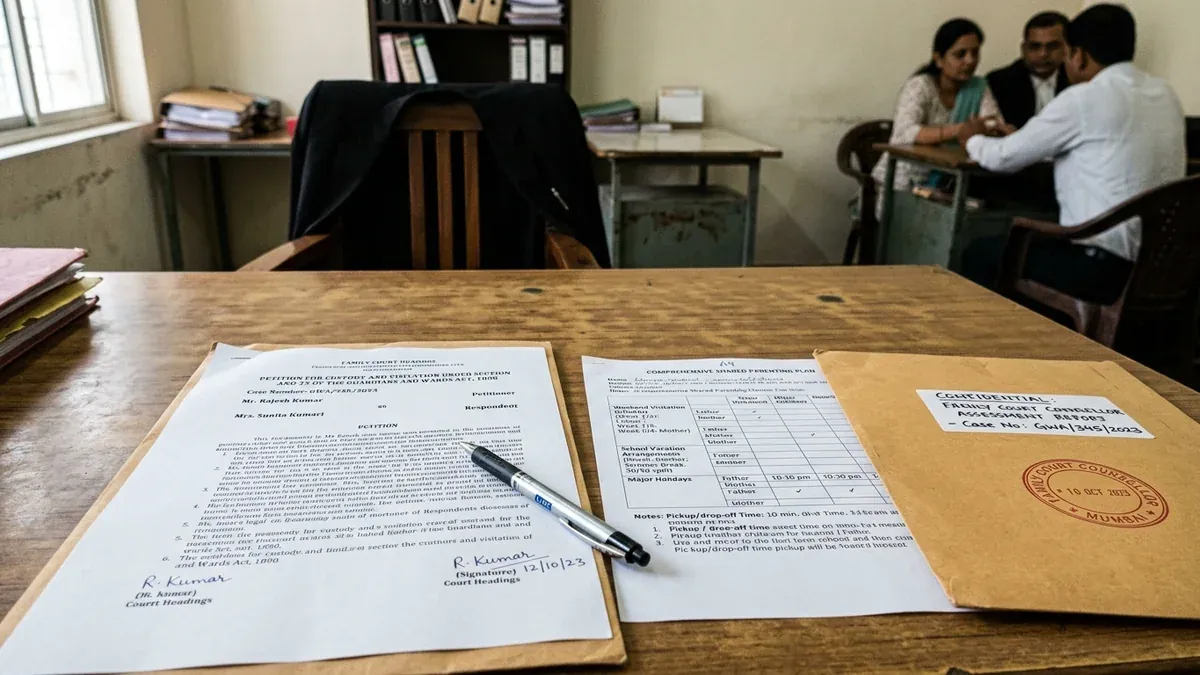
When matrimonial relationships collapse, the most agonizing, delicate, and high-stakes dispute is the custody and guardianship of minor children. Governed by the Guardians and Wards Act, 1890 (GWA), the Hindu Minority and Guardianship Act, 1956 (HMGA), and Section 26 of the Hindu Marriage Act, 1955, custody litigation is fundamentally different from ordinary adversarial lawsuits: it is not a battle of ownership between warring spouses, but an inquiry into human welfare.
The Supreme Court of India in landmark precedents from Gaurav Nagpal v. Sumedha Nagpal (2009 1 SCC 42) to Yashita Sahu v. State of Rajasthan (2020 3 SCC 210) has firmly established the doctrine of "Parens Patriae"—affirming that the moral, ethical, financial, and psychological welfare of the child is the supreme, non-negotiable consideration, superseding all statutory rights of parents.
In child custody disputes under the Guardians and Wards Act and Section 26 HMA, the paramount consideration is the welfare of the minor child, superseding statutory parental claims. Courts prioritize child psychological stability, schooling continuity, and shared parenting through generous weekend visitation, holiday custody, and daily video access.
1. The Paramount Principle: Welfare of the Child (Section 17 GWA)
Section 17 of the Guardians and Wards Act commands that in appointing a guardian, the court shall be guided by what appears to be for the welfare of the minor, considering:
- The age, sex, and religion of the minor;
- The character, capacity, and emotional proximity of the proposed guardian;
- The existing ties of affection and continuity of educational environment; and
- If the minor is old enough to form an intelligent preference, the court may consider that preference.
Under Section 6(a) HMGA, the natural guardian of a Hindu minor is the father, and after him, the mother, with the proviso that custody of a minor below five years ordinarily belongs to the mother. However, the Supreme Court in Gaurav Nagpal ruled that Section 6 must strictly yield to Section 13 HMGA and Section 17 GWA: if maternal custody harms the child, or if the father provides superior emotional and educational stability, custody will be awarded to the father regardless of age.
2. The Fundamental Right to Both Parents: Yashita Sahu Guidelines
In Yashita Sahu v. State of Rajasthan, a two-judge bench of the Supreme Court held:
"Even if the parents are at war with each other, the child should not be deprived of the love and affection of either parent. A child has a human right to access both parents. The non-custodial parent must be granted generous, meaningful visitation rights including weekend overnight stays, school holidays, and daily contact through electronic means."
Courts strongly disfavor treating the non-custodial parent as an occasional visitor in court visitation rooms, instead ordering:
- Physical Weekend Custody: Alternating weekends from Friday evening to Sunday night.
- Festival & Vacation Sharing: 50% split of summer vacations, Diwali, Christmas, and birthday celebrations.
- Virtual Digital Visitation: Mandatory 15-to-30 minute daily video calls via WhatsApp or Zoom.
Landmark Judicial Precedents & Statutory Authorities
Courts and appellate tribunals across Delhi NCR (Faridabad, Saket, Tis Hazari, Gurugram, High Courts) strictly apply these authoritative Supreme Court benchmarks:
The Supreme Court reaffirmed the three mandatory golden tests for grant of interlocutory injunctions under Order XXXIX Rules 1 and 2 of the Code of Civil Procedure: (i) strong prima facie case, (ii) balance of convenience tilted in applicant's favor, and (iii) imminent threat of irreparable injury not compensable in monetary damages. The Court held that temporary relief cannot be granted mechanically without judicial application of mind.