Securing 20% Interim Cash Compensation in Cheque Bounce under Section 143A NI Act: Application & Court Rules
 Authored by: Advocate Kishan Kumar (Advocate & Legal Consultant)
Quick Summary & Strategic Key Takeaways
- The Landmark Rakesh Ranjan Shrivastava Doctrine (2024): In its definitive ruling, the Supreme Court held that Section 143A of the Negotiable Instruments Act is DIRECTORY, NOT MANDATORY. Trial magistrates cannot automatically order 20% interim compensation and must record reasoned findings assessing the prima facie case and accused's defence.
- Strict Procedural Stage Requirement: Interim compensation cannot be sought at the inception of a complaint. It can be ordered strictly after the plea of the accused is recorded under Section 251 CrPC / Section 274 BNSS, or upon framing of charges.
- The 60 + 30 Day Statutory Timeline: The accused must remit the compensation within 60 days, extendable by 30 days upon sufficient cause. Non-payment triggers recovery proceedings as a fine under Section 421 CrPC / Section 461 BNSS via asset attachment.
- Mandatory Refund with RBI Interest on Acquittal: If the accused secures acquittal after trial, the complainant is legally bound to refund the entire 20% sum along with RBI bank rate interest within 60 to 90 days.
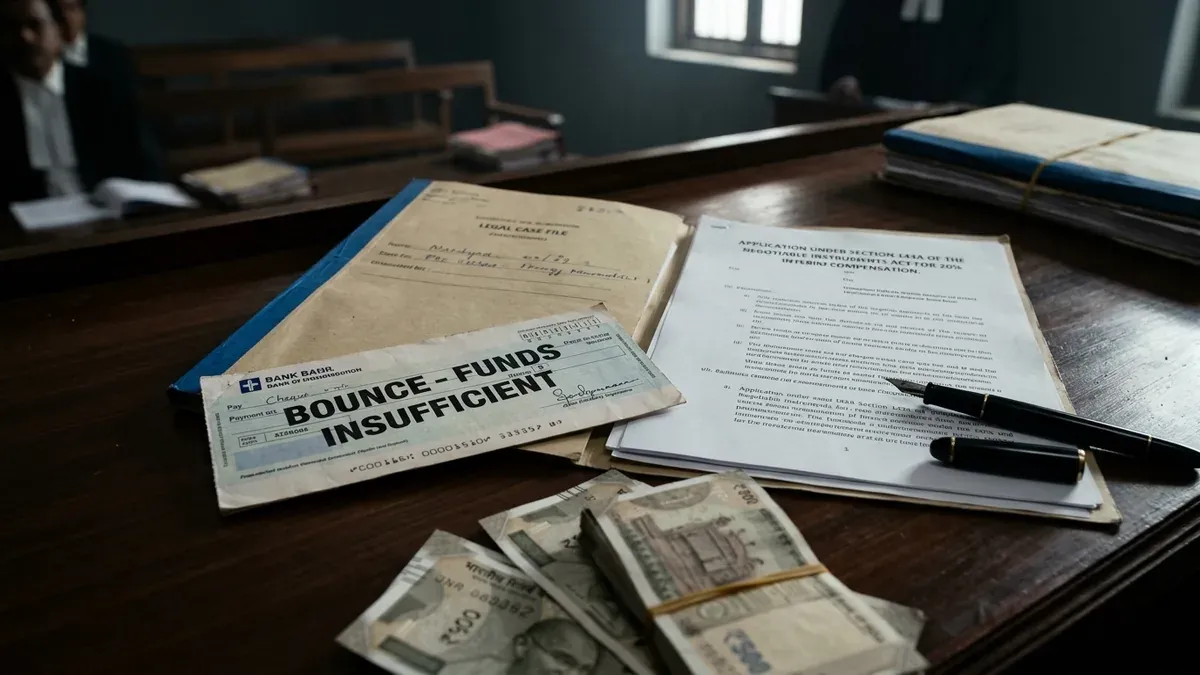
1. Legislative Intent: The 2018 Amendment & Section 143A NI Act
Cheque dishonour litigation under Section 138 of the Negotiable Instruments Act, 1881 has historically suffered from acute systemic delays. Chronic backlog in Magistrate Courts across Delhi NCR, Mumbai, and commercial hubs allowed unscrupulous drawers of cheques to prolong trial proceedings for years while enjoying the proceeds of unpaid commercial debt. To provide immediate liquidity relief to complainants during trial, Parliament enacted the Negotiable Instruments (Amendment) Act, 2018 (Act 20 of 2018), inserting Section 143A with effect from 1st September 2018.
Section 143A empowers the trial magistrate to order the drawer of the dishonoured cheque to pay interim compensation not exceeding twenty percent (20%) of the amount of the cheque to the complainant during the pendency of the criminal trial.
2. The Landmark Rakesh Ranjan Shrivastava Doctrine (2024): Directory vs. Mandatory
Following the 2018 amendment, trial magistrates across India routinely treated Section 143A as a mandatory provision, mechanically awarding 20% interim compensation in almost every case without examining the merits of the accused's defence.
This erroneous judicial practice was definitively overturned by the Supreme Court of India in the landmark judgment of Rakesh Ranjan Shrivastava v. State of Jharkhand & Anr. (Criminal Appeal No. 741 of 2024, decided on 15th March 2024). A Division Bench comprising Justice Sanjiv Khanna and Justice S.V.N. Bhatti held that:
- Section 143A is Directory and Discretionary: The word 'may' used in Section 143A(1) cannot be read as 'shall'. The provision vests discretionary power in the trial court.
- Application of Judicial Mind Mandatory: Interim compensation cannot be awarded as a matter of routine or automatic consequence of summons issuance. The court must evaluate whether the complainant has established a strong prima facie case.
- Evaluation of Accused's Defence: The court must consider the plausibility of the defence set up by the accused. If the accused demonstrates that the cheque was a stolen security, blank instrument, or that debt was extinguished, interim compensation should not be ordered.
- Financial Capacity Consideration: The magistrate must evaluate the financial capacity of the accused to pay, and whether directing 20% deposit would cause irreparable prejudice or business closure.
- Complainant's Restitution Solvency: The court must examine whether the complainant has the financial capability to refund the 20% amount with RBI interest if the accused is acquitted.
3. Statutory Stage: Recording of Plea (Section 251 CrPC / 274 BNSS)
Under Section 143A(1), the court cannot entertain or adjudicate an application for interim compensation at the stage of issuing summons or pre-summoning evidence. The power can be exercised strictly after:
- In a summary trial or a summons case: When the accused appears before the Magistrate and pleads not guilty upon the accusation being explained to them under Section 251 CrPC (now Section 274 of the Bharatiya Nagarik Suraksha Sanhita, 2023); OR
- In any other case: Upon the formal framing of charges.
4. Timelines & Recovery Mechanisms under Section 421 CrPC (Fine Realization)
Where an order under Section 143A is passed, the statute establishes strict payment timelines and coercive recovery mechanisms:
- 60-Day Primary Window: Under Section 143A(3), the interim compensation must be remitted by the accused within sixty (60) days from the date of the order.
- 30-Day Extension: Under Section 143A(4), upon application and showing sufficient cause, the court may extend the timeline by a further period not exceeding thirty (30) days.
- Recovery as a Fine under Section 421 CrPC / Section 461 BNSS: If the accused fails to pay, Section 143A(5) provides that the interim compensation may be recovered as if it were a fine. The Magistrate can issue:
- A warrant for levy of the amount by attachment and sale of any movable property belonging to the offender;
- A warrant to the District Collector authorizing the realization of the amount as arrears of land revenue from immovable properties.
5. Mandatory Restitution upon Acquittal: Repayment with RBI Bank Rate Interest
Section 143A contains a robust built-in statutory safeguard against malicious or unmerited prosecutions. Under Section 143A(4):
If the accused is acquitted at the conclusion of the trial, the court shall direct the complainant to repay to the accused the entire amount of interim compensation received, along with interest at the Bank Rate notified by the Reserve Bank of India prevalent at the beginning of the relevant financial year, within sixty (60) days (extendable by 30 days) from the date of the acquittal order.
6. Comparative Analysis: Section 143A (Pre-Trial) vs. Section 148 (Post-Conviction)
| Legal Dimension | Section 143A NI Act (Pre-Trial Stage) | Section 148 NI Act (Post-Conviction Stage) |
|---|---|---|
| Procedural Stage | During trial; after plea of not guilty recorded | In appeal before Sessions Court after conviction |
| Nature of Power | Directory & Discretionary (Rakesh Ranjan Shrivastava 2024) | Generally Mandatory (Surinder Singh Deswal 2019) |
| Quantum of Compensation | Capped at not exceeding 20% of cheque amount | Minimum 20% of fine/compensation awarded by trial court |
| Statutory Presumption Status | Accused is presumed innocent; trial ongoing | Presumption of innocence displaced by conviction judgment |
| Restitution Guarantee | Mandatory refund with RBI interest on acquittal | Refund with RBI interest if appeal is allowed |
7. Trial Defence Strategy: How to Successfully Oppose a Section 143A Application
When served with a Section 143A application, defence counsel must not file a generic reply. The defence must be structured around the specific judicial criteria laid down in Rakesh Ranjan Shrivastava:
- Establish a Bona Fide Plausible Defence: Place contemporaneous documentary evidence on record (emails, WhatsApp communications, police complaints) demonstrating that the cheque was a security instrument, that goods were defective, or that accounts were settled.
- Challenge Debt Enforceability under Section 138: Demonstrate that the underlying transaction was illegal, void under Section 23 Contract Act, or barred by limitation.
- Plead Acute Financial Hardship: Submit audited financial statements or ITRs demonstrating that directing an immediate 20% cash outflow will cause extreme insolvency or closure of business.
- Question Complainant's Restitution Capability: Demand that the complainant be required to furnish a bank guarantee or prove solvency to refund the 20% amount with interest in the event of acquittal.
8. Specimen Legal Reply to Complainant's Section 143A Application
SPECIMEN DEFENCE PLEADINGS: OPPOSING SECTION 143A COMPENSATION
"IN THE COURT OF METROPOLITAN MAGISTRATE / JMIC, [COURT LOCATION]
CC No. [XXXXX / Year]
In re: [Complainant Name] ... Complainant vs. [Accused Name] ... Accused
REPLY ON BEHALF OF THE ACCUSED OPPOSING COMPLAINANT'S APPLICATION UNDER SECTION 143A NI ACT
MOST RESPECTFULLY SHOWETH:
1. That the captioned application filed by the Complainant seeking interim compensation under Section 143A is legally misconceived, factually baseless, and liable to be dismissed in limine in light of the authoritative ruling of the Hon'ble Supreme Court of India in Rakesh Ranjan Shrivastava v. State of Jharkhand (Criminal Appeal No. 741 of 2024).
2. That Section 143A is directory and discretionary in nature. The Accused has set up an unassailable, bona fide defence demonstrating that: (a) The impugned cheque was issued strictly as conditional security for an unfulfilled supply contract; (b) The Complainant failed to deliver conforming goods, as evidenced by email dated [Date]; and (c) There exists no legally enforceable debt or liability under Section 138.
3. That directing payment of 20% interim compensation at this preliminary stage would cause grave and irreversible financial prejudice to the Accused, while the Complainant possesses no identifiable assets to guarantee restitution with RBI interest upon the Accused's ultimate acquittal.
PRAYER: It is therefore respectfully prayed that this Hon'ble Court may be pleased to dismiss the Complainant's Section 143A application with costs."
9. Actionable Cheque Bounce Defence Checklist for Litigants
Accused Cheque Bounce Defence Protocol
- Record Detailed Defence at Plea Stage: When recording your plea under Section 251 CrPC / Section 274 BNSS, dictate a specific, detailed defence stating why the cheque was not for enforceable debt.
- File Comprehensive Counter-Affidavit to 143A: Annex email correspondences, police complaints, and debit notes proving the existence of a triable dispute.
- Rely Explicitly on Rakesh Ranjan Shrivastava (2024): Cite the Supreme Court precedent to rebut the complainant's argument that interim compensation is mandatory.
- Highlight Complainant's Restitution Risk: Insist that the Magistrate demand proof of financial solvency from the complainant before ordering any interim deposit.
- Challenge Arbitrary Orders before Sessions Court / High Court: If the Magistrate passes a mechanical 143A order without recording reasons, file a Criminal Revision Petition under Section 438 BNSS (old 397 CrPC).
Frequently Asked Questions on Section 143A Interim Compensation
Key statutory answers and trial defence guidance curated by Negotiable Instruments Act Advocates in Delhi NCR.
Is Section 143A of the Negotiable Instruments Act mandatory or directory for trial courts?
In the landmark judgment of Rakesh Ranjan Shrivastava v. State of Jharkhand & Anr. (Criminal Appeal No. 741 of 2024), the Supreme Court authoritative ruled that Section 143A of the NI Act is directory and discretionary, NOT mandatory. The word 'may' used in Section 143A(1) confers judicial discretion. The magistrate cannot mechanically award 20% interim compensation merely upon the complainant's application. The court is legally obligated to apply its judicial mind, assess whether a prima facie case exists, evaluate the plausibility of the accused's defence, examine the financial capability of the accused, and record reasoned findings in writing.
At what procedural stage of a cheque bounce trial can Section 143A compensation be ordered?
Under Section 143A(1), interim compensation can be directed only at two specific stages: (a) In a summary trial or a summons case, where the accused pleads not guilty to the accusation upon recording of plea under Section 251 CrPC (now Section 274 BNSS); or (b) In any other case, upon the formal framing of charge. An application under Section 143A filed before the recording of plea or framing of charge is premature and legally non-maintainable.
What is the statutory timeline for paying Section 143A interim compensation?
Under Section 143A(3), the interim compensation ordered by the court must be paid by the accused within sixty (60) days from the date of the order. The court possesses discretionary power under Section 143A(4) to extend this period by a further period not exceeding thirty (30) days, upon sufficient cause being shown by the accused, creating an absolute maximum payment window of ninety (90) days.
How can the complainant recover interim compensation if the accused defaults on payment?
Under Section 143A(5), if the accused fails to remit the interim compensation within 60 (or 90) days, the amount can be recovered as if it were a fine under Section 421 of the Code of Criminal Procedure, 1973 (now Section 461 of the Bharatiya Nagarik Suraksha Sanhita, 2023). This empowers the trial magistrate to issue a distress warrant for the attachment and sale of any movable property belonging to the accused, or issue a warrant to the District Collector authorizing the realization of the amount as arrears of land revenue from immovable property.
What happens to the interim compensation if the accused is ultimately acquitted at trial?
Under Section 143A(4), if the accused is acquitted after trial, the court must direct the complainant to repay to the accused the entire amount of interim compensation received, along with interest at the Bank Rate notified by the Reserve Bank of India (RBI) prevalent at the beginning of the relevant financial year, within sixty (60) days (extendable by 30 days) from the date of the acquittal order.
What is the critical distinction between Section 143A and Section 148 of the NI Act?
Section 143A operates at the pre-trial / trial stage before conviction, where the grant of interim compensation (up to 20%) is directory and discretionary as per Rakesh Ranjan Shrivastava (2024). Section 148 operates at the appellate stage post-conviction, where the Appellate Court (Sessions Court) can order the appellant-convict to deposit a minimum of twenty percent (20%) of the fine or compensation awarded by the trial magistrate. In Surinder Singh Deswal v. Virender Gandhi (2019) 11 SCC 341, the Supreme Court held that Section 148 is generally mandatory unless exceptional circumstances exist.
What are the most effective legal defences to oppose a Section 143A application?
Effective defences include: (1) Citing the Rakesh Ranjan Shrivastava doctrine establishing that Section 143A is discretionary; (2) Demonstrating that the cheque was a blank security cheque issued for an incomplete commercial contract; (3) Establishing a pre-existing commercial dispute, defective goods delivery, or lack of legally enforceable debt under Section 138; (4) Demonstrating severe financial hardship or insolvency; and (5) Highlighting that the complainant lacks financial solvency to repay the 20% amount with RBI interest in the event of the accused's acquittal.