Section 141 NI Act: Protecting Independent & Non-Executive Directors from Cheque Bounce
 Authored by: Advocate Kishan Kumar (Senior Trial, Criminal Defence & Appellate Advocate)
Strategic Executive Summary
- Merely being a director does not make one vicariously liable under Section 141 NI Act.
- Complainant must aver specific role and active day-to-day management in the complaint.
- Independent and non-executive directors are immune unless direct complicity is established.
- Filing High Court quashing petition under Section 528 BNSS with MCA ROC records.
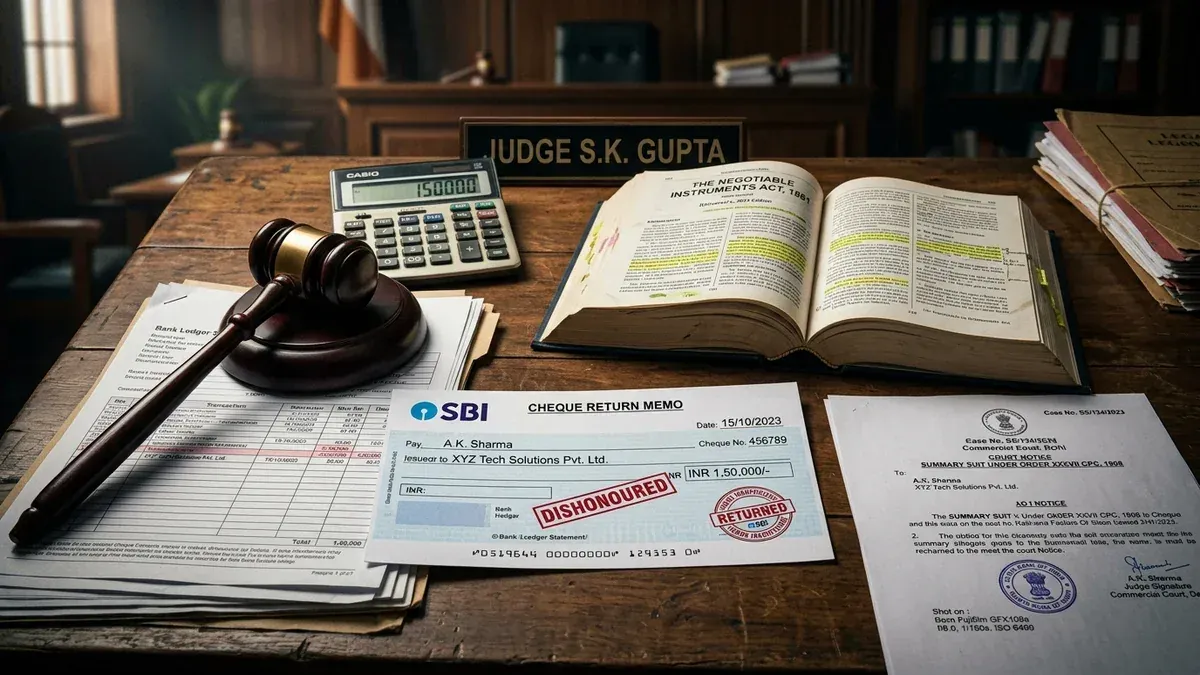
Understanding your exact legal rights and procedural remedies is vital when navigating Section 141 NI Act: Protecting Independent & Non-Executive Directors from Cheque Bounce. Under Indian jurisprudence, statutory compliance, preserving contemporaneous documentary records, and taking prompt recourse to competent courts dictate the final judicial outcome.
1. The Principle of Vicarious Criminal Liability under Sec 141
Litigation and legal strategy in this domain require an exact understanding of statutory thresholds, procedural safeguards, and competent judicial forums. The following comparative matrix outlines the operational parameters:
| Core Parameter | Primary Statutory Framework | Alternate / Legacy Position |
|---|---|---|
| Governing Provision | Section 141 NI Act | Legacy procedural or civil codes |
| Nature of Remedy | Urgent Judicial Relief / Preventive Protection | Post-hoc damages or protracted trial |
| Competent Forum | Sessions Court / High Court / Designated Tribunal | Civil Court or Magistrate Bench |
| Key Evidentiary Test | Bona fide cause, absence of mala fide, documentary trail | Oral allegations lacking corroboration |
| Urgency & Timeline | Time-sensitive statutory limitation windows | Routine calendar listing |
2. Managing Director vs Non-Executive & Independent Director
The substantive law governing Section 141 NI Act: Protecting Independent & Non-Executive Directors from Cheque Bounce operates on the dual principles of constitutional fairness and strict statutory compliance. Under the modern legal framework established by Section 141 NI Act • SMS Pharmaceuticals v. Neeta Bhalla • Sunita Palita v. Panchami Stone Quarry • Section 528 BNSS, trial courts must balance judicial discretion with binding appellate precedents.
The Supreme Court of India has repeatedly emphasized that procedural safeguards enacted for the protection of citizens and litigants are mandatory, not directory. In instances where statutory procedures are bypassed by investigating authorities or adversarial litigants, the resulting proceedings are vitiated ab initio and subject to high court quashing.
To substantiate a claim or establish a robust defense before trial courts in Faridabad, Gurugram, or Delhi, counsel must lead primary documentary evidence. Conjectural claims or uncorroborated oral testimony are consistently disregarded in the presence of verified contemporaneous records.
3. Mandatory Averments Required in Complaint: SMS Pharmaceuticals Test
The substantive law governing Section 141 NI Act: Protecting Independent & Non-Executive Directors from Cheque Bounce operates on the dual principles of constitutional fairness and strict statutory compliance. Under the modern legal framework established by Section 141 NI Act • SMS Pharmaceuticals v. Neeta Bhalla • Sunita Palita v. Panchami Stone Quarry • Section 528 BNSS, trial courts must balance judicial discretion with binding appellate precedents.
The Supreme Court of India has repeatedly emphasized that procedural safeguards enacted for the protection of citizens and litigants are mandatory, not directory. In instances where statutory procedures are bypassed by investigating authorities or adversarial litigants, the resulting proceedings are vitiated ab initio and subject to high court quashing.
To substantiate a claim or establish a robust defense before trial courts in Faridabad, Gurugram, or Delhi, counsel must lead primary documentary evidence. Conjectural claims or uncorroborated oral testimony are consistently disregarded in the presence of verified contemporaneous records.
4. High Court Quashing Procedure with Form DIR-12 ROC Proof
The substantive law governing Section 141 NI Act: Protecting Independent & Non-Executive Directors from Cheque Bounce operates on the dual principles of constitutional fairness and strict statutory compliance. Under the modern legal framework established by Section 141 NI Act • SMS Pharmaceuticals v. Neeta Bhalla • Sunita Palita v. Panchami Stone Quarry • Section 528 BNSS, trial courts must balance judicial discretion with binding appellate precedents.
The Supreme Court of India has repeatedly emphasized that procedural safeguards enacted for the protection of citizens and litigants are mandatory, not directory. In instances where statutory procedures are bypassed by investigating authorities or adversarial litigants, the resulting proceedings are vitiated ab initio and subject to high court quashing.
To substantiate a claim or establish a robust defense before trial courts in Faridabad, Gurugram, or Delhi, counsel must lead primary documentary evidence. Conjectural claims or uncorroborated oral testimony are consistently disregarded in the presence of verified contemporaneous records.
5. Supreme Court Immunity Rulings for Sleeping Directors
The substantive law governing Section 141 NI Act: Protecting Independent & Non-Executive Directors from Cheque Bounce operates on the dual principles of constitutional fairness and strict statutory compliance. Under the modern legal framework established by Section 141 NI Act • SMS Pharmaceuticals v. Neeta Bhalla • Sunita Palita v. Panchami Stone Quarry • Section 528 BNSS, trial courts must balance judicial discretion with binding appellate precedents.
The Supreme Court of India has repeatedly emphasized that procedural safeguards enacted for the protection of citizens and litigants are mandatory, not directory. In instances where statutory procedures are bypassed by investigating authorities or adversarial litigants, the resulting proceedings are vitiated ab initio and subject to high court quashing.
To substantiate a claim or establish a robust defense before trial courts in Faridabad, Gurugram, or Delhi, counsel must lead primary documentary evidence. Conjectural claims or uncorroborated oral testimony are consistently disregarded in the presence of verified contemporaneous records.
6. Defense Checklist for Board Members
The substantive law governing Section 141 NI Act: Protecting Independent & Non-Executive Directors from Cheque Bounce operates on the dual principles of constitutional fairness and strict statutory compliance. Under the modern legal framework established by Section 141 NI Act • SMS Pharmaceuticals v. Neeta Bhalla • Sunita Palita v. Panchami Stone Quarry • Section 528 BNSS, trial courts must balance judicial discretion with binding appellate precedents.
The Supreme Court of India has repeatedly emphasized that procedural safeguards enacted for the protection of citizens and litigants are mandatory, not directory. In instances where statutory procedures are bypassed by investigating authorities or adversarial litigants, the resulting proceedings are vitiated ab initio and subject to high court quashing.
To substantiate a claim or establish a robust defense before trial courts in Faridabad, Gurugram, or Delhi, counsel must lead primary documentary evidence. Conjectural claims or uncorroborated oral testimony are consistently disregarded in the presence of verified contemporaneous records.
7. Frequently Asked Questions
When dealing with contentious legal scenarios in Delhi NCR and Haryana, structured pre-trial preparation often dictates the final outcome of the case. Retaining experienced courtroom counsel early ensures that procedural rights under Section 141 NI Act • SMS Pharmaceuticals v. Neeta Bhalla • Sunita Palita v. Panchami Stone Quarry • Section 528 BNSS are fully preserved.
Practical Procedural Action Protocol
- Audit Formal Notices: Scrutinize the legality, service date, and territorial competence of any statutory summon, demand notice, or police communication.
- Secure Certified Digital Records: Preserve original WhatsApp chats, emails, banking ledgers, and CCTV footage with mandatory Section 63 BSA compliance.
- File Timely Protective Motions: Approach the competent Sessions Court or High Court without delay to preempt coercive steps, ex-parte attachments, or unlawful detention.
- Avoid Self-Incrimination: Exercise your constitutional rights under Article 20(3) and Article 22(1) during police interrogation or investigative inquiries.
Statutory Authorities & Legal References
- Section 141 NI Act • SMS Pharmaceuticals v. Neeta Bhalla • Sunita Palita v. Panchami Stone Quarry • Section 528 BNSS
- Code of Civil Procedure, 1908 & Specific Relief Act, 1963
- Bharatiya Sakshya Adhiniyam, 2023 (Section 63 Electronic Evidence Protocol)
- Binding Precedents of the Supreme Court of India, Delhi High Court, and Punjab & Haryana High Court
- Reported rulings in Supreme Court Cases (SCC), AIR, and Delhi Law Times (DLT)
Disclaimer: This guide is authored for educational and informational purposes under the Advocates Act, 1961. It does not constitute formal legal advice. For case-specific counsel, contact our advocates.
Frequently Asked Questions
Authoritative statutory answers and procedural guidance curated by Senior Advocates in Faridabad & Delhi NCR.
What is the immediate legal remedy when facing an issue regarding Section 141 NI Act: Protecting Independent & Non-Executive Directors from Cheque Bounce?
The immediate legal remedy involves consulting an experienced advocate to evaluate statutory protections under Section 141 NI Act. Depending on urgency, moving an application before the Judicial Magistrate, Sessions Court, or High Court for interim protection or statutory relief is critical.
Which court holds jurisdiction to entertain proceedings related to this matter in Delhi NCR?
Jurisdiction depends on the statutory cause of action. In Delhi NCR, criminal and bail matters lie before the designated District & Sessions Courts (Patiala House, Saket, Tis Hazari, Dwarka, Rohini, Karkardooma, or Faridabad Sector 12). High Courts exercise concurrent revisional and inherent powers under Section 528 BNSS / Section 482 CrPC.
What are the mandatory documents required to file a court petition?
Essential documents include certified copies of relevant police reports or notices, identity verification, verified affidavits of assets/facts, exculpatory digital or documentary records, and certified Vakalatnama empowering legal counsel.
What is the statutory limitation period to initiate court proceedings?
Limitation periods are governed strictly by the Limitation Act, 1963 and special statutory codes (e.g. 30 days for Section 138 NI Act notices, 60/90 days for statutory default bail, 3 years for civil recovery suits). Delay must be explained with sufficient cause under Section 5 Limitation Act.
How can I consult Advocate Advocate Kishan Kumar for strategic representation in Delhi NCR?
You can schedule a confidential legal consultation at Urban Rights Legal Consultants (Chamber Complex, District & Sessions Court, Sector-12, Faridabad) or request an urgent online review via telephone or WhatsApp at +91-9716770343.