
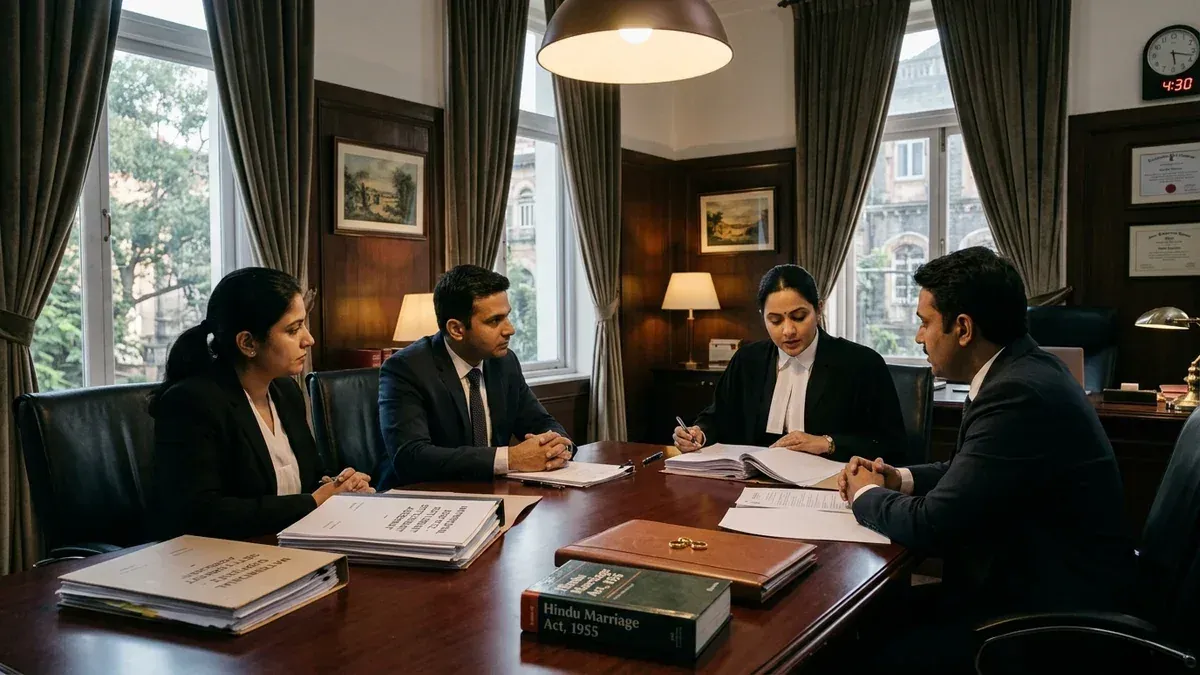
The maintenance rights of divorced Muslim women occupy a central position in the constitutional history of gender justice in India. For decades, traditionalist interpretations of personal law asserted that a Muslim husband's obligation to maintain his divorced wife ceased completely upon the expiration of the three-month Iddat period. That paradigm was shattered by the historic Constitution Bench ruling of the Supreme Court in Mohd. Ahmed Khan v. Shah Bano Begum (1985) 2 SCC 556.
Authored by Chief Justice Y.V. Chandrachud, the court affirmed that Section 125 of the Code of Criminal Procedure, 1973 is a secular, public order measure enacted to prevent destitution and vagrancy, overriding personal laws. Despite subsequent legislative efforts to restrict this ruling through the Muslim Women (Protection of Rights on Divorce) Act, 1986, the Supreme Court in Danial Latifi v. Union of India (2001) 7 SCC 740, Shabana Bano v. Imran Khan (2010), and recent 2024 verdicts confirmed that a divorced Muslim woman possesses an unfettered legal right to claim maintenance under the secular procedural code—now codified under Section 144 of the Bharatiya Nagarik Suraksha Sanhita, 2023 (BNSS).
"Section 125 is truly secular in character. It cuts across the barriers of religion and affords a swift and summary remedy to wives, children and parents who are in distress and unable to maintain themselves. There is no conflict between the provisions of Section 125 and the Muslim Personal Law on the question of the Muslim husband's obligation to provide maintenance for a divorced wife who is unable to maintain herself."
1. The Legislative Reaction: Danial Latifi's Harmonious Interpretation
Following intense political agitation after Shah Bano, Parliament enacted the Muslim Women (Protection of Rights on Divorce) Act, 1986. Section 3(1)(a) of the 1986 Act provided that a divorced woman was entitled to "a reasonable and fair provision and maintenance to be made and paid to her within the iddat period by her former husband."
When the constitutional validity of the 1986 Act was challenged in Danial Latifi (2001), a 5-judge Constitution Bench performed a masterful act of judicial construction:
| Statutory Phrase | Conservative Argument | Supreme Court's Binding Construction |
|---|---|---|
| "Within the Iddat Period" | Maintenance is payable only for the 3 months duration of Iddat. | The liability to make the arrangement must be discharged within the Iddat period, but the provision itself must cover the woman's entire life or until remarriage. |
| "Fair Provision and Maintenance" | Interpreted as mere daily subsistence allowance. | Two distinct concepts: "Maintenance" covers day-to-day food and clothing; "Provision" requires a lump-sum corpus, residence, or property to secure her dignified future. |
| Constitutionality of 1986 Act | Challenged as discriminatory under Articles 14 and 15. | Upheld as valid precisely because it does not deprive Muslim women of long-term economic security, creating a more beneficial lump-sum remedy. |
2. The Dual-Track Legal Remedy for Divorced Muslim Women
In family court practice today across Delhi NCR, an estranged or divorced Muslim woman possesses two parallel, mutually reinforcing statutory remedies:
- Secular Monthly Maintenance under Section 144 BNSS (Section 125 CrPC): She can file before the Family Court seeking continuous monthly maintenance. As confirmed in Shabana Bano (2010), the existence of the 1986 Act does not bar her from choosing the secular remedy under the Code.
- Lump-Sum Application under Section 3 of the 1986 Act: She can file before the Judicial Magistrate seeking:
- Recovery of unpaid Mahr (dower) agreed upon at the time of marriage;
- Return of all properties, wedding gifts, and jewelry (Jahez / Streedhan);
- A capital lump-sum calculated to maintain her in dignity for the remainder of her life, considering the financial status of the former husband.
3. Calculating Maintenance: Income Affidavits & Rajnesh v. Neha Standards
Whether litigating under Section 144 BNSS or Section 3 of the 1986 Act, the quantum of maintenance is governed by the Supreme Court's mandatory disclosure guidelines in Rajnesh v. Neha (2021) and Aditi alias Mita v. Jitesh Sharma (2023). Both parties must submit detailed Affidavits of Assets and Liabilities, including:
- Income Tax Returns (ITRs) for the preceding three financial years;
- Bank statements for all accounts held individually or jointly;
- Directorships, partnership shares, and business revenue streams;
- Living expenses, child educational fees, and standard of living enjoyed during the subsistence of marriage.
Ready Maintenance Petition Format: Section 144 BNSS for Divorced Muslim Wife
IN THE FAMILY COURT AT SAKET COURTS, NEW DELHI

MAINTENANCE PETITION NO. ________ OF 2026

IN THE MATTER OF:
[Petitioner Wife]                                       ...PETITIONER
                                VERSUS
[Respondent Husband]                                    ...RESPONDENT

PETITION UNDER SECTION 144 OF THE BHARATIYA NAGARIK SURAKSHA SANHITA, 2023

MOST RESPECTFULLY SHOWETH:

1. That the Petitioner and Respondent were married according to Muslim rites and ceremonies on [Date] at New Delhi.

2. That the Respondent unilaterally pronounced Talaq on [Date] and abandoned the Petitioner without making any reasonable or fair provision for her livelihood.

3. That the Petitioner has completed the Iddat period and has not remarried. The Petitioner has no independent source of income and is completely unable to maintain herself.

4. That the Respondent is an employed professional / businessman earning a monthly income of Rs. [__] and possessing substantial movable and immovable assets, as detailed in the accompanying Affidavit of Assets and Liabilities.

5. That as authoritatively established by the Hon'ble Supreme Court in Mohd. Ahmed Khan v. Shah Bano Begum (1985) 2 SCC 556, Danial Latifi v. Union of India (2001) 7 SCC 740, and Shabana Bano v. Imran Khan (2010) 1 SCC 666, a divorced Muslim woman is entitled to maintain a petition under the secular criminal procedure code and claim monthly maintenance commensurate with her husband's lifestyle.

PRAYER: It is therefore prayed that this Hon'ble Court may be pleased to award monthly interim and permanent maintenance of Rs. [__] per month in favor of the Petitioner.

PETITIONER
THROUGH COUNSEL
NEW DELHI | DATED: [Date]
Official Landmark Case Brief
Read our in-depth case study: Mohd. Ahmed Khan v. Shah Bano Begum (1985) Landmark Case Brief and our brief on Danial Latifi v. Union of India (2001). Our family litigation team represents women and respondents in maintenance, dower recovery, and matrimonial proceedings across Delhi NCR Family Courts.

Advocate Kishan Kumar
Criminal, Civil & Debt Recovery Advocate • Bar Council of Delhi