
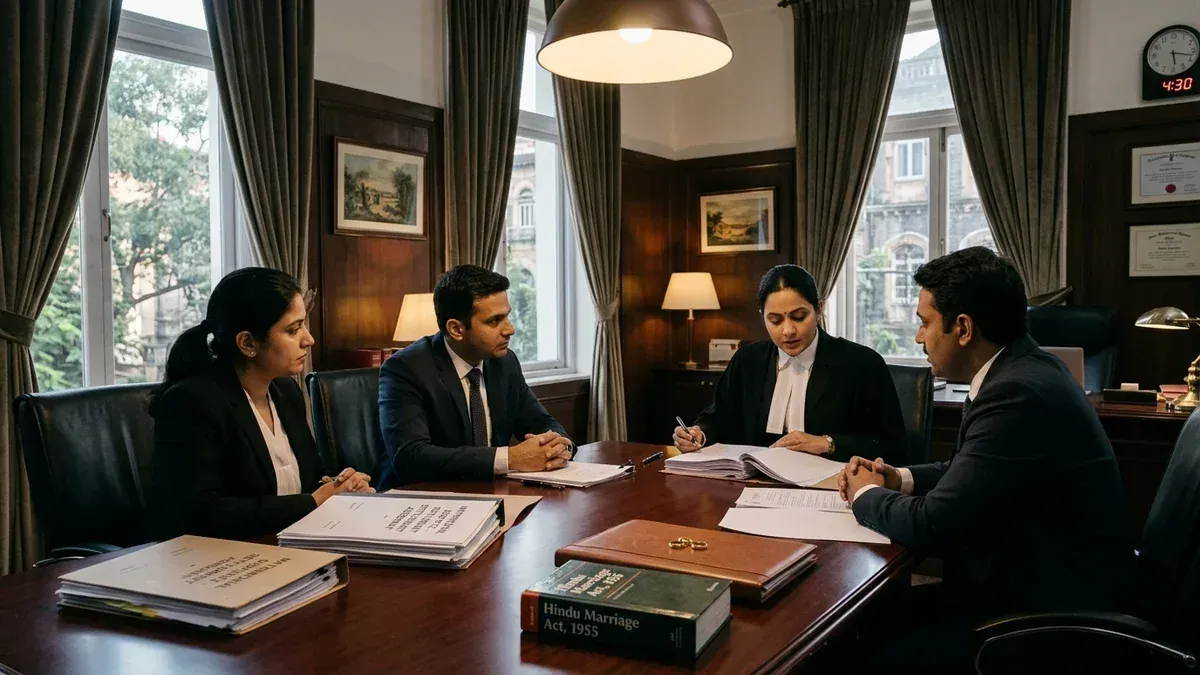
One of the most distressing stratagems deployed in matrimonial breakdowns across Delhi NCR, Gurugram, and Faridabad is the orchestrated eviction of the wife. Following marital discord, the husband quietly abandons the matrimonial home or moves to rented premises, leaving the wife and children behind. Shortly thereafter, the husband's parents or the landlord institutes a civil eviction suit or maintenance eviction petition under the Senior Citizens Act, 2007, alleging that the wife is a mere licensee whose permission to occupy has been revoked.
For over a decade, in-laws relied on the notorious ruling in S.R. Batra v. Tarun Batra (2007) to throw wives onto the street on the pretext that the property belonged exclusively to the in-laws. That harsh doctrine was authoritatively overruled by a 3-Judge Bench of the Supreme Court in B.P. Achala Anand v. S. Appi Reddy (2005) 3 SCC 313 and subsequently in the landmark ruling in Satish Chander Ahuja v. Sneha Ahuja (2020) 10 SCC 788.
Under Section 17 of the Protection of Women from Domestic Violence Act, 2005 (DV Act), every woman in a domestic relationship has an absolute statutory right to reside in the shared household. She cannot be dispossessed or excluded from the matrimonial home save in accordance with the procedure established by law. Collusive eviction decrees obtained behind her back are nullities in the eyes of law.
1. Evolution of the Shared Household Doctrine
To mount an effective defense, advocates must understand the progressive evolution of Supreme Court jurisprudence:
| Legal Landmark | Key Doctrine | Impact on Deserted Wife |
|---|---|---|
| Achala Anand v. Appi Reddy (2005) | Deserted wife has an inchoate right of residence flowing from marriage. If husband abandons tenanted premises, wife can contest eviction in her own right. | Prevents husbands from colluding with landlords to obtain default surrender decrees. |
| Tarun Batra (2007) [Overruled] | Held that a shared household only means property owned by husband or joint family. | Led to rampant misuse where husbands transferred properties to parents to evict wives. |
| Satish Chander Ahuja (2020) [3-Judge Bench] | Expressly overruled Tarun Batra. Property owned exclusively by in-laws is a shared household if the woman lived there in a domestic relationship. | In-laws cannot evict a daughter-in-law without providing comparable alternative accommodation. |
| Prabha Tyagi v. Kamlesh Devi (2022) | Affirmed that actual physical living on the date of complaint is not necessary; subsisting right to reside is sufficient. | Protects wives who were forcibly driven out or locked out of the shared household. |
2. Overcoming the Senior Citizens Act (2007) Eviction Weapon
A frequent counterblast deployed by in-laws is filing an eviction complaint before the Maintenance Tribunal / District Magistrate under the Maintenance and Welfare of Parents and Senior Citizens Act, 2007:
- In Smt. S. Vanitha v. Deputy Commissioner, Bengaluru Urban District (2021) 15 SCC 730, the Supreme Court harmonized the two statutes:
- The tribunal under the Senior Citizens Act cannot order summary eviction of a daughter-in-law without considering her statutory right of residence under the DV Act.
- The right of senior citizens to live peacefully must be harmonized with the wife's right against homelessness, requiring the son or in-laws to provide suitable alternative accommodation before any relocation order is passed.
3. Step-by-Step Defense Playbook for Deserted Wives
Follow this five-step courtroom strategy to protect your client's roof:
- Move an Immediate Application under Section 19 DV Act: File an application before the Metropolitan Magistrate / Judicial Magistrate seeking an ex-parte residence order restraining the respondents from dispossessing the wife or renouncing rights in the shared household.
- Apply for Impleadment in Pending Civil Suits: If in-laws or third parties file a suit for possession against the husband, move an application under Order I Rule 10 CPC citing Achala Anand (2005) to be impleaded as a necessary and proper party.
- Seek Injunction Against Alienation: Obtain an injunction restraining the husband and in-laws from creating third-party rights, mortgages, or lease agreements intended to defeat the shared household.
- Demand Alternate Accommodation: If domestic friction makes cohabitation impossible, invoke Section 19(1)(f) of the DV Act directing the husband to pay monthly rent for alternative accommodation of equal standard.
Ready Court Draft: Application under Section 19 DV Act for Residence Order
IN THE COURT OF THE LEARNED CHIEF METROPOLITAN MAGISTRATE / JUDICIAL MAGISTRATE, DELHI / GURUGRAM

CC NO. ________ OF 2026

IN THE MATTER OF:
[Aggrieved Wife Name]                        ...AGGRIEVED PERSON
                             VERSUS
1. [Husband Name]
2. [Father-in-Law Name]
3. [Mother-in-Law Name]                      ...RESPONDENTS

APPLICATION UNDER SECTION 19 READ WITH SECTION 23 OF THE PROTECTION OF WOMEN FROM DOMESTIC VIOLENCE ACT, 2005
FOR INTERIM RESIDENCE ORDERS RESTRAINING DISPOSSESSION FROM SHARED HOUSEHOLD

MOST RESPECTFULLY SHOWETH:

1. That the Aggrieved Person is the legally wedded wife of Respondent No. 1, having been married on [Date] according to Hindu rites and ceremonies.
2. That following the marriage, the Aggrieved Person lived continuously in the shared household bearing Property No. [Property Details] with all the Respondents.
3. That following matrimonial discord, Respondent No. 1 has strategically relocated to separate premises, and Respondents No. 2 and 3 are actively threatening to forcibly throw out the Aggrieved Person and her minor children.
4. That in terms of the binding 3-Judge Bench ruling of the Supreme Court in Satish Chander Ahuja v. Sneha Ahuja (2020) 10 SCC 788, the suit property constitutes a "shared household" under Section 2(s), and the Aggrieved Person has an absolute statutory right under Section 17 not to be evicted save in accordance with law.
5. That the Aggrieved Person has no other shelter or alternative accommodation and will be rendered destitute along with her minor children if dispossessed.

PRAYER:
It is therefore respectfully prayed that this Hon'ble Court may be pleased to:
a) Pass an ex-parte ad-interim Residence Order under Section 19(1)(a) restraining the Respondents from dispossessing or in any manner disturbing the peaceful possession of the Aggrieved Person from the shared household;
b) Restrain the Respondents under Section 19(1)(d) from alienating, selling, or encumbering the shared household; and
c) Pass any further order(s) deemed fit and proper in the interest of justice.

AGGRIEVED PERSON
THROUGH COUNSEL
Official Landmark Case Brief
Review the comprehensive case analysis: B.P. Achala Anand v. S. Appi Reddy (2005) Brief & Ratio. Our matrimonial defense advocates represent wives and families across Delhi NCR in shared household disputes, domestic violence proceedings, and civil eviction trials.

Advocate Kishan Kumar
Criminal, Civil & Debt Recovery Advocate • Bar Council of Delhi