
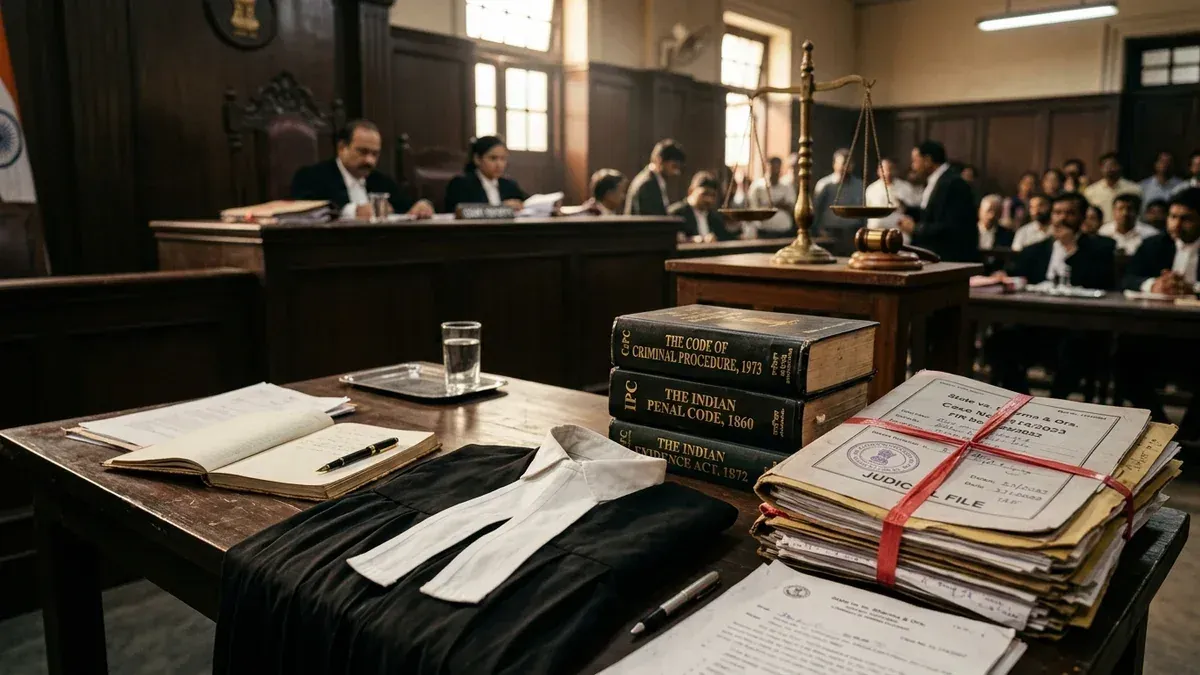
In contemporary criminal trials, commercial disputes, and matrimonial litigation across Indian courts, WhatsApp messages, digital audio recordings, emails, and Call Detail Records (CDRs) frequently form the substantive foundation of claims and defences. However, tender of digital printouts or downloaded media without adhering to strict statutory certification protocols leads to instantaneous rejection at the trial exhibit stage.
With the enactment of the Bharatiya Sakshya Adhiniyam, 2023 (BSA), which superseded the Indian Evidence Act, 1872 (IEA) on July 1, 2024, the legal regime governing electronic records has undergone pivotal structural updates. Section 63 of the BSA replicates and expands upon Section 65B of the repealed Evidence Act, incorporating statutory recognition for digital signatures, semi-conductor memories, and structured Schedule certificates. Crucially, the jurisprudence settled by the landmark three-judge bench of the Supreme Court in Arjun Panditrao Khotkar v. Kailash Kushanrao Gorantyal (2020) 7 SCC 1 continues to dictate how electronic secondary evidence must be gathered, certified, and admitted.
An electronic printout, screenshot, or pen drive is secondary evidence that is wholly inadmissible unless accompanied by a contemporaneous statutory certificate under Section 63(4) BSA (formerly Section 65B(4) IEA). The sole exception established in Arjun Khotkar is when the primary device itself (the physical smartphone, hard drive, or server) is produced in the witness box and demonstrated directly to the trial judge.
1. Primary vs. Secondary Electronic Evidence: The Core Distinction
To avoid fatal evidentiary traps, trial practitioners must first distinguish whether their proffered proof is primary or secondary evidence:
- Primary Electronic Evidence (Section 57 BSA / Section 62 IEA): The physical electronic device on which the original record was created, stored, or received. For example, bringing the actual mobile phone to court, presenting it as an exhibit, having the witness open WhatsApp, and demonstrating the chat thread in the witness box. In this scenario, no Section 63 BSA certificate is legally required.
- Secondary Electronic Evidence (Section 58 & 63 BSA / Section 63 & 65B IEA): Any reproduction, printout, screenshot, CD-ROM, USB flash drive, external hard drive backup, or server extraction containing the digital communication. The moment data leaves the original handset and is printed or saved onto media, it becomes secondary evidence and cannot be marked as an exhibit without a valid certificate.
2. Section 63 BSA vs. Section 65B IEA: Comparative Analysis
The transition from Section 65B IEA to Section 63 BSA codified modern digital realities while retaining the core protective architecture:
| Parameter | Section 65B Evidence Act, 1872 | Section 63 BSA, 2023 | Practical Litigation Impact |
|---|---|---|---|
| Statutory Scope | Addressed "computer outputs" produced by traditional computing systems. | Expressly includes communications devices, smartphones, tablets, cloud servers, and semi-conductor chips. | Eliminates disputes regarding whether mobile phones constitute "computers". |
| Mandatory Schedule | Prescribed conditions in sub-section (4) without a statutory schedule format. | Introduces a standardized Schedule with Part A (Party/User) and Part B (Expert/Custodian). | Ensures uniformity across trial courts and minimizes drafting deficiencies. |
| Hash Value & Forensics | Hash value validation was an investigative best practice, not explicit in statute. | Emphasizes electronic record integrity, system validation, and forensic hash algorithms (SHA-256). | Enhances reliability against tampered screenshots and AI-altered image files. |
| Curability of Omission | Permitted filing of supplementary certificate prior to judgment (Arjun Khotkar). | Continues the curability doctrine; non-filing at initial stage is not fatal if cured before evidence closes. | Protects bona fide complainants and plaintiffs from procedural dismissal. |
3. The Landmark Principles of Arjun Panditrao Khotkar (2020)
The 3-Judge Bench in Arjun Panditrao Khotkar definitively resolved a decade of conflicting two-judge bench precedents (overruling Shafhi Mohammad (2018) and reaffirming Anvar P.V. (2014)). The Supreme Court established five binding rules that every trial lawyer must master:
- Mandatory Nature: A Section 65B(4) / Section 63(4) certificate is a condition precedent to the admissibility of any secondary electronic evidence. Verbal testimony alone cannot substitute for the written statutory certificate.
- Production of Primary Device: If the original smartphone or server is produced and inspected, no certificate is necessary. However, since courts cannot retain litigants' personal phones indefinitely, secondary printouts with certificates remain the standard procedure.
- Stage of Production: In criminal cases, while the prosecution should file certificates with the report under Section 173 CrPC (Section 193 BNSS), the trial judge has discretionary power under Section 311 CrPC (Section 348 BNSS) to allow production of the certificate at a subsequent stage before judgment.
- The Uncooperative Third-Party Rule (Paragraph 52): What happens when WhatsApp chats or emails reside on another person's device, or when an adverse party refuses to sign a certificate? The Supreme Court held that the litigant is not remediless:
What if the Handset Owner Refuses to Certify? (Paragraph 52 Rule)
Under paragraph 52 of Arjun Khotkar, if a party cannot personally certify an electronic record because the device is owned or controlled by someone else (e.g., an ex-spouse, an employer, an opposing business director, or a telecom service provider), the party must make an application to the Court under Section 91 CrPC (now Section 94 BNSS) or Order XVI of the Code of Civil Procedure, 1908. Once the party applies to the court to summon the device or direct the witness to produce the certificate, the party has exhausted all means in law, and the electronic evidence cannot be excluded for failure to supply a voluntary certificate.
4. Step-by-Step Protocol: How to Prove WhatsApp Chats in a Trial Court
Follow this five-step courtroom blueprint when tendering WhatsApp chats as exhibits in District Courts (such as Saket, Tis Hazari, Gurugram, or Faridabad):
Step 1: Proper Digital Capture & Export
Screenshots alone are vulnerable to allegations of fabrication, Photoshop manipulation, or cropping of vital context. To establish unimpeachable authenticity:
- Export the entire chat thread using WhatsApp's built-in "Export Chat without Media" or "Export Chat with Media" feature. This generates an unedited
.txtfile containing exact UTC/IST timestamps, phone numbers, and consecutive messages. - Take full-screen screenshots that clearly display the mobile network carrier, battery percentage, phone number (not just a saved contact nickname), and timestamp.
- Save the raw exported text file, media files, and screenshots onto a read-only optical disc (CD-R/DVD-R) or write-protected USB drive.
Step 2: Securing Telecom Subscriber Details
A WhatsApp account is tied directly to a mobile SIM card. To prove that the sender was indeed the accused or opposite party:
- Move an application under Section 94 BNSS (Section 91 CrPC) or Order XVI CPC seeking a direction to the Telecom Service Provider (Airtel, Jio, Vi) to preserve and produce the Customer Application Form (CAF), Aadhaar identity verification, and Call Detail Records (CDRs) for the mobile number.
- Obtain a telecom nodal officer certificate certifying that the number was registered and active in the name of the opposite party on the dates of communication.
Step 3: Drafting the Section 63 BSA / 65B IEA Certificate
The certificate must strictly satisfy the statutory requirements under Section 63(4) BSA. It must be executed by the person who had lawful custody or management of the phone or computing device when the printout or export was generated.
Ready Court Draft: Section 63 BSA Certificate for WhatsApp Chats
IN THE COURT OF THE LEARNED JUDICIAL MAGISTRATE / CIVIL JUDGE, FARIDABAD / DELHI

IN THE MATTER OF:
[Complainant / Plaintiff Name]               ...Complainant / Plaintiff
                               VERSUS
[Accused / Defendant Name]                   ...Accused / Defendant

CERTIFICATE UNDER SECTION 63(4) OF THE BHARATIYA SAKSHYA ADHINIYAM, 2023
(CORRESPONDING TO SECTION 65B(4) OF THE INDIAN EVIDENCE ACT, 1872)

I, [Deponent Name], S/o [Father Name], aged about [Age] years, R/o [Address], do hereby solemnly affirm and declare as follows:

1. That I am the Complainant / Plaintiff in the above-titled proceeding and am fully conversant with the facts of the case.
2. That I am the lawful owner, subscriber, and custodian of the mobile phone handset make: [e.g., Apple iPhone 15 Pro / Samsung Galaxy S24], IMEI No. [IMEI Number], having mobile number [+91-XXXXXXXXXX] registered in my name with [Telecom Provider].
3. That during the period from [Start Date] to [End Date], I communicated with the Accused / Defendant [Name], who was using mobile number [+91-YYYYYYYYYY], via the encrypted messaging application WhatsApp.
4. That on [Date of Export], I produced a computer output in the form of physical printouts (Ex. PW-1/A colly, running into pages 1 to 24) and saved digital copies on a write-protected CD-R (Ex. PW-1/B) directly from my aforesaid mobile phone.
5. That throughout the aforesaid period, the mobile handset and the WhatsApp application were operating properly, and there were no defects, operational errors, or interruptions that would affect the accuracy or integrity of the electronic record.
6. That the printout annexed hereto is an exact and faithful reproduction of the WhatsApp chat messages displayed on the screen of my mobile handset, without any alteration, deletion, addition, or digital manipulation.
7. That the SHA-256 hash value of the exported digital chat archive file preserved on the optical disc is: [Insert SHA-256 Hash String].

DEPONENT

VERIFICATION:
Verified at Faridabad on this [Date] day of [Month, Year], that the contents of paragraphs 1 to 7 above are true and correct to my personal knowledge, no part of it is false, and nothing material has been concealed therefrom.

DEPONENT
Step 4: Examination-in-Chief & Marking as Exhibit
When the witness steps into the witness box to tender their Evidence Affidavit:
- Witness deposes: "I tender my affidavit in evidence Ex. PW-1/1 along with printouts of WhatsApp messages Ex. PW-1/A (colly) and optical media Ex. PW-1/B. I also tender my certificate under Section 63(4) BSA as Ex. PW-1/C bearing my signatures at points A and B."
- Counsel must ensure that the primary device is physically available in counsel's brief during examination, so that if opposing counsel raises an objection regarding secondary authenticity, the witness can immediately offer the primary device for physical inspection by the court.
Step 5: Defending and Conducting Cross-Examination
Cross-examination regarding electronic records focuses on four primary vulnerabilities:
- Ownership of the Sending Number: Proving that the number displayed actually belonged to the accused (check if admitted in bail applications, pleadings, or previous notices).
- Chain of Custody & Timing: Asking when the certificate was signed relative to when the printouts were taken.
- Device Tampering: Cross-examining on whether the device was rooted, jailbroken, or if screenshots were stitched using third-party collage tools.
- Absence of Hash Values: Pointing out that raw screenshots do not establish electronic integrity when compared to forensic disk images.
5. Objections at Trial: Timely Objection vs. Permanent Waiver
Under the Supreme Court's doctrine in Sonu v. State of Haryana (2017) 8 SCC 370, an objection regarding the mode of proof (such as the absence of a Section 65B / Section 63 BSA certificate) must be raised at the time when the document is being tendered and marked as an exhibit. If opposing counsel allows the document to be marked as an exhibit without objection during trial, they cannot raise the technical absence of a certificate for the first time during final arguments or in appellate proceedings.
Strategic Practice Note
Read our full analysis of the 3-Judge Bench ruling: Arjun Panditrao Khotkar v. Kailash Kushanrao Gorantyal (2020) Case Analysis. Our trial team at Urban Rights Legal regularly advises clients across Faridabad District Courts and Delhi NCR on digital forensics, electronic discovery, and evidential compliance.

Advocate Kishan Kumar
Criminal, Civil & Debt Recovery Advocate • Bar Council of Delhi