
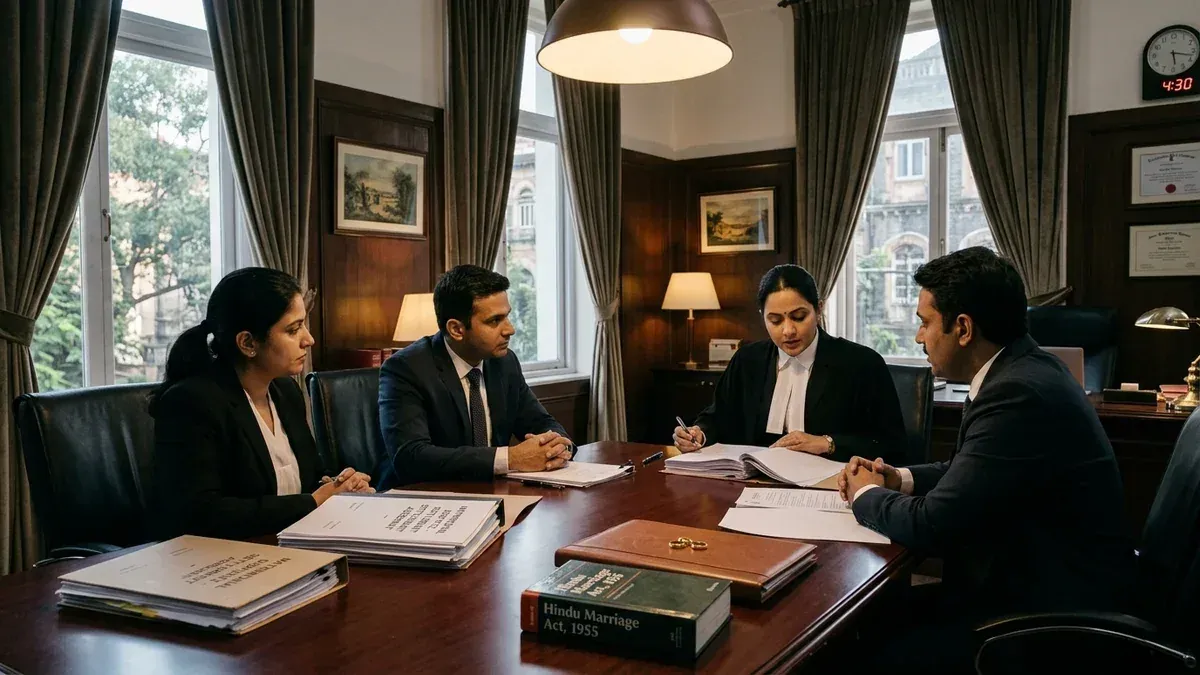
In traditional societies, when two consenting adults enter into an inter-caste or inter-faith alliance against family wishes, the couple often faces mortal peril. Distraught relatives frequently deploy two lethal weapons: vigilante violence (honor killings orchestrated by Khap Panchayats) and the weaponization of the criminal justice system through fabricated FIRs alleging kidnapping, abduction, and rape.
The constitutional bulwark defending matrimonial autonomy was constructed by the Supreme Court of India in Lata Singh v. State of U.P. (2006) 5 SCC 475. In that landmark judgment, Justice Markandey Katju held that once an individual attains the age of majority (18 years), they possess an absolute constitutional right to marry whoever they choose. No parent, panchayat, or self-appointed guardian has the legal authority to intimidate, threaten, or commit violence against them. Subsequent rulings in Aparna Bhat v. State of Madhya Pradesh (2021) and Shakti Vahini (2018) reinforced this doctrine by prohibiting patriarchal compromises and creating institutional safe houses across districts.
"This is a free and democratic country, and once a person becomes a major, he or she can marry whosoever he/she likes. If the parents of the boy or girl do not approve of such inter-caste or inter-religious marriage, the maximum they can do is to cut off social relations with the son or the daughter, but they cannot give threats or commit or instigate acts of violence."
1. The Legal Defense Against Fabricated Abduction FIRs
When an adult daughter marries against parental approval, families routinely register complaints under Section 363 (Kidnapping) or Section 366 (Abducting woman to compel marriage) of the IPC (now Sections 137 & 140 of the Bharatiya Nyaya Sanhita, 2023 - BNS). Here is how defense counsel swiftly neutralizes such prosecutions:
- Section 183 BNSS (formerly 164 CrPC) Magistrate Statement: The bride appears before the Judicial Magistrate and records her sworn statement confirming that she left her parental home voluntarily, married out of free will, and that no kidnapping or coercion occurred.
- High Court Quashing Petition under Section 528 BNSS (482 CrPC): The High Court quashes the FIR at the threshold, holding that an adult woman exercising matrimonial autonomy cannot be "kidnapped" by her lawful spouse.
- Police Warning: In Lata Singh, the Supreme Court specifically directed police officers not to arrest the groom or his relatives on vexatious complaints lodged by unhappy parents.
2. High Court Writ Petitions for Round-the-Clock Police Protection
In Delhi NCR, couples facing imminent physical threats can approach the High Court of Delhi or the Punjab & Haryana High Court under Article 226 of the Constitution:
| Stage | Action Required | Timeline & Court Mechanism |
|---|---|---|
| 1. Statutory Representation | Submit a formal written representation via Speed Post and Email to the District Commissioner of Police / SSP and local SHO detailing specific death threats. | Day 1 (Mandatory pre-condition before filing writ) |
| 2. Writ Petition under Article 226 | File a Writ Petition (Civil/Criminal) for Police Protection annexing marriage certificate, age proofs (Aadhaar/10th certificate), and threat communications. | Day 2-3 (Listed on urgent mention before Roster Bench) |
| 3. High Court Judicial Order | The Court directs the SHO to record telephone numbers, provide beat constable patrol, and escort the couple if they need to collect personal belongings. | Same day of hearing (Ad interim protective relief) |
| 4. Safe House Accommodation | In high-risk honor crime threats, couple is housed in a government-monitored District Safe House as mandated by Shakti Vahini (2018). | Immediate protective custody till threat abates |
3. Eliminating Patriarchal Conditions: Aparna Bhat (2021)
In Aparna Bhat v. State of M.P. (2021) SCC Online SC 230, the Supreme Court clamped down on lower courts imposing patriarchal, regressive conditions (such as asking victims to tie rakhis to molesters or encouraging informal reconciliation). The court reiterated that constitutional protection must be uncompromising, professional, and free from gender stereotyping.
Ready Courtroom Drafting Format: Writ Petition for Police Protection under Article 226
IN THE HIGH COURT OF DELHI AT NEW DELHI
(EXTRAORDINARY WRIT JURISDICTION)

WRIT PETITION (CRIMINAL) NO. ________ OF 2026

IN THE MATTER OF:
1. Mrs. [Wife Name], Age: 22 Years
2. Mr. [Husband Name], Age: 25 Years
Both R/o [Safe Address / Hiding Location]               ...PETITIONERS
                               VERSUS
1. STATE (NCT OF DELHI)
   Through Standing Counsel (Criminal)
2. THE COMMISSIONER OF POLICE, DELHI
3. SHO, POLICE STATION [Local PS Name]
4. [Father of Petitioner No. 1]                        ...RESPONDENTS

WRIT PETITION UNDER ARTICLE 226 OF THE CONSTITUTION OF INDIA
PRAYING FOR ISSUANCE OF A WRIT OF MANDAMUS OR ANY OTHER APPROPRIATE WRIT
FOR PROTECTION OF LIFE AND LIBERTY OF THE PETITIONERS

MOST RESPECTFULLY SHOWETH:
1. That both Petitioners are major Indian citizens, having attained the legal age of marriage (Date of Birth Proofs annexed as Annexure P-1 and P-2).
2. That the Petitioners were in love and voluntarily solemnized their marriage on [Date] at [Arya Samaj Mandir / Special Marriage Registrar] without any force, fraud, or undue influence (Marriage Certificate annexed as Annexure P-3).
3. That Respondent No. 4 and other family members of Petitioner No. 1 strictly oppose the inter-caste marriage and have issued explicit threats to kill both Petitioners in an "honor killing".
4. That on [Date], the Petitioners dispatched an urgent representation seeking police protection to Respondents 2 and 3, but no tangible protection has been accorded, forcing the Petitioners into hiding.
5. That the right to marry a person of one's choice is an integral facet of Article 21, as authoritatively held in Lata Singh v. State of U.P. (2006) 5 SCC 475 and Shakti Vahini v. Union of India (2018) 7 SCC 192.

PRAYER:
It is therefore respectfully prayed that this Hon'ble Court may graciously be pleased to:
a) Issue a Writ of Mandamus directing Respondents 2 and 3 to provide adequate, round-the-clock physical protection to the lives and personal liberty of the Petitioners;
b) Direct Respondent No. 3 not to entertain any false kidnapping or abduction FIR against Petitioner No. 2 at the behest of Respondent No. 4;
c) Pass any further orders deemed just and proper in the circumstances of the case.

PETITIONERS
THROUGH COUNSEL
NEW DELHI | DATED: [Date]
Official Precedent Briefs
Read our in-depth case records: Lata Singh v. State of U.P. Landmark Case Brief and Aparna Bhat v. State of M.P.. Our matrimonial and human rights litigation practice files urgent police protection writ petitions before the High Court of Delhi and the Punjab & Haryana High Court.

Advocate Kishan Kumar
Criminal, Civil & Debt Recovery Advocate • Bar Council of Delhi