
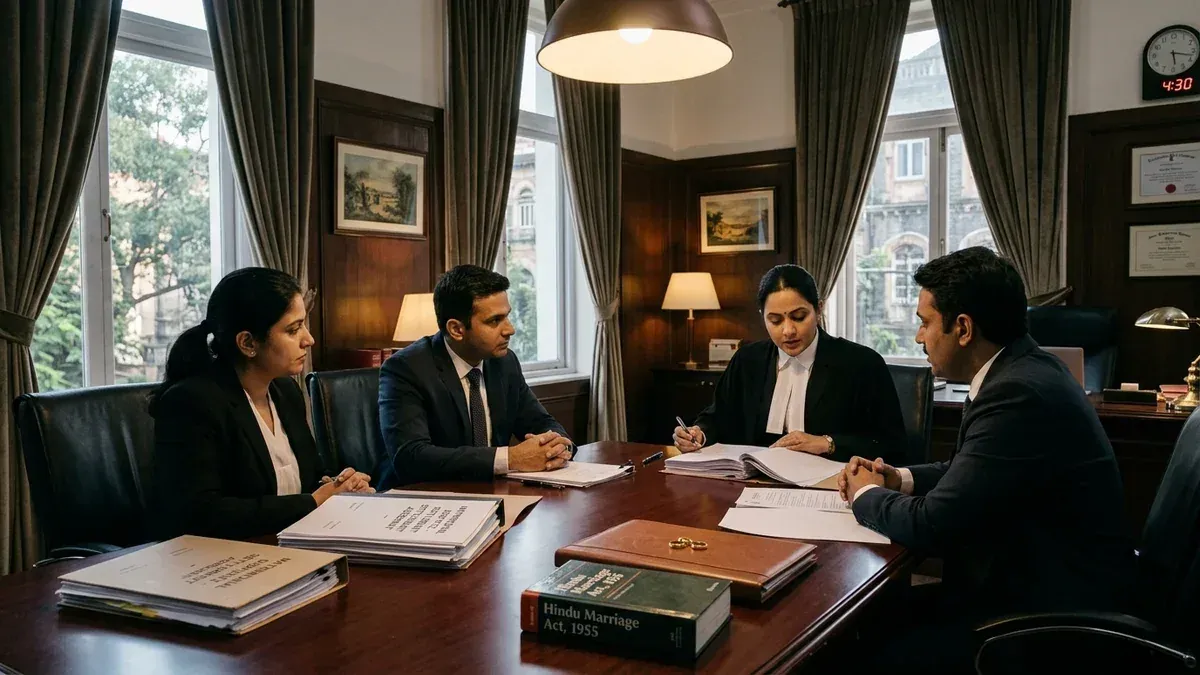
The societal landscape of modern urban India has witnessed a dramatic surge in couples choosing to live together without formal matrimonial ceremonies. When these partnerships fracture, critical legal questions arise: Does an abandoned live-in partner possess a right to monthly maintenance, right of residence, and protection from domestic abuse, or are these remedies reserved exclusively for legally wedded wives?
When Parliament enacted the Protection of Women from Domestic Violence Act, 2005 (PWDVA), it deliberately included women living in a "relationship in the nature of marriage" under Section 2(f). However, to prevent frivolous weekend flings or adulterous affairs from claiming marital benefits, the Supreme Court of India in D. Velusamy v. D. Patchaiammal (2010) 10 SCC 469 and Indra Sarma v. V.K.V. Sarma (2013) 15 SCC 755 formulated authoritative tests. Furthermore, the presumption of lawful marriage from continuous long cohabitation was upheld in S.P.S. Balasubramanyam v. Suruttayan (1994).
In D. Velusamy, Justice Markandey Katju held that not all live-in relationships entitle a woman to maintenance. To qualify as a "relationship in the nature of marriage", four conditions must be concurrently satisfied:
- The couple must hold themselves out to society as being akin to spouses.
- They must be of legal age to marry.
- They must be otherwise qualified to enter into a legal marriage, including being unmarried (neither party should have a living spouse).
- They must have voluntarily cohabited and held themselves out to the world as spouse-like for a significant period of time in a shared household.
1. The Adultery Conundrum: Indra Sarma v. V.K.V. Sarma (2013)
One of the most litigated questions before Family Courts and Magistrates is whether a woman who knowingly lives with a married man can claim maintenance under Section 12 PWDVA or Section 144 BNSS (Section 125 CrPC):
- In Indra Sarma (2013), the Supreme Court answered in the negative. The court held that if a woman enters into a live-in relationship with a man knowing fully well that he has a living wife and children, the relationship is adulterous and concubinage.
- Such a relationship cannot be elevated to a "relationship in the nature of marriage". Granting maintenance in such situations would defeat the sanctity of lawful marriage and prejudice the rights of the innocent wedded wife.
- Crucial Exception: If the man deceitfully conceals his existing marriage and misleads the woman into believing he is a bachelor or divorcee, the woman is a victim of fraud and retains full entitlement to maintenance and damages (Badshah v. Urmila Badshah Godse (2014)).
2. The Indra Sarma Eight-Factor Test
In Indra Sarma, Justice K.S. Radhakrishnan laid down eight practical guidelines to determine whether a live-in arrangement qualifies under the DV Act:
| Factor | Evidentiary Threshold | Practical Documentation |
|---|---|---|
| 1. Duration of Relationship | Substantial cohabitation over months/years; casual weekend stays excluded. | Joint residential lease agreements, utility bills, housing society registration. |
| 2. Shared Household | Living under one roof with shared domestic chores. | Same address mentioned on bank accounts, passports, or Aadhaar cards. |
| 3. Pooling of Financial Resources | Financial interdependence, joint bank accounts, mutual investments. | Joint bank statements, credit card add-ons, shared household expense transfers. |
| 4. Domestic Arrangements | Entrusting the woman with running the house and home management. | Grocery deliveries, domestic staff management, mutual grocery bills. |
| 5. Sexual Relationship | Intimate relationship not for commercial sex or casual encounter. | Cohabitation history, communications, mutual travel bookings. |
| 6. Children | Bearing and rearing children together. | Birth certificates showing both names as mother and father. |
| 7. Social Socialization | Socializing with relatives and friends as husband and wife. | Photographs of family festivals, weddings attended jointly, invitations. |
| 8. Intention & Conduct | Parties' actions demonstrating long-term mutual commitment. | Nomination in insurance policies, provident funds, or medical policies. |
3. Rights of Children Born from Live-in Relationships
Regardless of whether the parents' live-in relationship is recognized as a valid marriage, children born from long continuous cohabitation enjoy comprehensive legal protection:
- Presumption of Legitimacy: Under S.P.S. Balasubramanyam v. Suruttayan (1994) and Section 116 BSA (Section 114 IEA), long continuous cohabitation raises a strong presumption of marriage, rendering children legitimate.
- Maintenance Rights: Under Section 144 BNSS (Section 125 CrPC) and Section 20 PWDVA, a father is legally bound to pay monthly maintenance and educational expenses for his minor children born from a live-in relationship.
- Inheritance Rights: Under Section 16 of the Hindu Marriage Act, children are entitled to inherit the self-acquired property of their biological father.
Ready Courtroom Drafting Template: Section 12 PWDVA Application (Live-in Partner Maintenance)
IN THE COURT OF THE LEARNED METROPOLITAN MAGISTRATE (MAHILA COURT),
SAKET COURTS, NEW DELHI

CC NO. ________ OF 2026

IN THE MATTER OF:
Ms. [Applicant Name], D/o [Father Name]
R/o [Address]                                         ...AGGRIEVED PERSON
                              VERSUS
Mr. [Respondent Name], S/o [Father Name]
R/o [Address]                                         ...RESPONDENT

APPLICATION UNDER SECTION 12 OF THE PROTECTION OF WOMEN FROM DOMESTIC VIOLENCE ACT, 2005
CLAIMING MAINTENANCE, RESIDENCE ORDER AND MONETARY RELIEF UNDER SECTIONS 18, 19, 20 & 22

MOST RESPECTFULLY SHOWETH:
1. That the Applicant and the Respondent resided together in a continuous "relationship in the nature of marriage" as defined under Section 2(f) of the Act from [Month, Year] until [Month, Year] in the shared household bearing Flat No. [Details].
2. That both parties were unmarried adults having legal capacity to marry. The parties held themselves out to family, neighbors, and society as husband and wife, having joint bank accounts and attending family functions jointly (Photographs and Joint Lease annexed as Annexure A-1 and A-2).
3. That the relationship completely fulfills all four conditions laid down by the Hon'ble Supreme Court in D. Velusamy v. D. Patchaiammal (2010) 10 SCC 469 and Indra Sarma v. V.K.V. Sarma (2013) 15 SCC 755.
4. That on [Date], the Respondent subjected the Applicant to severe physical and emotional abuse and unlawfully locked her out of the shared household without any financial support.
5. That the Respondent earns over ₹3,50,000/- per month as a Senior Vice President, whereas the Applicant has no independent source of sustenance.

PRAYER:
It is therefore respectfully prayed that this Hon'ble Court may be pleased to:
a) Pass an Interim Maintenance Order under Section 20 directing Respondent to pay ₹75,000/- per month;
b) Pass a Residence Order under Section 19 directing Respondent to provide alternative suitable rented accommodation or pay rent;
c) Award compensation of ₹10,00,000/- under Section 22 for emotional distress.

AGGRIEVED PERSON
THROUGH COUNSEL
NEW DELHI | DATED: [Date]
Official Landmark Case Briefs
Read our comprehensive legal briefs: D. Velusamy v. D. Patchaiammal Brief, Indra Sarma v. V.K.V. Sarma, and S.P.S. Balasubramanyam v. Suruttayan. Our family law team handles complex DV Act claims, maintenance trials, and domestic rights disputes across Delhi NCR.

Advocate Kishan Kumar
Criminal, Civil & Debt Recovery Advocate • Bar Council of Delhi