Defamation under Section 356 BNS 2023: WhatsApp Groups, Social Media Trolling & Online Defamation Remedies
 Authored by: Advocate Kishan Kumar (Advocate & Legal Consultant)
Quick Summary & Strategic Key Takeaways
- Section 356 BNS Evolution: Bharatiya Nyaya Sanhita, 2023 consolidates defamation under Section 356, maintaining the 10 classic statutory exceptions while introducing Community Service as a modern alternative penal sanction.
- Digital Publication & Retweet Liability: Social media posts, memes, reels, and retweets satisfy the legal requirement of publication; judicial precedents affirm that retweeting defamatory material constitutes independent republication.
- Mandatory Pre-Cognizance Hearing (Section 223 BNSS): Unlike the old CrPC regime, the Magistrate cannot issue process mechanically—Section 223 BNSS mandates giving the accused a prior opportunity of hearing before taking cognizance.
- Intermediary Immunity (Section 79 IT Act): Social media intermediaries enjoy statutory safe harbor under Shreya Singhal, provided they comply with court takedown orders within 36 hours.
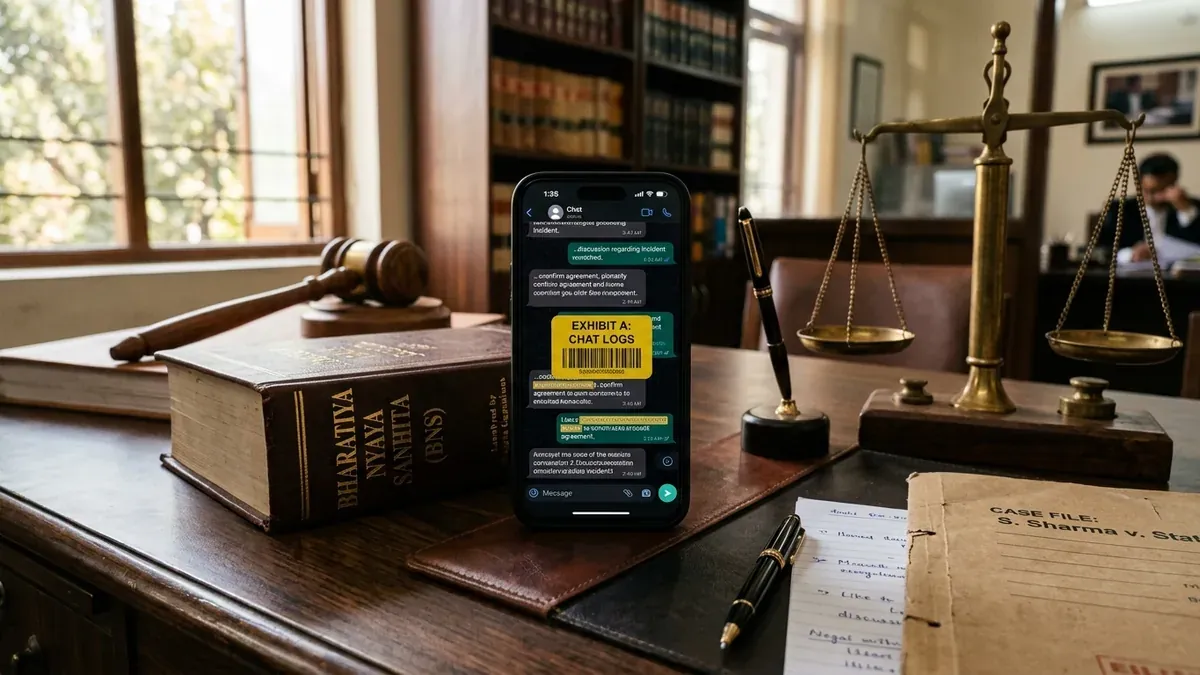
1. Statutory Architecture of Defamation under Section 356 BNS, 2023
In democratic societies, the fundamental right to freedom of speech and expression guaranteed under Article 19(1)(a) of the Constitution is not an unfettered license to destroy an individual's dignity or professional standing. The right to reputation is an inseparable facet of the fundamental right to life with dignity protected under Article 21, as affirmed by the Constitution Bench in Subramanian Swamy v. Union of India (2016) 7 SCC 221.
Under the new criminal law framework, Section 356 of the Bharatiya Nyaya Sanhita, 2023 (BNS) consolidates the substantive law of defamation, replacing Sections 499 and 500 of the Indian Penal Code, 1860. Section 356(1) defines defamation with statutory precision:
Section 356(1), Bharatiya Nyaya Sanhita, 2023:
"Whoever, by words either spoken or intended to be read, or by signs or by visible representations, makes or publishes any imputation concerning any person intending to harm, or knowing or having reason to believe that such imputation will harm, the reputation of such person, is said, except in the cases hereinafter excepted, to defame that person."
To establish the offense of criminal defamation, the complainant must prove three essential statutory ingredients beyond reasonable doubt: (1) The making or publication of an imputation; (2) The imputation was made by words, signs, or visible representations; and (3) The imputation was made with an intention to harm, or with knowledge or reason to believe that it will lower the reputation of the victim in the estimation of right-thinking members of society.
2. The Community Service Sentencing Innovation in Section 356(2)
A transformative legal reform introduced by Parliament in Section 356(2) of the BNS is the statutory incorporation of Community Service as a punitive and reformative alternative to incarceration:
Section 356(2), BNS 2023:
"Whoever defames another shall be punished with simple imprisonment for a term which may extend to two years, or with fine, or with both or with community service."
Under Section 23 of the Bharatiya Nagarik Suraksha Sanhita, 2023 (BNSS), Judicial Magistrates are empowered to order convicted first-time offenders in minor social media trolling or verbal defamation disputes to perform court-monitored community service in charitable hospitals, municipal libraries, old age homes, or municipal sanitation drives, avoiding the stigma of custodial imprisonment while delivering restorative justice.
3. Digital Defamation, Online Trolling & Social Media Retweet Liability
The ubiquity of social media platforms—X (Twitter), LinkedIn, Instagram, WhatsApp, YouTube, and Facebook—has transformed the dynamics of defamation. Digital trolling, coordinated character assassination campaigns, deepfake video slanders, and weaponized gossip forums now spread across millions of screens in seconds.
The Republication Doctrine & Retweet Liability
A recurring defense raised by social media users is: "I did not author the tweet; I only retweeted / shared it." Indian jurisprudence decisively rejects this shield.
In Arvind Kejriwal v. State (NCT of Delhi) 2024 SCC OnLine Del 719, the Delhi High Court held that retweeting a defamatory video or imputation amounts to a fresh act of publication. The Court observed that in the digital era, an individual who retweets defamatory material to a vast audience lends credibility and amplifies the reach of the slander, thereby attracting criminal liability under Section 499 IPC (now Section 356 BNS). The maker of a social media post and those who deliberately republish or amplify it with malicious knowledge are equally liable to prosecution.
4. The 10 Statutory Exceptions: Truth, Good Faith & Public Good
Section 356 of the BNS preserves the ten celebrated statutory exceptions that safeguard legitimate whistleblowing, fair journalistic criticism, and lawful governance:
| Statutory Exception | Legal Scope & Essential Criteria | Practical Application Scenario |
|---|---|---|
| 1st Exception: Truth for Public Good | Imputation of anything true concerning any person, if published for the public good. | Investigative reporting exposing corporate financial fraud or food adulteration. |
| 2nd Exception: Public Servants' Conduct | Expressing good-faith opinions on the official conduct of public servants. | Criticizing an administrative officer's arbitrary denial of building permissions. |
| 3rd Exception: Public Questions | Good-faith opinions touching any public question and conduct of persons involved. | Public debate regarding infrastructure policy or political party governance. |
| 4th Exception: Court Proceedings | Publishing substantially true reports of court proceedings or results thereof. | Law reporting journals publishing judgments and trial transcripts. |
| 5th Exception: Case Merits & Witnesses | Opinions on merits of decided cases or conduct of parties/witnesses in good faith. | Academic critique of judicial rulings after final case pronouncement. |
| 6th Exception: Public Performances | Good-faith critique of literary works, art, cinema, or musical performances submitted to the public. | Film reviews, theatre critiques, and published book reviews. |
| 7th Exception: Lawful Censure | Censure passed in good faith by person possessing lawful authority over another. | School principal censuring a student or judge censuring an advocate's conduct. |
| 8th Exception: Accusation in Good Faith | Accusation preferred in good faith to an authorized person holding lawful authority. | Filing a police complaint or vigilance report against corruption. |
| 9th Exception: Protection of Interests | Imputation made in good faith for protection of maker's or another's legitimate interests. | Employer writing confidential character reference to a prospective employer. |
| 10th Exception: Conveyed Caution | Caution conveyed in good faith for the good of the person or public good. | Warning a business associate about a convicted fraudster's financial schemes. |
5. Procedural Roadmap under BNSS: Section 223 Pre-Cognizance Hearings
A major safeguard against vexatious defamation complaints was enacted in the Bharatiya Nagarik Suraksha Sanhita, 2023. Under old Section 200 CrPC, Magistrates frequently issued process against accused persons on ex-parte preliminary statements without hearing the defence.
Under Section 223(1) of the BNSS, 2023, a statutory revolution has been enacted:
Section 223(1) Proviso, BNSS 2023:
"Provided that no Magistrate shall take cognizance of an offence on a complaint made without giving the accused an opportunity of being heard."
Consequently, when a complainant files a private criminal defamation complaint, the Judicial Magistrate must issue a pre-cognizance notice to the accused. The accused can appear, produce proof of statutory exceptions (e.g., proof of truth or fair comment), highlight the absence of a Section 63 BSA certificate for digital screenshots, and request the court to dismiss the complaint at the threshold under Section 226 BNSS without being forced to face a protracted criminal trial.
6. Intermediary Safe Harbor under Section 79 IT Act & Shreya Singhal Doctrine
Victims of digital defamation frequently seek to prosecute social media platforms (such as X/Twitter, Meta, YouTube, Telegram) as co-accused in defamation complaints. However, Section 79 of the Information Technology Act, 2000 provides statutory immunity known as "Safe Harbor":
Shreya Singhal v. Union of India (2015) 5 SCC 1
The Supreme Court held that intermediaries are not liable for third-party information, data, or communication links hosted by them. The Court read down Section 79(3)(b) to mean that an intermediary loses safe harbor only if, upon receiving an actual court order or government takedown requisition, it fails to expeditiously remove or disable access to the unlawful content within 36 hours. Consequently, filing criminal complaints directly against Twitter or Google without a prior court takedown order is barred by law.
7. High Court Quashing under Section 528 BNSS & Strategic Trial Defences
When frivolous criminal defamation proceedings are initiated by corporations or politicians to muzzle legitimate criticism, the accused can invoke the inherent powers of the High Court under Section 528 of the BNSS, 2023 (formerly Section 482 CrPC):
- Vague or Missing Innuendo Averments: The petition must establish that the complaint fails to specify how the impugned words harmed reputation, or who among the public thought less of the complainant.
- Absence of Mandatory Section 63 BSA Certificate: If the complaint relies on computer printouts or social media screenshots without a contemporaneous Section 63 certificate, the evidence is legally inadmissible at the threshold under Arjun Khotkar.
- Strategic Lawsuit Against Public Participation (SLAPP): Demonstrate that the litigation is an abuse of judicial process intended to stifle public interest whistleblowing, fully covered by Exceptions 1, 2, or 9 of Section 356 BNS.
8. Specimen Draft: Criminal Defamation Complaint under Section 356 BNS
Below is a standardized statutory complaint format for instituting defamation proceedings before a Judicial Magistrate:
IN THE COURT OF THE CHIEF JUDICIAL MAGISTRATE / JUDICIAL MAGISTRATE FIRST CLASS
AT [CITY / DISTRICT, E.G., NEW DELHI / GURUGRAM]
CRIMINAL COMPLAINT NO. _______ OF 202X
IN THE MATTER OF:
[Complainant Full Name, Address, Occupation] ... COMPLAINANT
VERSUS
[Accused Full Name, Address, Social Media Handle] ... ACCUSED
COMPLAINT UNDER SECTION 223 BNSS, 2023 FOR OFFENCE PUNISHABLE UNDER SECTION 356(2) BHARATIYA NYAYA SANHITA, 2023
MOST RESPECTFULLY SHOWETH:
1. The Complainant is a respected [Professional / Business Leader / Citizen] enjoying unblemished reputation and esteem among peers, clients, and society at large.
2. On [Date] at [Time], the Accused published a malicious, scandalous, and false statement on social media platform [X / LinkedIn / WhatsApp Group], stating: "[Insert exact defamatory statement]".
3. Publication to Third Parties: The impugned post was viewed by over [X] persons, shared [X] times, and read by business associates of the Complainant, directly lowering the Complainant's moral, professional, and personal reputation.
4. Malice & Intention to Harm: The Accused published these imputations knowingly, maliciously, and without taking any reasonable care to verify the truth, with the sole intent to cause injury to the Complainant's standing.
5. Admissibility Compliance: The digital screenshots and URL records are filed along with a certified affidavit under Section 63(4) of the Bharatiya Sakshya Adhiniyam, 2023.
PRAYER:
It is respectfully prayed that this Hon'ble Court may be pleased to issue process and summon the Accused under Section 356(2) of the Bharatiya Nyaya Sanhita, 2023, try and convict the Accused in accordance with law, and award exemplary costs.
COMPLAINANT THROUGH: ADVOCATE
Date: [DD/MM/YYYY] Place: [City]
9. Civil Tort Damages vs Criminal Defamation Comparative Matrix
| Legal Parameter | Criminal Defamation (Section 356 BNS) | Civil Defamation Suit (Tort Law / CPC) |
|---|---|---|
| Primary Objective | Penal sanction: Incarceration, fine, or Community Service. | Monetary compensation for actual & general damages. |
| Standard of Proof | Proof beyond reasonable doubt (Criminal trial). | Preponderance of probabilities (Civil trial). |
| Court Fees | Nominal criminal complaint filing charges. | Ad-valorem court fees on claimed damages sum (5-8%). |
| Interim Relief | No interim relief; pre-cognizance hearing required. | Interim injunction / takedown under Order 39 Rules 1 & 2 CPC. |
| Limitation Period | 3 Years under Section 468 BNSS (max punishment 2 years). | 1 Year from publication (Article 75 & 76 Limitation Act). |
Frequently Asked Questions on Criminal Defamation & Section 356 BNS
Comprehensive guide to defamation laws under BNS 2023, social media trolling liability, and Section 223 BNSS court procedures.
What are the changes introduced to Criminal Defamation under Section 356 of Bharatiya Nyaya Sanhita (BNS)?
Section 356 of the Bharatiya Nyaya Sanhita, 2023 (BNS) replaces old Sections 499 and 500 of the Indian Penal Code (IPC). While retaining the substantive definition of defamation and its 10 statutory exceptions, Section 356 introduces a significant novel sentencing option: 'Community Service'. Under Section 356(2), whoever defames another may now be punished with simple imprisonment for a term which may extend to two years, or with fine, or with both, OR with Community Service.
Does posting a defamatory tweet, LinkedIn comment, or WhatsApp message constitute criminal defamation?
Yes. The publication requirement under Section 356 BNS is satisfied whenever a defamatory imputation is communicated to any third person. Social media posts, retweets, LinkedIn articles, Instagram stories, YouTube videos, and WhatsApp group forwards constitute 'electronic documents' under the Bharatiya Sakshya Adhiniyam, 2023. If the imputation lowers the moral or intellectual character of the complainant in the estimation of others, it attracts criminal defamation.
Can merely liking or retweeting someone else's defamatory tweet attract Section 356 BNS?
In several high-profile rulings (including rulings involving Delhi CM Arvind Kejriwal's retweets), the Delhi High Court and Supreme Court have held that retweeting or sharing defamatory content on social media constitutes a fresh act of publication and republication. If a user with significant followers retweets defamatory material without verifying its truth, they cannot escape liability by claiming they were not the original author.
What is the procedure for filing a criminal defamation complaint under BNSS?
Criminal defamation is a non-cognizable, bailable offence. The police cannot register an FIR directly (except in cases involving public servants under Section 222 BNSS). The aggrieved person must file a private criminal complaint under Section 223 of the Bharatiya Nagarik Suraksha Sanhita, 2023 (BNSS) before the Judicial Magistrate of First Class. Crucially, under Section 223 BNSS, the Magistrate must afford the accused an opportunity of being heard before taking cognizance.
What are the core statutory exceptions/defences available under Section 356 BNS?
Section 356 retains the 10 statutory exceptions: (1) Imputation of truth made for the public good; (2) Public conduct of public servants; (3) Conduct of any person touching any public question; (4) Publication of reports of proceedings of courts of justice; (5) Merits of case decided in court or conduct of witnesses; (6) Merits of public performance; (7) Censure passed in good faith by person having lawful authority; (8) Accusation preferred in good faith to authorized person; (9) Imputation made in good faith by person for protection of his or other's interests; and (10) Caution intended for good of person to whom conveyed or for public good.
What is the intermediary safe harbour protection under Section 79 of the IT Act?
Under Section 79 of the Information Technology Act, 2000 and the Supreme Court's ruling in Shreya Singhal v. Union of India (2015), social media platforms (such as X/Twitter, Meta, Google) enjoy safe harbor immunity from defamation prosecutions, provided they act as mere intermediaries and take down the offensive content within 36 hours upon receiving an actual court order or government notification.
How can an accused seek quashing of a malicious criminal defamation complaint?
If a defamation complaint is filed to harass, silence whistleblowers, or suppress legitimate criticism without fulfilling the statutory ingredients, the accused can approach the High Court under Section 528 of the Bharatiya Nagarik Suraksha Sanhita, 2023 (formerly Section 482 CrPC) for quashing. Grounds include: (1) Absence of specific averments showing injury to reputation; (2) Covered by First Exception (truth for public good); (3) Absence of valid Section 63 BSA certificate for digital screenshots; and (4) Abuse of judicial process.
What is the difference between Criminal Defamation and a Civil Suit for Damages?
Criminal defamation (Section 356 BNS) seeks penal punishment (jail up to 2 years, fine, or community service) to vindicate criminal wrongdoing. A civil suit for defamation (under common law tort) seeks monetary compensation and damages for financial loss, commercial ruin, and emotional distress, accompanied by applications under Order 39 Rules 1 & 2 CPC for interim takedown injunctions.