Drawee Bank Under RBI Moratorium & Withdrawal Caps: Section 138 Criminal Defense

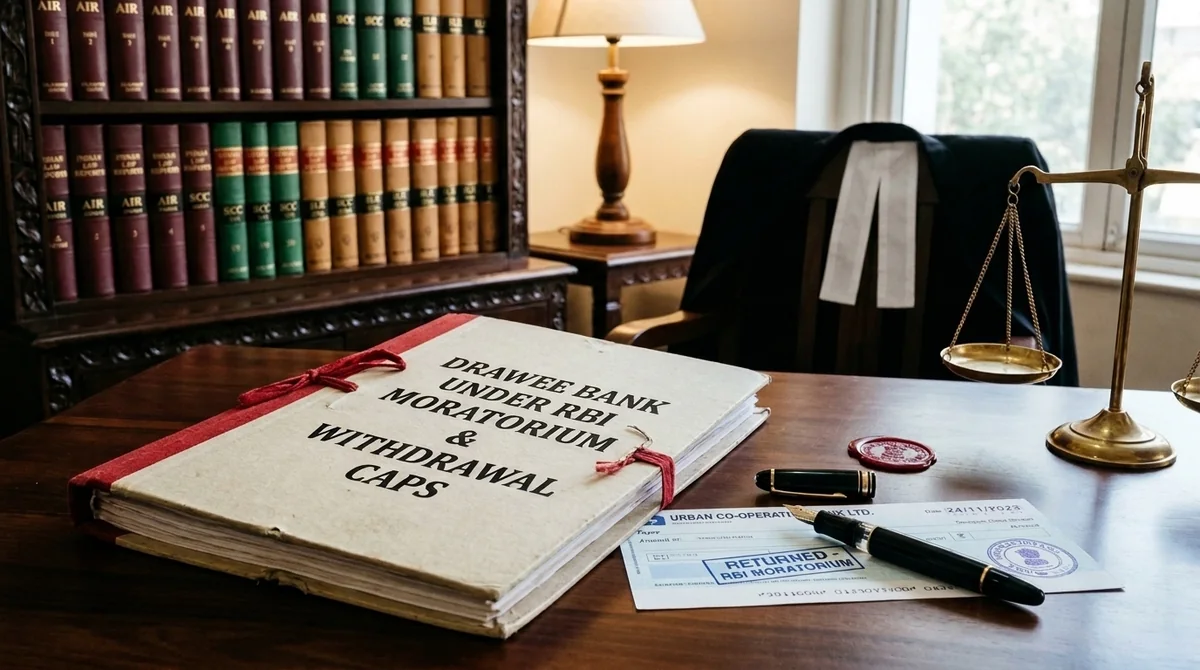
Executive Legal Brief
- Under Section 35A of the Banking Regulation Act, 1949, the RBI issues withdrawal-cap directions, while under Section 45, the Central Government (on RBI's application) orders a bank moratorium (e.g., PMC Bank, Yes Bank, cooperative banks).
- When a drawer holds ample credit balance in such a restricted bank, inward clearing cheques return unpaid with memos like 'RBI Restrictions / Moratorium'.
- Because dishonour arises from a statutory sovereign embargo rather than insufficiency of funds or voluntary drawer misconduct, criminal culpability under Section 138 is negated.
- However, the underlying civil debt survives: upon receiving the 15-day statutory demand notice, the drawer must arrange alternative payment via another unencumbered account or RTGS.
Key Statutory Provisions & Regulatory Framework
| Statutory Provision / Doctrine | Legal Operation & Judicial Impact |
|---|---|
| Section 35A & 45 Banking Regulation Act, 1949 | Empowers RBI to issue binding directions capping cash withdrawals and suspending bank clearing operations. |
| Section 138 NI Act, 1881 | Offence requires dishonour due to insufficient funds or exceeding bank arrangement—distinct from sovereign regulatory freezes. |
| Section 56 Indian Contract Act, 1872 | Doctrine of temporary supervening impossibility suspending specific clearing mode while preserving underlying debt. |
| Section 528 BNSS, 2023 | High Court quashing jurisdiction where complaint suppresses RBI moratorium return memo and full account balance. |
1. When Bank Failures Collide With Commercial Cheques
Episodes involving Punjab and Maharashtra Cooperative (PMC) Bank, Yes Bank (2020), Lakshmi Vilas Bank, and several urban cooperative banks highlighted a sudden legal risk for bona fide account holders. When the Reserve Bank of India invokes Section 35A or Section 45 of the Banking Regulation Act, 1949, it imposes an immediate statutory moratorium capping customer withdrawals (often as low as ₹1,000 or ₹50,000) and halting CTS clearing.
Any commercial or EMI cheque issued prior to the moratorium returns unpaid—not because the drawer lacked money, but because federal banking regulators locked the vault.
2. Why Sovereign Regulatory Embargoes Defeat Section 138 Prosecution
Under settled Supreme Court jurisprudence, Section 138 creates a statutory offence only when dishonour results from reasons attributable to the drawer's lack of funds or deliberate obstruction. Where a cheque returns marked 'Payment Stopped Under RBI Directions' or 'Bank Under Moratorium' while the drawer's ledger clearly reflects cleared credit balance exceeding the cheque amount:
- The statutory ingredients of Section 138 are fundamentally absent on the date of presentation.
- Criminal prosecution amounts to punishing a citizen for an unforeseeable regulatory act of the State (force majeure / supervening legal impossibility).
3. Crucial Distinction: Criminal Immunity vs Continuing Civil Debt Obligation
While the accused can seek quashing under Section 528 BNSS by producing the gazetted RBI Notification and certified bank balance statement showing adequate funds, the underlying civil debt is NOT extinguished. Once the payee serves a statutory demand notice informing the drawer of the moratorium bounce, prudent drawers should either remit the debt via an alternate operational bank account or clearly propose structured payment schedules rather than refusing payment entirely.
Disclaimer: This article is published strictly for academic and educational purposes under the Advocates Act, 1961. It does not constitute formal legal advice, solicitation, or advertisement under Rule 36 of the Bar Council of India Rules, nor does it create an advocate-client relationship. For case-specific legal counsel, readers should consult an independent advocate.
Frequently Asked Questions
Can I be jailed under Section 138 if my cheque bounced because RBI froze my bank under a moratorium?
No. If your bank account actually held sufficient cleared balance and dishonour occurred solely due to an RBI Section 35A/45 moratorium order, Section 138 criminal ingredients are absent.
Does an RBI moratorium wipe out my obligation to pay the creditor?
No. Your criminal liability for the bounced cheque is negated, but the underlying contractual debt remains legally payable through alternative banking channels or civil settlement.
What documents are needed to quash a Section 138 summons in an RBI moratorium case?
Attach the official RBI press release/gazette notification, the exact bank return memo citing regulatory restrictions, and a certified bank balance statement covering the presentation date.

Advocate Kishan Kumar
Criminal, Civil & Recovery Advocate • Bar Council of Delhi