Accommodation Cheques & Kite-Flying: The Section 43 NI Act Defense

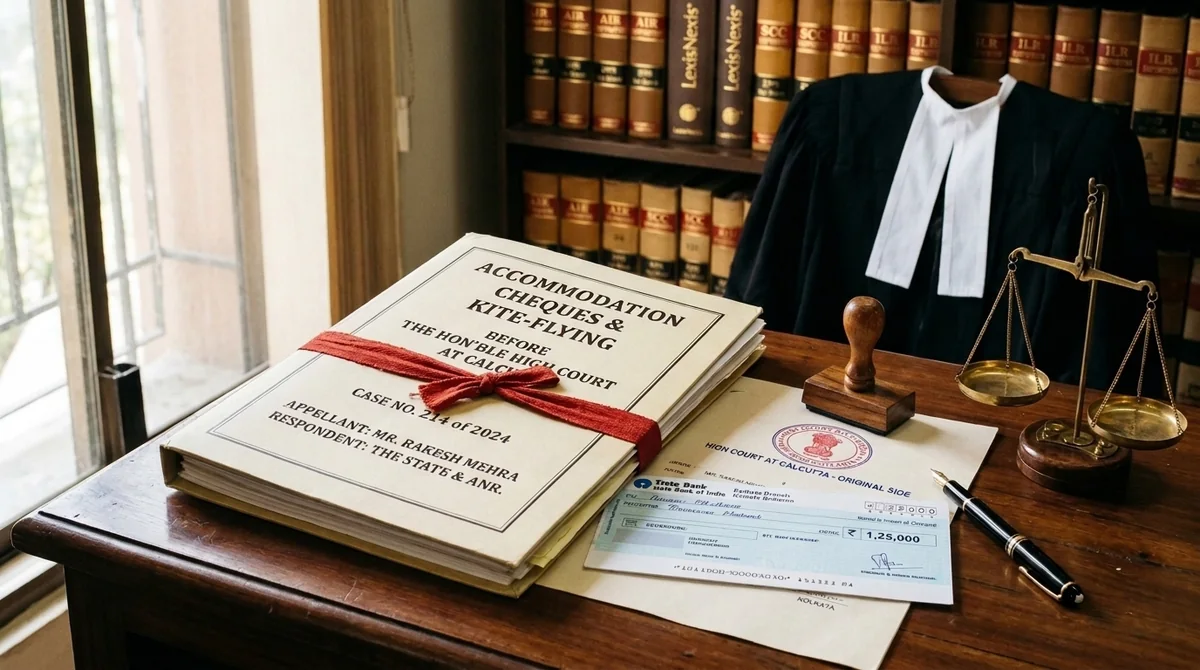
Executive Legal Brief
- Section 43 of the NI Act governs negotiable instruments made, drawn, accepted, or endorsed without consideration, known as accommodation bills.
- An accommodation cheque creates no obligation of payment between accommodating and accommodated parties; neither can sue the other under Section 138.
- In commercial trading networks, parties sometimes engage in 'kite-flying' by exchanging reciprocal accommodation cheques to generate temporary bank float.
- The drawer accused must present concrete ledger books, VAT/GST returns, and lack of commercial invoices to rebut the presumption of consideration.
Key Statutory Provisions & Regulatory Framework
| Statutory Provision / Doctrine | Legal Operation & Judicial Impact |
|---|---|
| Section 43 NI Act, 1881 | Negotiable instrument made without consideration creates no obligation between the immediate parties. |
| Section 138 NI Act, 1881 | Offence requires dishonoured instrument to be drawn for the discharge of a legally enforceable debt. |
| Section 118(a) NI Act, 1881 | Presumption that every negotiable instrument was made or drawn for consideration. |
| Section 139 NI Act, 1881 | Presumption in favor of holder that cheque was received for discharge of debt or liability. |
1. Understanding Accommodation Cheques and Kite-Flying in Commercial Trade
In wholesale commodity markets, bullion trading, and MSME clusters, business associates frequently assist each other by issuing 'Accommodation Cheques' or participating in 'Kite-Flying' transactions. An accommodation instrument is one where the drawer lends their name and signature without receiving any consideration or value, simply to allow the payee to raise funds or discount bills with a bank.
Under Section 43 of the Negotiable Instruments Act, 1881, a negotiable instrument made, drawn, accepted, or transferred without consideration creates no obligation of payment between the immediate parties to the transaction.
2. The Legal Defense under Section 43 against Section 138 Prosecution
When an accommodated friend or business partner abuses trust by directly depositing an accommodation cheque and filing a Section 138 complaint upon its return, the drawer has a complete substantive defense under Section 43 read with Section 138.
Because Section 138 penalizes dishonour only when the instrument is drawn for the 'discharge, in whole or in part, of any debt or other liability', establishing that the cheque was a purely gratuitous accommodation devoid of underlying consideration demolishes the criminal charge.
3. Evidentiary Tactics: Rebutting Presumptions under Sections 118(a) and 139
To succeed with the accommodation defense, the accused cannot merely make a bare oral assertion. Under the principles affirmed in Rangappa v. Sri Mohan (2010) 11 SCC 441 and Basalingappa (2019), the accused must establish absence of consideration on a preponderance of probabilities by proving:
- Reciprocal Cheque Exchanges: Producing bank statements showing identical or mirrored cheque exchanges between the parties over the preceding months.
- Absence of Commercial Invoices: Subpoenaing the complainant's GST returns, delivery challans, and stock ledgers to show that no goods were ever sold or delivered.
- Income Tax Audit Records: Demonstrating that neither party recorded any commercial receivable or payable in their audited financial balance sheets.
Disclaimer: This article is published strictly for academic and educational purposes under the Advocates Act, 1961. It does not constitute formal legal advice, solicitation, or advertisement under Rule 36 of the Bar Council of India Rules, nor does it create an advocate-client relationship. For case-specific legal counsel, readers should consult an independent advocate.
Frequently Asked Questions
Can a friend sue me under Section 138 on a cheque I gave to help him get a loan?
No. If you can prove that the cheque was an accommodation instrument issued without consideration, Section 43 NI Act protects you from liability between the immediate parties.
What is the legal difference between an accommodation cheque and a security cheque?
A security cheque is issued to secure a real, contingent, or future commercial liability; an accommodation cheque is executed without any underlying liability or consideration whatsoever.
Can a third-party holder in due course enforce an accommodation cheque?
Yes. Under Section 43 second proviso, if an accommodation cheque is transferred to a bona fide holder in due course for value, that third party can enforce payment against the drawer.

Advocate Kishan Kumar
Criminal, Civil & Recovery Advocate • Bar Council of Delhi